


CONTENTS:
- The Importance of Vibration Analysis in EO/IR Gimbals
- Sources of Vibration in Vehicle-Borne Systems
- Impact of Vibrations on EO/IR Gimbals
- Vibration Spectrum Chart for Vehicle-Borne EO/IR Gimbals
-
Advanced Vibration Mitigation Techniques
- Designing for Vibration Mitigation
- Testing and Validation
- Conclusion
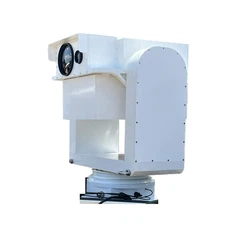
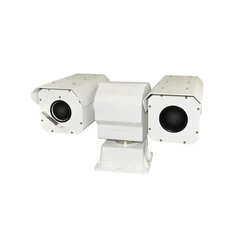
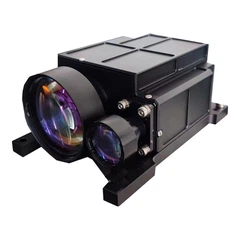
Remote Controlled Weapon Systems (RCWS) have become a critical component of modern defense and security operations. These systems rely heavily on Electro-Optical/Infrared (EO/IR) gimbals to provide real-time surveillance, target acquisition, and tracking capabilities. However, when deploying EO/IR gimbals on vehicles, one of the most significant challenges engineers face is managing the vibration spectrum. Vibrations can severely impact the performance and longevity of the gimbal system, making it essential to understand and mitigate their effects during the design phase.
The Importance of Vibration Analysis in EO/IR Gimbals
Vibration is an inherent characteristic of any vehicle, especially those operating in rugged terrains or at high speeds. For vehicle-borne EO/IR gimbals, these vibrations can originate from various sources, including engine operation, uneven road surfaces, and the movement of the vehicle itself. If not properly addressed, vibrations can lead to blurred images, misalignment of sensors, and even mechanical failure of the gimbal system.
The vibration spectrum refers to the range of frequencies and amplitudes that a system experiences during operation. In the context of EO/IR gimbals, understanding this spectrum is crucial for designing a system that can maintain stability and accuracy under dynamic conditions. The goal is to ensure that the gimbal can isolate or compensate for these vibrations, allowing the EO/IR sensors to function optimally.
Sources of Vibration in Vehicle-Borne Systems
- Engine and Drivetrain Vibrations: The engine and drivetrain are primary sources of low-frequency vibrations. These vibrations are typically in the range of 10 Hz to 100 Hz and can be transmitted through the vehicle's chassis to the gimbal mounting point.
- Road-Induced Vibrations: As the vehicle moves over uneven terrain, it experiences shocks and vibrations that can range from a few Hz to several hundred Hz. These vibrations are often random and can vary significantly depending on the terrain and vehicle speed.
- Aerodynamic Forces: At high speeds, aerodynamic forces can induce vibrations, particularly in the higher frequency range (above 100 Hz). These vibrations can affect the stability of the gimbal and the quality of the imagery.
- Weapon Recoil: In RCWS deployments, the firing of the weapon generates high-frequency vibrations and shocks. These can be particularly challenging for the gimbal system, as they occur suddenly and with significant force.
Impact of Vibrations on EO/IR Gimbals
The impact of vibrations on EO/IR gimbals can be categorized into two main areas: optical performance and mechanical integrity.
- Optical Performance: Vibrations can cause the EO/IR sensors to move relative to the target, leading to image blurring, reduced resolution, and difficulty in tracking moving objects. This is particularly problematic in long-range surveillance, where even minor vibrations can result in significant deviations from the target.
- Mechanical Integrity: Prolonged exposure to vibrations can lead to wear and tear on the gimbal's mechanical components, such as bearings, motors, and structural elements. Over time, this can result in misalignment, reduced accuracy, and eventual failure of the system.
Vibration Spectrum Chart for Vehicle-Borne EO/IR Gimbals
A vibration spectrum chart typically plots frequency (Hz) on the x-axis and amplitude (g-force or displacement) on the y-axis. The chart helps identify the dominant frequencies and their corresponding amplitudes, which are critical for designing vibration mitigation systems.
Example Data for a Vibration Spectrum table:
| Frequency Range (Hz) | Amplitude (g) | Source of Vibration |
|---|---|---|
| 5 - 20 Hz | 0.1 - 0.5 g | Engine and drivetrain |
| 20 - 50 Hz | 0.2 - 0.8 g | Road-induced vibrations |
| 50 - 100 Hz | 0.3 - 1.0 g | Aerodynamic forces |
| 100 - 500 Hz | 0.5 - 2.0 g | Weapon recoil and shocks |
How to Interpret the Table:
- Low-Frequency Range (5 - 20 Hz): These vibrations are typically caused by the engine and drivetrain. They have lower amplitudes but can still affect the gimbal's stability over time.
- Mid-Frequency Range (20 - 100 Hz): These vibrations are often caused by road-induced shocks and aerodynamic forces. They have higher amplitudes and can significantly impact optical performance.
- High-Frequency Range (100 - 500 Hz): These vibrations are usually associated with weapon recoil and sudden shocks. They have the highest amplitudes and can cause immediate damage if not properly mitigated.
Also the Vibration Spectrum Chart can be infered from the table/data, and exemplary chart you can refer from here (internet public accessable source)
Advanced Vibration Mitigation Techniques
While we've already discussed basic vibration mitigation strategies like mechanical isolation and material selection, there are more advanced techniques that can further enhance the performance of EO/IR gimbals in high-vibration environments. Let's explore a few of these:
-
Adaptive Filtering Algorithms
Adaptive filtering is a software-based approach that uses real-time data from vibration sensors to dynamically adjust the gimbal's response. These algorithms can predict and counteract vibrations before they affect the system. For example:
- Kalman Filters: These are widely used in gimbal systems to estimate the state of the system (e.g., position, velocity) and filter out noise caused by vibrations.
- LMS (Least Mean Squares) Algorithms: These are used in active vibration control systems to minimize the error between the desired and actual gimbal position.
2. Tuned Mass Dampers (TMDs)
Tuned mass dampers are passive devices that absorb and dissipate vibrational energy. They consist of a mass, spring, and damper system tuned to a specific frequency range. For example: A TMD tuned to 50 Hz can effectively reduce road-induced vibrations in the mid-frequency range.
TMDs are particularly useful for mitigating low-frequency vibrations that are difficult to address with active systems.
3. Composite Materials with Damping Properties
Advanced composite materials, such as viscoelastic polymers or carbon fiber reinforced polymers (CFRP), can be integrated into the gimbal structure to provide inherent damping. These materials absorb vibrational energy and convert it into heat, reducing the overall vibration levels.
4. Active Suspension Systems
Active suspension systems use actuators and sensors to dynamically adjust the gimbal's position in response to vibrations. These systems are particularly effective in high-vibration environments, such as off-road vehicles or aircraft.
Testing and Validation
Once the gimbal system has been designed, it is essential to conduct rigorous testing to validate its performance under real-world conditions. This typically involves subjecting the gimbal to a range of vibration frequencies and amplitudes, simulating the conditions it will encounter during operation. Testing can be conducted using specialized equipment such as shaker tables and environmental chambers.
In addition to laboratory testing, field testing is crucial to ensure that the gimbal can perform reliably in actual deployment scenarios. This involves mounting the gimbal on a vehicle and conducting tests over various terrains and at different speeds.
Designing for Vibration Mitigation
To address the challenges posed by vibrations, engineers must adopt a multi-faceted approach during the design phase of vehicle-borne EO/IR gimbals. This involves a combination of mechanical design, material selection, and advanced control algorithms.
- Mechanical Isolation: One of the most effective ways to mitigate vibrations is through mechanical isolation. This involves using shock absorbers, dampers, and isolators to decouple the gimbal from the vehicle's chassis. By isolating the gimbal, the transmission of vibrations from the vehicle to the gimbal can be significantly reduced.
- Material Selection: The choice of materials plays a critical role in vibration mitigation. Lightweight yet stiff materials, such as carbon fiber composites, can be used to construct the gimbal structure. These materials offer high strength-to-weight ratios and can help reduce the overall mass of the gimbal, making it less susceptible to vibrations.
- Active Vibration Control: Advanced EO/IR gimbals often incorporate active vibration control systems. These systems use sensors to detect vibrations in real-time and actuators to counteract them. By actively compensating for vibrations, the gimbal can maintain stability and ensure high-quality imagery.
- Dynamic Balancing: Proper balancing of the gimbal's moving parts is essential to minimize vibrations. Dynamic balancing involves adjusting the mass distribution of the gimbal to ensure smooth operation, even under dynamic conditions.
- Finite Element Analysis (FEA): During the design phase, engineers can use FEA to simulate the effects of vibrations on the gimbal structure. This allows them to identify potential weak points and optimize the design for vibration resistance.
Conclusion
The vibration spectrum is a critical factor in the design of vehicle-borne EO/IR gimbals for RCWS deployment. By understanding the sources and effects of vibrations, engineers can develop gimbal systems that are robust, reliable, and capable of delivering high-quality imagery under dynamic conditions. Through a combination of mechanical isolation, material selection, active vibration control, and rigorous testing, it is possible to mitigate the impact of vibrations and ensure the optimal performance of EO/IR gimbals in the field.
As the demand for advanced RCWS continues to grow, the importance of vibration analysis and mitigation in EO/IR gimbal design cannot be overstated. By addressing these challenges head-on, engineers can develop systems that meet the evolving needs of modern defense and security operations.