


Thermal Imaging Camera
What is Thermal Imaging Camera
Thermal imaging cameras are one of the most important detection and predictive maintenance tools that are used in various scenarios.These cameras are very helpful to either identify objects against complex backgrounds(such as forest, junggle, deserts etc.), or to detect any failure (over-temperature) occurring in the machines or equipment.Thermal imaging Cameras detects the infrared energy emitted by the object and convert it into a thermal image which enables the user to identify hotspot and cold spot very easily.
Advantages of Thermal Imaging Camera
Cutting-Edge Thermal Imaging Cameras: Seeing Beyond the Visible
Our range of advanced thermal imaging cameras combines state-of-the-art technology with versatile design, providing superior detection and observation capabilities across a wide range of applications. From compact bullet cameras to sophisticated dual-spectrum systems, our products are engineered to deliver unparalleled performance in diverse environments and mounting configurations.
Our Product Range:
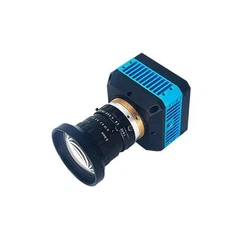
1) Thermal Imaging Bullet Cameras Compact and robust, our thermal bullet cameras offer discrete yet powerful thermal imaging capabilities. Ideal for fixed-point observation and security applications.
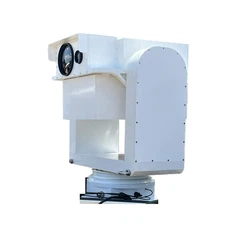
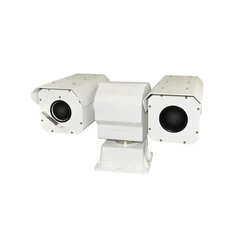
2) Dual Spectrum Pan-Tilt Systems: Combining thermal and daylight cameras in a flexible pan-tilt mount, these systems provide comprehensive situational awareness in all lighting conditions. Perfect for wide-area surveillance and critical infrastructure protection.
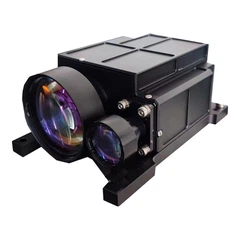
3) Multi-Sensor EO/IR system: Our stabilized EO/IR system integrate thermal and visible cameras, as well as other advanced sensors, with positioning systems, which offers exceptional image quality and precision for mobile applications.
4) Thermal Imaging Turret: Designed for maximum coverage and flexibility, our turrets provide 360-degree observation capabilities with integrated thermal and daylight imaging options.
5) Special purpose thermal imaging camera: those thermal cameras include anti-explosive, anti-corrosion, ruggedized design, high-temperature... thermal cameras ;
Our Product Features:
- IP/ETH based, to build a highly extensive surveillence network;
- ONVIF compatible, easy to be managed and merged into your current system;
- Highly customizable, free consultation: just tell us your requirements, our engineers will propose you the best suitable solution with variable configuration to reach to your mind;
Application Versatility of Thermal Imaging Camera
- Land/Rooftop -mount Observation: Enhance border security, perimeter protection, and wide-area surveillance with our long-range thermal imaging solutions.
- Marine Applications: Weather-resistant and stabilized systems for coastal monitoring, maritime security, and offshore operations.
- Vehicle Mounting: Ruggedized cameras and gimbals designed for integration on various vehicles, from patrol cars to armored vehicles, enhancing mobile reconnaissance capabilities.
Whether you need fixed installation cameras, mobile observation systems, or customized solutions, our thermal imaging product line offers the performance, reliability, and flexibility to meet the most demanding requirements in security, defense, and industrial applications.
Demo Video of our Thermal Imaging Observation System
- Long-range PTD series Real Test video
Video camera Configurations
- 2MP 50x vari-focal Daylight
- 640-512 12um VOX Uncooled plus 100mm lens, RTSP/IP network video output
- 384-288 12um VOX Uncooled plus 25mm lens, RTSP/IP network video output
- Control: PELCO-D/RS485 or Network
- Operations: Pallets (Pseudo-color)switchingt, Auto/Manual focusing/E-zooming etc.
Distances:
- Near buildings: 1-1.5 KM
- Far building: 3-4km
- Far mountains: 7-8km
-
![KBA12 Wide-Spectrum Dual-Sensor Fusion Camera Anti-explosive]() KBA12 Wide-Spectrum Dual-Sensor Fusion Camera Anti-explosiveThe KBA12 Mining Wide-Spectrum Dual-Sensor Fusion Camera is designed for high dust penetration, with a dust and water-repellent coating on the lens, ensuring clear imaging in high-dust...read more
KBA12 Wide-Spectrum Dual-Sensor Fusion Camera Anti-explosiveThe KBA12 Mining Wide-Spectrum Dual-Sensor Fusion Camera is designed for high dust penetration, with a dust and water-repellent coating on the lens, ensuring clear imaging in high-dust...read more -
![Ultra Long Range Multi-sensor Pantilt MWIR LRF Daylight Laser Pointer]() Ultra Long Range Multi-sensor Pantilt MWIR LRF Daylight L...SC-PTT620 Ultra long range dual spectrum Pan&Tilt EO system with LRF(Laser ranging unit) or Laser pointer or Laser illumination and tracker automatically capturing and (Tracking) object, such as...read more
Ultra Long Range Multi-sensor Pantilt MWIR LRF Daylight L...SC-PTT620 Ultra long range dual spectrum Pan&Tilt EO system with LRF(Laser ranging unit) or Laser pointer or Laser illumination and tracker automatically capturing and (Tracking) object, such as...read more -
![Long-range Uncooled Pan&Tilt Camera PTD Series]() Long-range Uncooled Pan&Tilt Camera PTD SeriesThis LWIR uncooled (MWIR cooled can be customized) system is applicable for Long-range focus observation and surveillance, at different scenarios, such as national/regional border, airport,...read more
Long-range Uncooled Pan&Tilt Camera PTD SeriesThis LWIR uncooled (MWIR cooled can be customized) system is applicable for Long-range focus observation and surveillance, at different scenarios, such as national/regional border, airport,...read more -
![Long Range Dual Spectrum Camera PTD64-300]() Long Range Dual Spectrum Camera PTD64-300An ultra-long range LWIR almost reach to the limit of uncooled thermal camera detection range.read more
Long Range Dual Spectrum Camera PTD64-300An ultra-long range LWIR almost reach to the limit of uncooled thermal camera detection range.read more -
![384 640 Middle Range Dual Spectrum PTZ System]() 384 640 Middle Range Dual Spectrum PTZ SystemThis 384x288 / 640x512 system is applicable for middle to long focus perimeter, border observation and video surveillance, at different scenarios, such as national/regional border, airport,...read more
384 640 Middle Range Dual Spectrum PTZ SystemThis 384x288 / 640x512 system is applicable for middle to long focus perimeter, border observation and video surveillance, at different scenarios, such as national/regional border, airport,...read more -
![Photoelectric Turret For Maritime Rescue]() Photoelectric Turret For Maritime RescueFeatures This product is a photoelectric turret that integrates observation capabilities and acquisition of target feature measurement data. The product has the ability to stabilize the visual...read more
Photoelectric Turret For Maritime RescueFeatures This product is a photoelectric turret that integrates observation capabilities and acquisition of target feature measurement data. The product has the ability to stabilize the visual...read more -
![Outdoor Thermal Camera]()
-
![Thermal Security Camera For Maritime Use]() Thermal Security Camera For Maritime UseCompared with SPD 30/60 series, SPD 32/62 also has a built-in heater and fan, as well as the damper option to avoid strong shocking during moving of vehicles. The SPD 32/62 series have IP 67...read more
Thermal Security Camera For Maritime UseCompared with SPD 30/60 series, SPD 32/62 also has a built-in heater and fan, as well as the damper option to avoid strong shocking during moving of vehicles. The SPD 32/62 series have IP 67...read more -
![Thermal Security Camera For Outdoor]() Thermal Security Camera For OutdoorThe SC-BMH3/6 series are budget solution of fixed on-site video surveillance bullet camera for CCTV.read more
Thermal Security Camera For OutdoorThe SC-BMH3/6 series are budget solution of fixed on-site video surveillance bullet camera for CCTV.read more -
![Thermal Security Camera Outdoor]() Thermal Security Camera OutdoorMiddle range Thermal security camera outdoor SC-PTD 30/60 Series, dual spectrum Pantilt.read more
Thermal Security Camera OutdoorMiddle range Thermal security camera outdoor SC-PTD 30/60 Series, dual spectrum Pantilt.read more -
![Thermal Video Monitoring Pan&Tilt Camera]() Thermal Video Monitoring Pan&Tilt CameraLong range Dual spectrum PTZ camera, with IR thermal camera and Daylight camera empowered.read more
Thermal Video Monitoring Pan&Tilt CameraLong range Dual spectrum PTZ camera, with IR thermal camera and Daylight camera empowered.read more -
![Thermal Surveillance Systems]() Thermal Surveillance SystemsLong range double spectrum PTZ camera forest fire prevention IR thermal cameraread more
Thermal Surveillance SystemsLong range double spectrum PTZ camera forest fire prevention IR thermal cameraread more


Why Choose Us
Our Factory
Founded in 2019 and located both in Beijing and Hangzhou city, IR-EO CAMERAS & SYSTEMS Co., Ltd is a system integrator and reseller of a large scope of InfraRed(IR) Electro-Optical (EO) cameras, including related their parts (e.g., electronic circuits and lenses, etc.).
Services
As a prominent solution provider, we also render consultancy and remote after-sales service to our valuable customers. We can help our potential customer to provide both highlevel and low-level system design, bring to our valuable customer the additional value-add services.
One-stop Solution
Cooperated with several elite partners in the industry, Sense&Com is dedicated in providing consultancy, integrated EO (Electro-Optics) product solution to our customers.
Rich experience
Taking advantage of the industry standards (such as ONVIF, etc.) and the sophisticated engineers, our integration work is now becoming more and more productive and effective, which bring more benefits to our customer by choosing the optimal solution, and which in turn, will convert to more positive effects to the economical profits.
Types of Thermal Imaging Camera
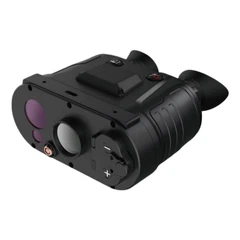
Handheld Thermal Cameras
Handheld Thermal Cameras, also known as point & shoot thermography, from FLIR are thermal imaging cameras suited for lots of applications. Among these are basic condition monitoring, hotspot inspection and visualizing all kinds of electrical-, mechanical- and building issues, such astracking down leaks in compressed air systems. These cameras shoot high-quality images with just one press on the button. Moreover these cameras have several functions for sharper images (with MSX®) and analytical possibilities (with Wi-Fi and GPS).
Fixed thermal cameras
Fixed thermal camerasfrom FLIR are thermal imaging cameras often applied in the automation. With these cameras you are able tocontinuously monitor conditions, to visualize and alarm potential hotspots for fire detection in waste bunkers and sheds and to measure temperatures in machine vision applications. These fixed-mounted cameras have some advanced functions. Think of built-in analytics, alarm possibilities and various streaming possibilities.


Gas detection cameras
Gas detection cameras, also called gasfinders are suited foroptical gas imagingmaking invisible gasses visible for inspectors in countless applications. Think for example ofvisualizing leaks of refrigerant gasses, SF6 (sulfur hexafluoride), CO2, carbon monoxide, etc.Furthermore, this camera will help you carry out preventive and periodic checks in the offshore, the metal production, at electricity plants and in the food and beverages industry. With these cameras, gasses can be located from a safe distance and in real-time. Moreover processes will be more productive, costs will be saved and less potentially dangerous situation will occur for inspectors.
Drones
Dronesfrom DJI are used to easily and quickly visualize large areas. Think for example ofsearching for the core and the size of a forest fire.or scanning installations at high-voltage substations. The drones are often provided with a built-in thermal imaging camera and are therefore a more efficient and more productive alternative to carrying out daily inspections manually.
Temperature range / value to be measured
The highest and lowest temperature required to be measured defines the temperature range required by the thermal camera. The range is the set of temperatures that the camera is capable of measuring.
It is very important when selecting a infrared camera to first know the range of temperatures that we are going to get in our application and that we need to measure.
Spectral range
The spectral range is the range of wavelengths that the thermal camera sensor is able to detect.
The spectral range is an important factor to consider when selecting a thermal camera and will depend on the target material and its emissivity. Emissivity is the parameter that determines the proportion of thermal radiation emitted by a surface or object due to its temperature.
To minimize errors and increase the accuracy of the measurement we have to choose the thermal camera with the shortest wavelength that can measure the temperature range of our application.
If we want to measure 600°C and we do not need to measure values less than 450°C, then we will choose a 1 micron camera (NIR camera). Although we can use an LWIR (7 to 14 microns), the temperature measurement will be more accurate with the shorter wavelength.
Sensitivity (NETD)
The thermal sensitivity (Noise Equivalent Temperature Difference, NETD) is equivalent to the smallest differential in temperature that is able to measure the infrared camera without being attributed to its own noise. Thermal sensitivity is equivalent to the thermal resolution of the camera (it is the minimum measurement value between two consecutive temperatures).
The more sensitive the detector (lower NETD), the finer the temperature details the thermal camera is able to display.
Conventional cameras have a NETD between 80mK and 100mK, while the cameras with the highest sensitivity can have 40mK at competitive prices or at 20mK or even 10mK for those with the highest performance (usually cooled and with high cost).
If the objectives to be measured have large temperature differences, a camera with a low NETD is probably not necessary.
Resolution
The resolution of the thermal camera sensor, also called detector, determines the quality of the rendered image. The resolution indicates the number of pixels in the detector. More pixels means higher resolution.
The higher the resolution of the detector, the sharper and more accurate each individual point in the image will be, allowing for more precise measurements and better decisions.
Higher resolution infrared cameras can measure smaller targets at a greater distance and create sharper thermal images for more accurate and reliable measurements.
Optics / Field of View (FOV)
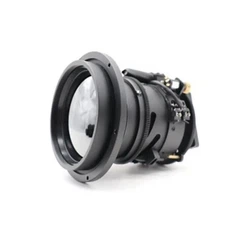
The field of view (FOV) is determined by the thermal camera lens and refers to the extent of the scene that the camera can capture. The greater the field of view, the greater the area or space that can be captured with the thermal camera.
Some cameras are available with multiple lenses for different types of applications. A camera that allows you to change the lens increases its versatility.
Knowing the distance at which the camera can be installed and the size of the smallest detail that we want to measure in the scene, allow us to identify the ideal optics for our application.
Focus
When it comes to capturing thermal images, having an accurate focus means not only getting a sharp image, but also reliably measuring temperature.
There are different focus systems for thermal imaging cameras:
Fixed focus
Manual focus
Autofocus
The highest performance thermal cameras generally have a manual or automatic focus.
Ambient temperature and environment
It is important to know the conditions of the environment where the thermal imaging camera will be finally installed. There are a large number of accessories to protect the camera in harsh industrial environments.
For example:
Air or water cooled housing for high temperature environments
Air purge devices for dusty environments to keep the lens clean
Housings for outdoor installation with internal heater.
Top Applications of Thermal Imaging Camera
Electrical wiring involves many discrete physical connections between cables and various connectors, and between connectors and mounting studs on equipment. The hallmark of a high-quality electrical connection is very low electrical resistance between the items joined by the connection. Continued electrical efficiency depends on this low contact resistance.
Passing a current through an electrical resistor of any sort dissipates some of the electrical power. The dissipated power manifests itself as heat. If the quality of the connection degrades, it becomes, in effect, an energy dissipating device as its electrical resistance increases. With increased resistance, the connector or joint exhibits a phenomenon called ohmic heating. Electricians and maintenance technicians use the thermographic camera to locate these hot spots in electrical panels and wiring. The heated electrical components appear as bright spots on a thermogram of the electrical panel.
Three-phase electrical equipment connects to the power supply through three wires. The current through each wire of the circuit should be equal in magnitude. However, it is possible to have an unbalance in the phases. In this case, the current in one of the phases differs significantly from the others. Consequently, there exists a temperature difference among the three connections. Thermographic cameras can illustrate this imbalance quite easily and dramatically. Consider, for a moment, the ease with which a thermographer can inspect overhead electrical connections or pole-mounted transformers from a remote, safe place on the ground.
Thermal imaging cameras are an indispensable tool for firefighters because of their ability to isolate points of interests from noise. In other words, thermal imagers help the firemen to see beyond the thick cloud of smoke and reveal what's behind it. This is a great help in finding people trapped inside a building or to identify an entry point for a rescue that has a relatively low temperature.
Nearly all the military groups in the world now sport thermal imaging technology in the form of integrated cameras, either mounted on the individual's gear or on vehicles. In recent years, thermal imagers are also increasingly used in home security. Since the thermal image can uncover hotspot even in pitch-black nights, spotting intruders hiding behind bushes or thin veils is easy.
Red-blooded animals produce heat. And when they are sick, the temperature often fluctuates. Thermal imagers are used to check the body temperature of animals, and to see whether they have a uniform surface temperature. These checkups are mostly performed on pets.
Mechanical installations require a certain amount of precision, or else, the machinery will be subjected to unwanted vibrations or undulating stresses. A thermal imager is able to pick up the heat created by such forces like friction. It gives an insight into the soundness of the machinery.
Infrared imaging is widely used in industries as a means to detect gas leaks. When an IR camera is pointed at a surface having a gas leak, it shows the temperature difference at the point of a leak caused by the pressure variance.
Heat loss to the surrounding environment is a function of temperature of the inside temperature. The heat loss increases nonlinearly with increased temperature because radiant losses can easily exceed convective and conductive losses at higher temperatures. For example, the refractory block installed inside of a kiln, boiler, or furnace is intended to minimize heat loss to the environment. Thermography can quickly locate any refractory defects. Another application for the technology is a blast furnace, with its massive amount of refractory.
Thermography finds further use in the inspection of concrete bridge decks and other paved surfaces. The defects in question are voids and delamination in and among the various layers of paving materials. The air or water contained within the interlaminar spaces of the pavement slab affects its overall thermal conductivity. The IR imager can detect these defects.
Painted surfaces become multilayer composites when a bridge or storage tank has been repainted numerous times during its service life. Here, too, the possibility of hidden rust, blistering, cracking, and other delamination defects between adjacent paint layers make objective visual inspection difficult. A technique called transient thermography returns objectivity to the evaluation of a potentially costly repainting project.

Natural light is composed of light waves of different wavelengths, with the visible range for the human eye being roughly 390-780nm. Electromagnetic waves shorter than 390nm and longer than 780nm cannot be sensed by the human eye. The electromagnetic waves with wavelengths less than 390nm are outside the visible light spectrum in purple and are called ultraviolet rays. The electromagnetic waves longer than 780nm are outside the visible light spectrum in red and are called infrared rays, with a band ranging from 780nm to 1mm.
Infrared rays are electromagnetic waves with wavelengths between microwaves and visible light with the same nature as radio waves and visible light. In nature, all objects with temperatures higher than absolute zero constantly emit infrared rays, which is called thermal radiation. The technology of thermal imaging video camera uses a micro-thermal radiation detector, optical imaging lens, and optical scanning system to receive the infrared radiation signal of the measured target. The focused infrared radiation energy distribution is reflected on the photosensitive element of the infrared detector through spectral filtering and spatial filtering. Thus, the thermal image of the measured object is scanned and focused on a unit or spectral detector. The detector converts the infrared radiation energy into an electrical signal, which is amplified and then converted into a standard video signal, displaying the thermal image on a television screen or monitor.
How to Maintain Thermal Imaging Camera
Maintenance after and during use
Thermal imaging cameras often have a lens protector. Make use of this too! Cover the lenses you are not using.
When you are not using the camera and are walking around with it, close the lens hood or put the lens cap on the camera. This avoids direct sunlight on the detector. Also, when you are not using the camera, make sure to point the lens at the ground.
Calibration check
Sometimes it is useful to carry out a calibration check. With this test we check whether the camera meets its specifications. This way you can be sure that the measurements are correct and within the error margins. A calibration check is cheaper than a full service. No changes are made to the curves in the camera itself.
Calibration – Adjustment
Were any deviations found during the calibration check? Then the camera goes to the manufacturer for a new calibration. This recalibration ensures that the camera again meets the accuracy requirements. The adjustment of a camera is always done by the manufacturer.
Contaminated lenses
It is not uncommon for the lens of a thermal imaging camera to get dirty from dust, gases or splashes of liquid. Fortunately, this is not a problem. First, the lens must be made dust-free. Try first with air and otherwise with a soft brush. Clean the lens with a lens cleaner that contains a high level of alcohol. You can do this with cotton wool. Rub in circles from the inside to the outside. These cleaning products are available from us.
Sphere in the screen
With interchangeable lenses, it is possible that a “sphere” appears in your image. This is usually caused by a dust in the optical path. This can also happen between the detector and the inside of the lens. Should you have a persistent sphere in the screen, remove the lens to see if there is any dust on the inside.
FAQ
Q: What is a thermal imaging camera used for?
Q: What is detected by thermal imaging cameras?
Q: Is it worth buying a thermal imaging camera?
Q: How accurate is thermal imaging?
Q: Can a phone detect thermal imaging?
Q: Do thermal imaging cameras need to be calibrated?
Q: What is a good resolution for a thermal imaging camera?
Q: How do I choose a camera resolution?
Q: How do I choose a camera quality?
Q: What material is thermographic camera?
IR-EO Cameras & Systems Co., Ltd. is one of the most professional thermal imaging camera manufacturers and suppliers in China, specialized in providing high quality customized service. We warmly welcome you to buy high-grade thermal imaging camera made in China here from our factory.