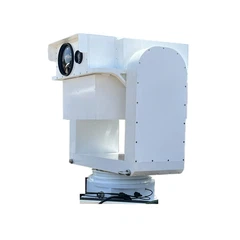
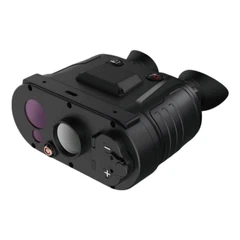
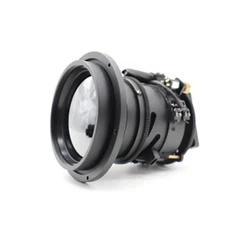
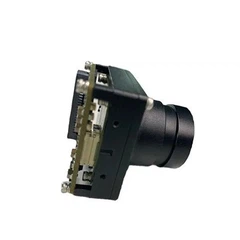
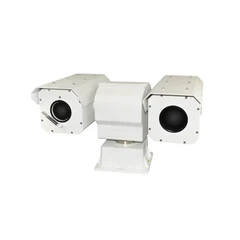
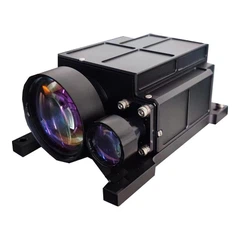
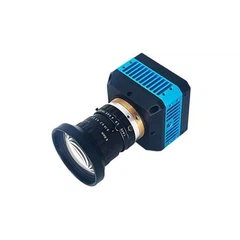

IREO CAM&SYSTEM has dedicated ourselves in the manufacturing of EO/IR camera parts of the C-UAV system for several years. However, we can provide a integrated solution of the completed solution. Please contact us for more information.
CONTENTS
- System Architecture Of C-UAV Systems
- Functions of C-UAV Systems
Unmanned Aerial Vehicles (UAVs), commonly known as drones, have become increasingly popular for both civilian and military applications. However, their widespread use has also raised concerns about security, privacy, and safety. This has led to the development of Counter-Unmanned Aerial Vehicle (C-UAV) systems, designed to detect, track, and neutralize unauthorized or hostile drones. In this article, we'll explore the architecture, functions, market trends, and applications of C-UAV systems.
System Architecture of C-UAV Systems
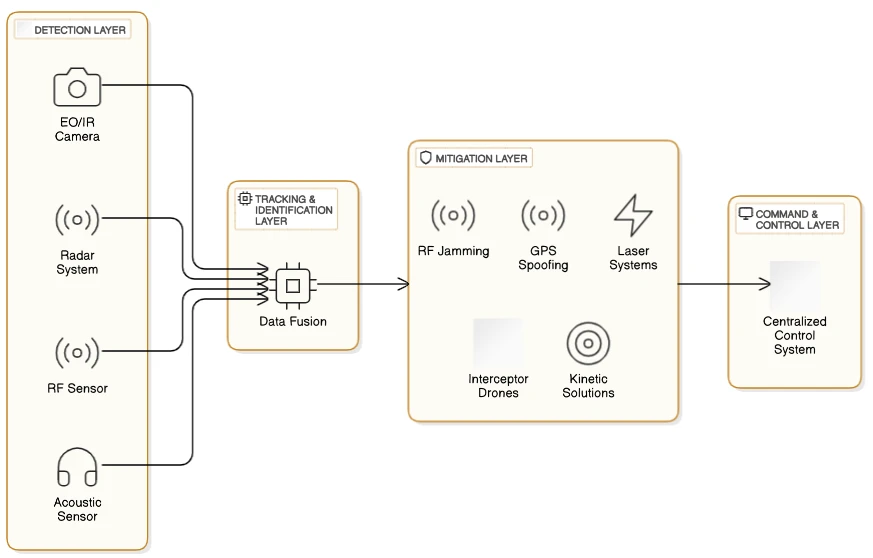
A typical C-UAV system consists of several integrated components that work together to provide comprehensive drone detection and mitigation capabilities. The architecture can be divided into four main layers:
1. Detection Layer
- Radar Systems: Detect drones by emitting radio waves and analyzing the reflected signals. Radar is effective for long-range detection but may struggle with small, low-flying drones.
- RF (Radio Frequency) Sensors: Identify drones by detecting their communication signals (e.g., control links, video feeds). RF sensors are particularly useful for detecting consumer-grade drones.
- Electro-Optical/Infrared (EO/IR) Cameras: Provide visual confirmation of drone threats using visible light and thermal imaging.
- Acoustic Sensors: Detect the unique sound signatures of drones, especially in urban environments where other sensors may be less effective.
2. Tracking and Identification Layer
- Data Fusion: Combines inputs from multiple sensors (radar, RF, EO/IR) to create a comprehensive picture of the drone threat.
- Artificial Intelligence (AI): Uses machine learning algorithms to classify and identify drones based on their size, shape, and behavior.
- Threat Assessment: Determines whether a detected drone poses a threat based on its flight path, speed, and proximity to sensitive areas.
3. Mitigation Layer
- Radio Frequency Jamming: Disrupts the communication link between the drone and its operator, forcing the drone to land or return to its origin.
- GPS Spoofing: Sends false GPS signals to confuse the drone's navigation system, causing it to deviate from its intended path.
- Laser Systems: Use high-energy lasers to physically disable or destroy drones.
- Interceptor Drones: Deploy specialized drones to capture or disable hostile UAVs mid-air.
- Kinetic Solutions: Use nets, projectiles, or other physical means to neutralize drones.
4. Command and Control Layer
- Centralized Control System: Integrates all components into a single interface for real-time monitoring and decision-making.
- User Interface: Provides operators with a clear view of the threat environment and tools to respond effectively.
- Automation: Enables autonomous operation of the C-UAV system, reducing the need for human intervention.
Functions of C-UAV Systems
C-UAV systems are designed to perform the following key functions:
- Detection: Identify the presence of drones within a defined area.
- Tracking: Monitor the drone's location, speed, and trajectory.
- Identification: Determine the type of drone and assess its threat level.
- Neutralization: Disable or destroy the drone using jamming, spoofing, or kinetic methods.
- Reporting: Provide detailed logs and analytics for post-event analysis.