

What you will Read In This Guide
Table of Contents
- Introduction
- Direct Drive Motors
- Servo Motors
- Common Gears and Worm Drives with Step Motors
- Harmonic Gear Drives
- Comparison Summary
- Conclusion
Introduction
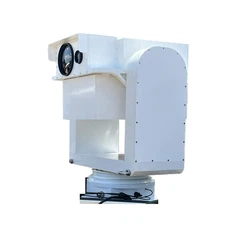
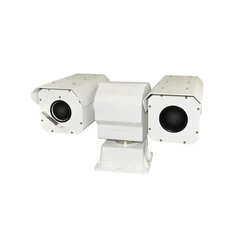
Electro-Optical/InfraRed (EO/IR) turrets and pan-tilt units are sophisticated systems essential for applications ranging from security surveillance to military and anti-drone operations. These systems integrate advanced motor and transmission designs to deliver rapid, precise, and stable operation in demanding environments. This in-depth guide explores various motor and transmission technologies, focusing on direct drive, servo motors, worm and step motors, harmonic drives, and stabilization subsystems, detailing their benefits, drawbacks, and application scenarios.
Direct Drive Motors
Direct drive motors, particularly brushless DC motors, are coupled directly to the load, eliminating intermediate transmission components like gearboxes. This design leads to high efficiency and precision by minimizing mechanical complexity.
Advantages
- Fast Response Times: The reduced mechanical inertia offers quick acceleration.
- High Precision: Low backlash results in accurate positioning.
- Low Maintenance: Fewer mechanical parts mean less wear and tear.
- Minimal Noise and Vibration: Simplified construction reduces operational disturbances.
Disadvantages
- Higher Initial Cost: Investment can be more substantial compared to geared systems.
- Limited Torque Range: Lacks gear reduction, potentially restricting torque in some applications.
Application Scenarios
- Anti-Drone Systems: Where rapid target engagement is crucial.
- High-Speed Tracking: Ideal for applications needing instantaneous response.

Servo Motors
Technology Overview
Servo motors are equipped with feedback systems, providing closed-loop control of position, speed, and torque. This feature makes them highly adaptable and precise. The Servo motors are integral in EO/IR systems due to their ability to provide precise control over position, speed, and torque. They utilize closed-loop control mechanisms, with the most widely adopted method being Proportional-Integral-Derivative (PID) control. This allows for fine adjustments in response to feedback from the system, ensuring high performance in demanding applications.
Advantages
- Exceptional Positioning Accuracy: Feedback allows for fine control.
- Versatile Speed and Torque Control: Suited for a range of dynamic conditions.
- Programmable Flexibility: Easily adapted to various operational needs.
Disadvantages
- Complex Control Systems: Requires sophisticated electronics and software.
- Higher Cost than Open-Loop Systems: Investment relative to simpler motors.
Application Scenarios
- Long-Range Surveillance: Where stability and precise adjustments are essential.
- Precision Tracking Operations: Especially in variable environmental conditions.
Common Gears and Worm Drives with Step Motors
Technology Overview
Gearboxes, especially worm gears, are utilized to multiply torque and manage speed. Step motors offer precise incremental movement, advantageous in applications with straightforward rotational motions.
Advantages
- Cost-Effective Solution: Affordable for applications with moderate precision and torque needs.
- Inbuilt Braking Capability: Worm gears inherently resist back-driving, maintaining positions effectively.
- Simple Precise Positioning: Step motors provide adequate precision for low-cost implementations.
Disadvantages
- Possible Gear Backlash: This can affect positioning accuracy.
- Position Loss under High Load: Step motors may slip, losing step count in turbulent settings.
Application Scenarios
- CCTV Surveillance Systems: Focused on balanced cost and performance.
- Entry-Level EO/IR Applications: Where budget constraints are key.


Harmonic Gear Drives
Technology Overview
Harmonic drives use a flexible spline and a wave generator to achieve high reduction ratios in a compact form, offering exceptional precision and torque control with minimal backlash.
Advantages
- High Precision and Zero Backlash: Ideal for applications that demand exact positioning.
- Compact and Lightweight: Particularly beneficial in size-constrained installations.
- High Torque Density: Delivers significant torque relative to size.
Disadvantages
- Higher Manufacturing Costs: Advanced and precise design elevates the cost.
- Requires Precise Assembly: Setup can be more complex due to intricate parts.
Application Scenarios
- Military EO/IR Systems: Designed for high-performance and space-constrained environments.
- Advanced Gimbal Systems: Where precision is critical.

Application Scenario Comparison Summary
Here's A summary table providing a comparative overview for your better understanding:
| Technology | Advantages | Disadvantages | Applications |
|---|---|---|---|
| Direct Drive | Fast response, high precision, low maintenance | Higher cost, limited torque without gearing | Anti-drone, high-speed tracking |
| Servo Motors | High accuracy, versatile control, adaptable | Complex control, higher cost than open-loop | Long-range surveillance, precision tracking |
| Worm Gears with Step Motors | Cost-effective, inherent locking, simple positioning | Possible backlash, position loss under load | CCTV, entry-level EO/IR systems |
| Harmonic Drives | High precision, compact, high torque density | Higher cost, precise assembly needed | Military EO/IR, advanced gimbals |
Conclusion
When designing or selecting EO/IR turret and pan-tilt systems, understanding the specific demands of the application is crucial for choosing the appropriate motor and transmission technology. Direct drive systems provide unparalleled responsiveness, making them suitable for dynamic applications like anti-drone systems. Servo motors offer precise control, advantageous for long-range surveillance, while worm gears paired with step motors deliver cost-effective solutions for applications like CCTV surveillance. Harmonic gear drives, with their zero-backlash and compact form, are ideal for high-performance military and space-constrained environments.
Through careful consideration of these technologies-along with factors such as budget, precision, operational environment, and payload capacity-professionals can tailor EO/IR solutions to meet the diverse needs of security, military, and civilian surveillance markets. This guide serves as a resource for informed decision-making, ensuring the selection of the most suitable technology for specific operational requirements, further facilitating dialogue between experts and clients seeking optimized EO/IR systems.
At IREOCAM, we are committed to helping our clients navigate these choices by providing expert advice and customized solutions tailored to your unique needs. Whether you are deploying a system for urban surveillance or remote border monitoring, our expertise ensures that you choose the right components to achieve peak performance and reliability.