

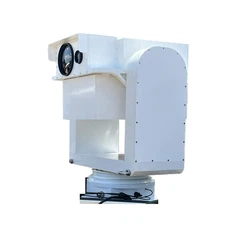
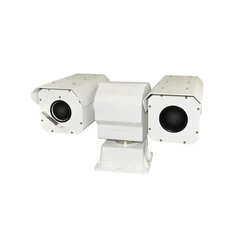
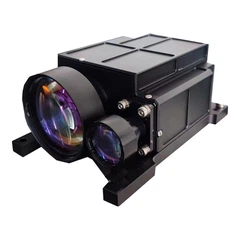
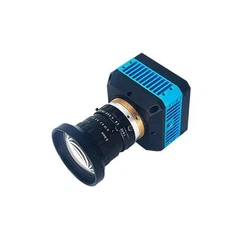


GL10 Series Online Gas Cloud Imaging Camera
Fixed-Mount PTZ Infrared Imaging for Continuous Gas Leak Detection & Localization
400+ VOC gas types detected
3 km max viewing...
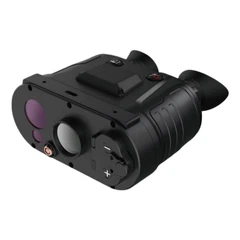
Handheld Portable Thermal Camera
What is Handheld/Portable Thermal Camera
Thermal Imaging Handheld/Portable Cameras are compact, mobile devices designed to capture and display thermal images. These cameras detect infrared radiation emitted by objects and convert it into a visible image, allowing users to see temperature differences.
They often have next features:
- Design: Compact and lightweight for easy carrying and handheld use, often are ruggedized for use in various environments
- Functionality: Capture real-time thermal images, Often include both thermal and visual cameras for image fusion, most of them may offer image and video recording capabilities
- Display: They have Built-in screen for immediate viewing of thermal images, some models offer smartphone connectivity for remote viewing
Our Handheld/Portable Thermal Cameras
Our Thermal binoculars provide superior heat detection in a compact form factor. Ideal for wildlife observation, search and rescue operations, and outdoor navigation, these devices offer:
- High-resolution thermal imaging
- Extended detection range
- Rugged, weather-resistant construction
- Long battery life for extended field use
2. Thermal Vision Weapon Sights, Scopes, and Clip-on Devices
Designed for precision and reliability, our thermal imaging attachments, they include:
- Dedicated thermal weapon sights with reticles
- Thermal scopes for long-range observation and targeting
- Clip-on thermal devices compatible with existing day optics
These products feature:
- Shock-resistant construction
- Quick start-up and calibration
- Multiple reticle options
- Integration with range finders and calculators
When every second counts and darkness is not an option, Fusion Vision Handhelds give you the edge. Combining thermal, low-light, and daylight imaging into one rugged, handheld system, these devices let you detect, identify, and document targets—day or night, rain or shine.
No more switching tools. No more blind spots. Just clear, actionable vision in the palm of your hand.
4.Multi-Sensor Reconnaissance Handheld Cameras
Our multi-sensor Reconnaissance handheld devices combine thermal imaging with other technologies for comprehensive situational awareness. Those sensors include:
- Integrated thermal and daylight cameras
- Laser rangefinder capabilities
- GPS for location tracking and mapping
- Digital magnetic compass
- Wireless connectivity for data sharing
Applications:
These versatile devices are suited for:
- Border patrol and law enforcement
- Military reconnaissance
- Search and rescue operations
- Industrial inspection and maintenance
5. Thermal vision/ Low-light goggles
Goggles are another type of portable devices, they designed primarily for helmet-mounted applications. These sophisticated devices offer unparalleled situational awareness and mobility for military, law enforcement, and specialized security operations.
If you are looking for Low-light goggles or sights/scopes other than thermal imaging, like using IIT(Image intensifier tube) or low-light CMOS, please refer to here Night Vision Camera.
Key features of our thermal imaging goggles include:
- Lightweight and compact design for reduced user fatigue
- Helmet-compatible mounting systems for easy integration
- High-resolution thermal sensors for clear image quality
- Wide field of view for enhanced situational awareness
- Adjustable ocular systems for comfortable viewing
- Dual-eye viewing options for improved depth perception
- Compatibility with existing night vision equipment
- Ruggedized construction for durability in harsh environments
- Extended battery life for prolonged operations
Applications:
- Military operations in low-light or no-light conditions
- Special forces and tactical team deployments
- Search and rescue missions in challenging environments
- Firefighting and emergency response
- Border patrol and perimeter security
Summary
Our thermal imaging handheld cameras offer unparalleled performance in a portable package, providing clear thermal vision in total darkness and through obscurants like smoke or fog. Whether for professional use or outdoor enthusiasts, our range of handheld thermal devices delivers the reliability and clarity needed in critical situations.
-
![Online Gas Cloud Imaging Camera]()
-
![Airborne Gas Leak Detector]() Airborne Gas Leak DetectorGL10AE Airborne Gas Leak Detectorread more
Airborne Gas Leak DetectorGL10AE Airborne Gas Leak Detectorread more
UAV-Mounted Infrared Gas Imaging Payload for Aerial Pipeline & Facility Inspection
320×256 cooled IR resolution
≤15 mK NETD @25°C
1.6 kg... -
![Single-Photon Quantum Gas LiDAR]() Single-Photon Quantum Gas LiDARGL-Q500 Photon Quantum Gas LiDARread more
Single-Photon Quantum Gas LiDARGL-Q500 Photon Quantum Gas LiDARread more
Single-Photon Quantum LiDAR for Continuous, Autonomous Methane Detection, Localization & Quantification
500 m max detection distance
360°×180° ... -
![Clip-on Thermal Imaging Riflescope TSC 6B]() Clip-on Thermal Imaging Riflescope TSC 6BThe TSC-6B is a compact front-mounted thermal imaging clip-on device designed for seamless working with daylight optical sights. It allows for quick conversion to thermal vision without requiring...read more
Clip-on Thermal Imaging Riflescope TSC 6BThe TSC-6B is a compact front-mounted thermal imaging clip-on device designed for seamless working with daylight optical sights. It allows for quick conversion to thermal vision without requiring...read more -
![Thermal Imaging Clip-On Device TSC 6A]() Thermal Imaging Clip-On Device TSC 6AThe TSC A series thermal imaging clip-on is a revolutionary hunting optoelectronic accessory designed for traditional optical sights.read more
Thermal Imaging Clip-On Device TSC 6AThe TSC A series thermal imaging clip-on is a revolutionary hunting optoelectronic accessory designed for traditional optical sights.read more -
![TSR2 Red Dot Infrared Dual Light Sight]() TSR2 Red Dot Infrared Dual Light SightThe TSR2 red dot infrared dual light sight replicates the classic holographic sight appearance, perfectly replacing holographic sights for day and night use. It adopts a unique patented technology...read more
TSR2 Red Dot Infrared Dual Light SightThe TSR2 red dot infrared dual light sight replicates the classic holographic sight appearance, perfectly replacing holographic sights for day and night use. It adopts a unique patented technology...read more -
![Easy-Port Mini Handheld Thermal Imager]() Easy-Port Mini Handheld Thermal ImagerThe Easy-Port EP series integrates a high-performance thermal imager (TI) with a handheld laser rangefinder (LRF), enabling hunters to identify targets at night and accurately measure distances....read more
Easy-Port Mini Handheld Thermal ImagerThe Easy-Port EP series integrates a high-performance thermal imager (TI) with a handheld laser rangefinder (LRF), enabling hunters to identify targets at night and accurately measure distances....read more -
![Nyxara N Series Multi-functional Thermal Vision Sight And Clip-on]() Nyxara N Series Multi-functional Thermal Vision Sight And...The Nyxara N- series is a revolutionary miniature optoelectronic system, weighing only 360 grams yet integrating four major tactical function modes.read more
Nyxara N Series Multi-functional Thermal Vision Sight And...The Nyxara N- series is a revolutionary miniature optoelectronic system, weighing only 360 grams yet integrating four major tactical function modes.read more -
![Thermal Fusion Monocular With LRF LP]() Thermal Fusion Monocular With LRF LPKey Featuresread more
Thermal Fusion Monocular With LRF LPKey Featuresread more
Three-in-one optics: IR + Daylight + CMOS (shared aperture)
Manual focus (daylight & CMOS)
LRF: Short press → distance in lower-left
Laser Pointer: Long... -
![Thermal Fusion Binocular With LRF LP]() Thermal Fusion Binocular With LRF LPKey Featuresread more
Thermal Fusion Binocular With LRF LPKey Featuresread more
Dual-channel binocular: IR (manual focus) + CMOS
LRF: Short press → distance display
Laser Pointer: Long press → red spot (CMOS/direct)
Photo & video... -
![Thermal Low Light Fusion Binocular With LRF]() Thermal Low Light Fusion Binocular With LRFApplicationsread more
Thermal Low Light Fusion Binocular With LRFApplicationsread more
Command & control posts
Evidence-grade surveillance
Counter-terrorism operations
Wildlife crime investigations
Disaster response intelligence... -
![Handheld Gas Leakage Detection]() Handheld Gas Leakage DetectionCompact and explosion-proof, this handheld gas leak detector is designed for mobile inspection in industrial environments. Equipped with high-sensitivity cooled/uncooled IR detectors, it...read more
Handheld Gas Leakage DetectionCompact and explosion-proof, this handheld gas leak detector is designed for mobile inspection in industrial environments. Equipped with high-sensitivity cooled/uncooled IR detectors, it...read more


Handheld thermal imaging equipments are portable devices that use infrared technology to capture and display temperature variations. These devices are used in many settings, including electrical, mechanical, and building inspections, as well as search and rescue operations. The features of handheld thermal imaging equipments include lightweight design, high resolution imaging, and user-friendly displays.
Why Choose Us
Our Factory
Founded in 2019 and located both in Beijing and Hangzhou city, IR-EO CAMERAS & SYSTEMS Co., Ltd is a system integrator and reseller of a large scope of InfraRed(IR) Electro-Optical (EO) cameras, including related their parts (e.g., electronic circuits and lenses, etc.).
Services
As a prominent solution provider, we also render consultancy and remote after-sales service to our valuable customers. We can help our potential customer to provide both highlevel and low-level system design, bring to our valuable customer the additional value-add services.
One-stop Solution
Cooperated with several elite partners in the industry, Sense&Com is dedicated in providing consultancy, integrated EO (Electro-Optics) product solution to our customers.
Rich experience
Taking advantage of the industry standards (such as ONVIF, etc.) and the sophisticated engineers, our integration work is now becoming more and more productive and effective, which bring more benefits to our customer by choosing the optimal solution, and which in turn, will convert to more positive effects to the economical profits.
Types of Handheld Thermal Camera
Long wave handheld thermal imager
Namely infrared wave length in the spectral range of 7-12 microns, this type is the most popular one at present due to its features of minimal atmospheric absorption.
Since the thermal imager works in the long-wave length and is not interfered by sunlight, it is especially suitable for on-site detection of equipment during the day, such as substations, high-voltage grid and other equipment testing.
Middle wavelength thermal cameras detect infrared wavelengths in 2-5 microns, and they deliver higher resolution with accurate readings. The images are not as detailed as those produced by long wavelength thermal cameras, due to an increased amount of atmospheric absorption within this spectral range.
Short-wave handheld thermal imager
Infrared wave length in the spectral range of 0.9-1.7 microns
On-line monitoring thermal imager
It is mainly used for online monitoring in industrial production.
Research infrared camera
Since the specification of this type infrared cameras are relatively high, it is mainly used for research and product development, most of which are used in universities, institutes etc.

Why Handheld Thermal Camera Develops so Fast in Recent Years
Handheld thermal cameras have seen explosive growth in recent years, driven by several key factors:
- Technological Advancements: Improved sensors, image processing, and miniaturization have led to more powerful, compact devices.
- Expanded Applications: From industrial inspections to wildlife observation, thermal imaging's versatility has been widely recognized.
- Military and Law Enforcement Applications: Increased defense spending and demand from police and security forces for advanced night vision, surveillance, and target acquisition capabilities have been major drivers of innovation and market growth.
- COVID-19 Impact: The pandemic accelerated adoption for fever screening, highlighting new safety applications.
- Affordability: Manufacturing improvements and increased demand have reduced costs, broadening accessibility.
- Smart Device Integration: Connectivity with smartphones has opened new markets and use cases.
- Energy Efficiency Focus: Growing emphasis on conservation has boosted demand in building and energy sectors.
- Increased R&D Investment: Both established companies and startups are driving innovation and competition.
These factors have resulted in more sophisticated, user-friendly, and affordable handheld thermal cameras, with continued growth expected across various industries.
How to Choose Handheld Thermal Camera
Resolution
FPA (Focal Plan Array): Microbolometer detectors pixels (number of pixels at the FPA) and Pixel pitch (Smaller pixel pitch results in higher resolution ).
Display Resolution: Typically measured in pixels, is equally important. It determines the clarity of the image presented to the user.
Focus & FOV (Field of View)
Focus: Most thermal imagers have a fixed focus, suitable for general-purpose use. Some models offer manual or automatic focus for specific applications.
Field of View (FOV): This determines the area the imager can see at a given distance.
Ruggdize
Housing material: Durable materials like magnesium or polymer alloys protect the device from impacts.
IP rating: This indicates the device's resistance to water and dust. Higher IP ratings mean better protection.
Shock and vibration resistance: Withstand drops, bumps, and vibrations.
Battery
Battery type: we use rechargeable lithium-ion batteries.
Battery capacity: Measured in milliampere-hours (mAh), this indicates battery life. Higher capacity means longer runtime.
Battery life;
Battery charging: we offer quick charging or interchangeable batteries.
What Are the Components of a Handheld Thermal Camera
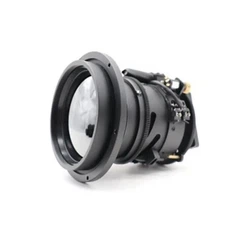
Objective Lens
The design of an objective lens and its parameters significantly influence the performance of a thermal camera device. The focal length of the objective lens directly influences the magnification of the unit (the bigger focal length, the bigger magnification), the field of view (decreases when focal length increases) and detection range.
One can say that the detection range directly depends on the focal length of the objective lens – the bigger focal length, the longer detection range (if the thermal sensor remains the same). The increase of focal length leads to an increase of magnification and a decrease in the field of view.
That is why when designing optical device it is necessary to take into account the tasks that the device has to perform – detect the object at long ranges and identify it due to its high magnification or find object fast due to its wide field of view
The most widely spread, but not the only, material used for manufacturing objective lenses of therma camera devices is single-crystal germanium, chalcogenide glass is also commonly used. To a certain extent sapphire, zinc selenide, silicon and polyethene also possess transmissivity in the MWIR and LWIR ranges.
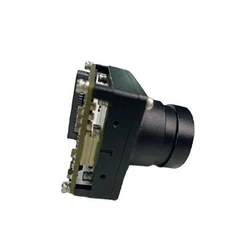
Thermal Sensor (Microbolometer)
The photosensitive element of a thermal camera unit is a two-dimensional array of photodetectors – the focal plane array (FPA) and is based on various semiconductor materials. There are numerous technologies for manufacturing infrared-sensitive elements, however in the civilian field bolometers (microbolometers) prevail.
The microbolometer is a detector of infrared radiation that registers the change of electrical conductivity of a sensitive element when heated during radiation absorption.
Microbolometers are subdivided into classes depending on what sensitive material is used, this could be vanadium oxide (VOx) or amorphous silicon (α-Si).
The sensitive material absorbs infrared radiation and as a result, according to the law of energy conservation, the sensitive area of a pixel (single photosensitive element) is heated. The internal electric conductivity of an element alters and these changes are registered. The result is a monochrome or colour visualization of temperature image on the display of the unit. It is worth mentioning, that colour palettes on the screen fully depend on the software element of a thermal camera device.
Electronic Processing Unit
The electronic processing unit usually consists of one or several printed circuit boards (depending on the design of the unit), with specialized microcircuits responsible for processing the signal from the sensor and passing it further to display where an image of temperature distribution is formed. The boards also contain main control elements of device and power distribution circuits.
Microdisplay & Eyepiece
Since the majority of hunting thermal imagers use microdisplays, it is necessary to use an eyepiece for image viewing which operates as a magnifying glass and allows to view the magnified image comfortably.
Most commonly used are liquid crystal displays of a transmissive type (where the display is lit up from the reverse side) or OLED displays (when an electric current is applied its substance starts emitting light).
The use of OLED displays has several advantages: the ability to use the device in low temperatures, higher image brightness and image contrast, more simple and reliable design (no backlight source as in LCD). Apart from LCD and OLED displays, LCOS (Liquid Crystal on Silicone) displays can also be used, which are a variety of reflective type LCDs.
How Handheld Thermal Camera Work
Thermal cameras may seem complicated, but they are actually quite simple in their basic design. A thermal camera consists of five main components: an optic system, a detector, an amplifier, a signal processing unit, and a display.
The optic system is responsible for focusing the infrared radiation onto the detector, which is made up of an array of pixels that can detect the radiation and convert it into an electrical signal. The amplifier increases the electrical signal from the detector, and the signal processing unit converts the amplified signal into an image that can be displayed on the camera's screen.
Capturing thermal images involves using infrared radiation, which is emitted by all objects with a temperature above absolute zero. This radiation is invisible to the human eye, but a thermal camera can detect it and create a visual representation of the temperature differences in the scene.
The camera can capture thermal images by detecting the infrared radiation and converting it into a visual image. This process involves assigning colors to different temperature ranges, with cooler temperatures appearing blue or green, and warmer temperatures appearing red, orange, or yellow.

10 Things You Can Do with a Handheld Thermal Camera
Detect energy loss in buildings
One of the most common uses for thermal cameras is to detect energy loss in buildings. By using a thermal camera to scan the walls, floors, and ceilings of a building, you can easily identify areas where heat is escaping. This can help you pinpoint areas where you need to add insulation, seal drafts, or make other improvements to improve energy efficiency.
Find electrical faults
Thermal cameras are also great for finding electrical faults. You can identify hotspots that may be indicative of a problem. Scanning electrical equipment such as electrical panels and other components, with a thermal camera can help you identify potential electrical hazards before they become serious issues. This can help prevent electrical fires and ensure that equipment is running efficiently.
Inspect HVAC systems
Thermal cameras are also useful for inspecting HVAC systems. By scanning ductwork and other components with a thermal camera, you can identify areas where there may be leaks or other issues. This can help you improve the performance of your HVAC system, leading to better energy efficiency and lower costs.
Plumbing Inspections
Thermal cameras can also be used in plumbing inspections. They can detect leaks in pipes and other components, which can help prevent water damage and mold growth. This makes them an essential tool for plumbers who want to ensure that a building's plumbing system is working efficiently.
Wildlife Observation
Thermal cameras are also useful for finding wildlife. By scanning a forest or other natural area with a thermal camera, you can identify areas where animals may be hiding. This can be especially useful for wildlife researchers, conservationists, and outdoor enthusiasts.
Identify hotspots in mechanical systems
Thermal cameras are great for identifying hotspots in mechanical systems. By scanning engines, motors, and other mechanical equipment with a thermal camera, you can identify areas where there may be friction or other issues. This can help you identify potential mechanical problems before they cause serious damage.
Agriculture
Thermal cameras can also be used in agriculture. They can be used to detect crop stress and other issues that might not be visible to the naked eye. This can help farmers identify issues early on and take the necessary steps to address them. This can improve crop yields and reduce crop losses. By scanning fields with a thermal camera, you can identify areas where crops may be stressed or diseased. This can help you identify potential problems before they spread, leading to higher crop yields and better profits.
Find missing pets
Another great use for thermal cameras is to find missing pets, you can identify areas where pets may be hiding. This can be especially useful for pet owners who have lost a pet and are searching for it.
Law Enforcement
Thermal cameras can be used to detect suspects in the dark or poor light conditions. This makes them an excellent tool to capture images of suspects or track their movements. Thermal cameras can also be used to identify intruders. By scanning a property with a thermal camera, you can identify areas where there may be unauthorized individuals.
Detect water leaks
By scanning walls, floors, and ceilings with a thermal camera, you can identify areas where moisture is present. This can help you find leaks that may be hidden behind walls or other obstacles and identify potential roofing problems.
Handheld Thermal Camera Maintenance Methods and Precautions
Maintenance method
To avoid damage to the thermal camera, first use compressed air to remove large particles of dust attached to the inside and outside of the thermal camera, and then wipe it off with a clean, soft cloth. When cleaning the camera lens, gently wipe the lens with a soft cotton cloth dampened with a little non-corrosive solution or a mild diluted soap solution. When cleaning the thermal camera body, use a clean, slightly damp cotton cloth to gently wipe, if necessary, soak the cloth with a solution of water and a small amount of mild soap before wiping. When the use is completed, the thermal camera should be covered with the lens cover as soon as possible, and stored in the carrying case to avoid dust. After the thermal camera has been used for a certain number of years, it needs to be calibrated. Generally, it needs to be calibrated in about 2 years under normal use.
Maintenance precautions
First, do not use too much force when wiping the thermal camera to avoid damage to the thermal camera.
Second, when wiping the lens of the thermal camera, it is forbidden to completely immerse the cotton cloth in the liquid. The lens is the information transmission window, and the maintenance of the lens is very important.
Third, when wiping the camera body, be careful not to use strong acid or strong alkaline detergent for cleaning. Also, remember not to place the thermal camera in a cool and humid place.
Fourth, to avoid damage to the thermal camera, it is necessary to ensure that the working environment does not exceed the working tolerance limit of the thermal camera equipment.
FAQ
Q: What is the purpose of a thermal camera?
A: In essence, a thermal imaging device can detect and visualize heat anomalies that could indicate a range of potential issues, from equipment malfunctions to security threats. By doing so, it plays an invaluable role in preventive maintenance, proactive troubleshooting, and efficient resource management.
Q: What is handheld thermal imager?
A: Handheld thermal cameras. Troubleshooting and line inspection. Easily see potential problems with precisely blended IR and thermal imaging–with up to 5MP visual camera, up to 320 x 240 resolution (76,800 pixels), and a large 3.5 inch LCD screen.
Q: What is the difference between a thermal camera and a normal camera?
A: Normal cameras capture visible light to create detailed visual representations, while thermal cameras detect and visualize thermal energy emitted by objects, revealing temperature patterns and anomalies. Both camera types serve specific purposes and find applications across various industries.
Q: What can a thermal camera detect?
A: Thermal imaging cameras detect the surface temperature of the first object in their line of sight. By pointing it at a wall or other solid surface, it will measure the heat radiated outward.
Q: Can a thermal camera see through walls?
A: No, thermal cameras cannot “see” through walls or concrete. However, if there is a hot or cold pipe within the wall, it's likely a thermal camera will pick up on this. Thermal cameras do not see through solid objects. Instead, they detect the subtle heat signatures that transmit from internal elements through barriers.
Q: Can a thermal camera see hot air?
A: The air that surrounds us is one of the few materials that are transmissive to infrared radiation. Because of this, we cannot measure the temperature of the air with an IR camera. We must pay attention to the telltale thermal patterns that show us the effects of the air to find air leakage pathways.
Q: How to detect leak with thermal camera?
A: If there is water or extra moisture, you may see temperature fluctuations. On the camera's display, these temperature differences will show up as cool areas. Any possible signs of a water leak should be noted and looked into further.
Q: How do you read a thermal camera?
A: Thermal imaging cameras use color to show the relative temperature of objects: cold is purple, moderate is red, and hot is yellow. In the winter, purple spots inside your home indicate a lack of air sealing or insulation. In the summer, these spots would appear yellow instead.
Q: How far away can a thermal camera see?
A: Depending on the camera configuration chosen it may be possible to detect humans beyond 15 km distance, ground vehicles or small boats beyond 20 km, larger ships or vessels and aircraft beyond 30 km.
Q: Do thermal cameras need calibration?
A: Thermal camera calibration is not merely a technical requirement; it is an integral part of the thermal imaging process.
IR-EO Cameras & Systems Co., Ltd. is one of the most professional handheld portable thermal camera manufacturers and suppliers in China, specialized in providing high quality customized service. We warmly welcome you to buy high-grade handheld portable thermal camera made in China here from our factory.