

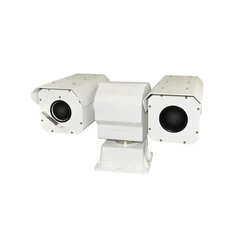
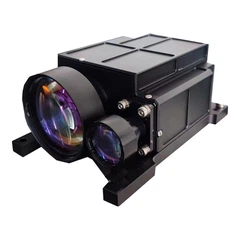
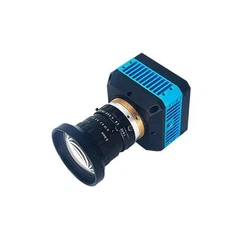

Thermal Sights Scopes Clip-on
What is Thermal Sights & Scopes
Thermal sights are designed to be mounted directly to your firearm, while thermal scopes are often designed as stand-alone observation devices, it means that they can be handheld or mounted.
Generally, thermal scopes have addtional features, like that they often have a wider field of view for scanning larger areas, and detailed imaging and additional features for analysis, while thermal sight are optimized for rapid target acquisition and aiming, they often have reticles or crosshairs for precise aiming.
There's also Clip-on scope for front mountingm and Red-Dot sight for special usage, please check the text below for details.
Both of them can be applied on various purpose for surveillance, hunting, or other applications where detecting heat signatures.
Advantages of Our Thermal Sights and Scopes
- Visibility in low-light and no-light conditions;
- Detection of heat Targets, especially those behind thin obstructions, like foliages, forests...
- Long-range detection: Can detect heat signatures from considerable distances
- Effective for surveillance and reconnaissance
- All-weather functioning: works under various weather conditions, including rain and snow
- Passive operation: No emition of any detectable signals, maintaining stealth
- Versatility: Useful in military, law enforcement, search and rescue, and wildlife observation
- Energy efficiency assessment: Identifying heat leaks in buildings or industrial equipment
- Enhanced situational awareness: Provide information not visible to the naked eye
- Non-invasive inspection: Allow for examination of equipment or structures without physical contact
What is a Thermal Clip-on device?
A thermal clip-on device is an type of thermal vision sights that can be attached to existing optical sights or scopes to add thermal imaging capabilities. It helps to convert a standard day optic into a thermal imaging system, and allows users to switch between regular and thermal vision without changing the entire sight.
In some countries where people should consider legality of hunting and firearms regulation, the clipe-on devices are more popular, and therefore, are compromised to be used since they can only work with optical scopes and can be detached/ attached easily ;
Below listed our models of the most advance clip-on device as a forward mounting scope
Clip-on Thermal Imaging Riflescope TSC 6B
Thermal Imaging Clip-On Device TSC 6A
What is a Red-Dot (Thermal Vision) Sight?
Red dot sights have become one of the most popular optics for modern firearms, transforming how shooters acquire targets quickly and accurately. These non-magnifying reflector (reflex) sights project an illuminated red (or sometimes green) dot onto a lens, serving as an intuitive point of aim. The dot remains parallax-free, meaning it stays aligned with the barrel regardless of minor eye position changes - just place the dot on target and fire.
The primary advantages over traditional iron sights are speed and ease of use. Red dots enable both-eyes-open shooting, providing superior situational awareness and faster target transitions. They excel in low-light conditions with adjustable brightness and perform exceptionally well for close- to medium-range engagements, from self-defense and competitive shooting to tactical and hunting applications.
Please click to visit our Red Dot Dual Vision Thermal sight
Compared to classic sights, red dots offer a clearer, less obstructed view and dramatically improve accuracy for most users, especially under stress:

-
![Clip-on Thermal Imaging Riflescope TSC 6B]() Clip-on Thermal Imaging Riflescope TSC 6BThe TSC-6B is a compact front-mounted thermal imaging clip-on device designed for seamless working with daylight optical sights. It allows for quick conversion to thermal vision without requiring...read more
Clip-on Thermal Imaging Riflescope TSC 6BThe TSC-6B is a compact front-mounted thermal imaging clip-on device designed for seamless working with daylight optical sights. It allows for quick conversion to thermal vision without requiring...read more -
![Thermal Imaging Clip-On Device TSC 6A]() Thermal Imaging Clip-On Device TSC 6AThe TSC A series thermal imaging clip-on is a revolutionary hunting optoelectronic accessory designed for traditional optical sights.read more
Thermal Imaging Clip-On Device TSC 6AThe TSC A series thermal imaging clip-on is a revolutionary hunting optoelectronic accessory designed for traditional optical sights.read more -
![Nyxara N Series Multi-functional Thermal Vision Sight And Clip-on]() Nyxara N Series Multi-functional Thermal Vision Sight And...The Nyxara N- series is a revolutionary miniature optoelectronic system, weighing only 360 grams yet integrating four major tactical function modes.read more
Nyxara N Series Multi-functional Thermal Vision Sight And...The Nyxara N- series is a revolutionary miniature optoelectronic system, weighing only 360 grams yet integrating four major tactical function modes.read more -
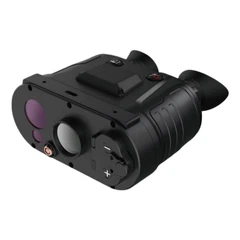
![Multi-Functional Handheld Thermal Vision Device]() Multi-Functional Handheld Thermal Vision DeviceThe thermal imager is a very compact and light weight,multifunctional imaging device, it can be used as either helmet-mounted, handheld, Clip-on, and a normal thermal vision sight. It can be used...read more
Multi-Functional Handheld Thermal Vision DeviceThe thermal imager is a very compact and light weight,multifunctional imaging device, it can be used as either helmet-mounted, handheld, Clip-on, and a normal thermal vision sight. It can be used...read more -
![384 640 Uncooled Thermal Vision Tube Model]() 384 640 Uncooled Thermal Vision Tube ModelTST 3/6 series are compact designed and lightweight multi-functional thermal weapon tube sights with ranging function (optional, up to 1200m). Empowered by the advanced shutter-free technology, it...read more
384 640 Uncooled Thermal Vision Tube ModelTST 3/6 series are compact designed and lightweight multi-functional thermal weapon tube sights with ranging function (optional, up to 1200m). Empowered by the advanced shutter-free technology, it...read more -
![384 640 Uncooled Thermal Vision Sight with 5D joystick]() 384 640 Uncooled Thermal Vision Sight with 5D joystickTSA series are compact and lightweight multi-functional thermal weapon sights. With advanced shutter-free and 5D joystick operating technology, it has the features of high sensitivity with ultra...read more
384 640 Uncooled Thermal Vision Sight with 5D joystickTSA series are compact and lightweight multi-functional thermal weapon sights. With advanced shutter-free and 5D joystick operating technology, it has the features of high sensitivity with ultra...read more -
![640 384 Uncooled Thermal Vision Sight Compact Model]() 640 384 Uncooled Thermal Vision Sight Compact ModelTSB 3/6 series are compact designed and lightweight multi-functional thermal weapon sights. With advanced shutter-free technology, it has the features of high sensitivity, high refresh rate and...read more
640 384 Uncooled Thermal Vision Sight Compact ModelTSB 3/6 series are compact designed and lightweight multi-functional thermal weapon sights. With advanced shutter-free technology, it has the features of high sensitivity, high refresh rate and...read more -
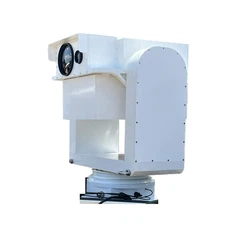
![Multi-purpose RCWS Remote Control Weapon Site System]() Multi-purpose RCWS Remote Control Weapon Site SystemThis is a multi-purpose reconnaissance system which has integrated thermal image camera (TI), visible light camera (VIS) and laser ranger finder (LRF).read more
Multi-purpose RCWS Remote Control Weapon Site SystemThis is a multi-purpose reconnaissance system which has integrated thermal image camera (TI), visible light camera (VIS) and laser ranger finder (LRF).read more -
![384 640 Uncooled Thermal Vision Sight]() 384 640 Uncooled Thermal Vision SightTSA series are compact and lightweight multi-functional thermal weapon sights. With advanced shutter-free technology, it has the features of high sensitivity, high refresh rate and high stability.read more
384 640 Uncooled Thermal Vision SightTSA series are compact and lightweight multi-functional thermal weapon sights. With advanced shutter-free technology, it has the features of high sensitivity, high refresh rate and high stability.read more -
![384 640 Uncooled Thermal Vision Sight Compact Model]() 384 640 Uncooled Thermal Vision Sight Compact ModelTSB series are compact designed and lightweight multi-functional thermal weapon sights. With advanced shutter-free technology, it has the features of high sensitivity, high refresh rate and high...read more
384 640 Uncooled Thermal Vision Sight Compact ModelTSB series are compact designed and lightweight multi-functional thermal weapon sights. With advanced shutter-free technology, it has the features of high sensitivity, high refresh rate and high...read more


Why Choose Us
Our Factory
Founded in 2019 and located both in Beijing and Hangzhou city, IR-EO CAMERAS & SYSTEMS Co., Ltd is a system integrator and reseller of a large scope of InfraRed(IR) Electro-Optical (EO) cameras, including related their parts (e.g., electronic circuits and lenses, etc.).
Services
As a prominent solution provider, we also render consultancy and remote after-sales service to our valuable customers. We can help our potential customer to provide both highlevel and low-level system design, bring to our valuable customer the additional value-add services.
One-stop Solution
Cooperated with several elite partners in the industry, Sense&Com is dedicated in providing consultancy, integrated EO (Electro-Optics) product solution to our customers.
Rich experience
Taking advantage of the industry standards (such as ONVIF, etc.) and the sophisticated engineers, our integration work is now becoming more and more productive and effective, which bring more benefits to our customer by choosing the optimal solution, and which in turn, will convert to more positive effects to the economical profits.
Thermal Sensors
Thermal sensors detect the infrared light and with the help of the processor, convert it into visible pixels. Different thermal sensors are more or less affordable depending on the quality of the sensor itself. The quality of the sensor is commonly determined by the number of pixels a sensor has. This is known as sensor resolution. The more pixels or the higher the pixel density, the better the resolution will be.
A benefit of having a higher resolution is that you'll have better images when using optical zoom features.
Lower resolution or entry-level cameras are great for their price within closer ranges. As the resolution increases, it becomes easier to detect temperature variations at further distances.
Putting two cameras with two different resolutions and lens sizes is the best way to visually notice the difference.
Optics and Lenses
Lens sizes help collect the light and direct it toward your thermal sensor so it can do all of its magic. When deciding which Thermal scope to go for it's important to pay attention to the lens size.
A smaller lens size will give you a wider field of view (How much of the landscape you can see within the frame of your scope) compared to something with a larger lens.
But a smaller lens size will also mean you will have a smaller base magnification compared to a thermal scope with a larger lens.
Image Processing
These thermal scopes like digital cameras are essentially small computers capable of rendering images and providing additional user interfacing features and functions.
The image processor quality is important in providing good quality images on your display, and in making sure your frame rate and refresh rate are good so you can get a live feed of everything your sensor is picking up.
A quality Image processor makes it possible to provide valuable software updates and the ability to add additional display features in the future as they're developed.
Display Technology
Having a higher-quality display with a good refresh rate Is very important to ensure you have a smooth image, especially with moving targets and visual identification at further distances.
Both your Image processor and your digital display work hand-in-hand in providing a smooth video feed while using your thermal scope.
Video and Audio Recording
Nearly all of AGM's Thermal Imaging Devices along with many others in the industry come equipped with the ability to take photos, video, and/or audio recording.
Each device equipped with video and audio recording typically comes with 64 GB of internal memory.

The difference between thermal imaging and night vision is particularly confusing to many people. Both thermal scopes and night vision scopes serve the same purpose, which is enhanced visibility, but that's where the common ground ends.
The biggest difference between the two, and the factor that determines their ultimate usefulness, is the technology that each uses to perform its function.
Night vision scopes take existing light, no matter how tiny, and amplify it. This can be moonlight, starlight, or even a single LED status light on an appliance or outdoor fixture. They're great for low light, but not absolute darkness, and they can be affected by smoke, fog, or even too much light.
On the other hand, thermal scopes read the heat signature of each object in the detection field and are unaffected by lighting conditions, fog, and standard smoke. They can operate in complete pitch-dark, and through some light obstacles that thwart night vision. However, thermal scopes generally have shorter ranges, since they struggle to provide the same level of detail as night vision, making long-distance target differentiation difficult.
Factors to Consider When Choosing a Thermal Sights
The sensor resolution of your thermal scope is the most important consideration when selecting a thermal imaging riflescope. A high-resolution image that appears on display should possess a crisp and precise definition of an object. The best cores in high-end optics now provide 640×512 resolution while the less expensive, but very good optics provide a 384×288 or similar resolution. Generally speaking, the higher the resolution, the better the image quality.
The pixel pitch is a measurement of the distance between the pixels of the digital image in the thermal sensor. The measuring unit is a micrometer, commonly called a micron. Today, most thermal optics are 12 to 17 microns, with the lower the number being the best quality.
Thermal sensitivity or Noise Equivalent Temperature Difference (NETD) indicates the ability of the thermal detector to recognize the smallest temperature difference of your target.
The smaller the NETD is, the more sensitivity you will get. If the targets you need to measure typically have wide temperature differences, a camera with a low NETD probably isn't necessary.
Field of View is determined by the camera lens, and is the extent of a scene that the camera will see at any given moment. For work being done close-up, you need a lens with a wide angle FOV. For long distance work, you need a telephoto lens.
Thermal scopes have different types of display, including Liquid Crystal Displays (LCD), organic light-emitting diode (OLED) or active-matrix organic light-emitting diode (AMOLED). The displays of OLED and AMOLED are generally applied in newer and higher quality scopes which provide outstanding clarity. The ThermTec thermal scopes use AMOLED displays for better performance in extreme conditions with temperatures ranging from -20°to +50°.
The detection range for thermal scopes refers to the distance to which you can get a clear image. There are hunting scopes that can provide you a clear image for distances as far as 4,000 yards.
The magnification defines a thermal scope's ability to zoom in on what you are looking at. The ability of scope to magnify the image affects its resolution. The two features are indirectly proportional to each other. The higher the magnification, the more it affects the resolution of the image you can see through the scope.
How Do You Sight in a Thermal Scope In
It's important to understand your scope. Unlike traditional scopes (typically with windage and elevation turrets), thermal scopes don't normally have those, so you'll need to learn how to make digital adjustments. It might be worth checking out the owners manual before you step out on the range to sight your scope. When sighting in, you need to use the exact calibre rounds you plan to use for real as bullet drop affects different calibre rounds in different ways. Normal paper targets won't do the job for sighting in your thermal scope, so you should invest in a thermal target (they glow under thermal lighting and are easy to see with a thermal scope).
Or if you're on a budget, you just need to make sure you generate heat around your target. Hand warmers are often suggested as a cheap and easy way to generate the heat you need in order to be able to see your target easily and clearly. Once you're ready to step out onto the range you'll need to set your target up. Since thermal scopes are most often on rifles you would normally set the distance at 100 metres. Now it's time to take your shots. Unless you are a very experienced shooter a minimum of five shots is advised. Once you've taken your shots head out to your target and make sure your shots are clustered together. Then it's time to adjust your scope vertically and horizontally to get close to the bullseye. Once you've made your adjustments head back to the starting block and take further shots. If all the shots are clustered close to the bullseye, you've successfully sighted your scope in. If not, repeat the process until you are able to do so.


How Does Thermal Sights Work
Various military operations, night hunting, and dozens of other events held at night would be inaccessible without modern thermal sights. These devices can uniquely form a thermal image of the examined area, which people use to detect and identify animals, people, various equipment, and surrounding objects. Thanks to this, the user receives valuable information, which he uses to achieve his goals. Despite their popularity, thermal scopes are relatively simple devices. At the same time, simplicity can be traced in everything, including the principle of action.
The work of thermal sights begins with collecting infrared radiation from all the objects surrounding the user. This work is done by the lens of optics, which is one of the critical elements of the design. Based on the received information, a thermal image is created. To do this, infrared rays are focused and fall on particular detectors. The latter always has a high sensitivity, so they do not let through even the most subtle radiation. These design details help the sight form the so-called thermogram. After that, it is transformed into electrical impulses sent to the electronic system of optics. There they are subjected to various influences, which makes it possible to obtain a thermal image visible to a person at the output. It is sent to the sight display, often built into the eyepiece. The final shot makes it possible to see the boundaries of various objects and the degree of heating of their areas. The higher the temperature, the brighter the color will be. Strongly heated regions are distinguished by warm shades (for example, red, orange, and various variations of yellow), and less hot areas are characterized by cold ones (green, blue, and others).
Things That Thermal Sights Can See Through
Thin Fabrics: Thermal sights excel at detecting body heat through light, non-insulated clothing such as a single layer of cotton or linen. This capability extends to materials like sheets or curtains, allowing for the detection of heat signatures even when subjects are partially obscured.
Smoke and Fog: Thermal sights are invaluable in environments where visibility is severely reduced due to smoke from fires or thick fog. Firefighters, for instance, use thermal imaging to locate hotspots and individuals trapped in smoke-filled structures, significantly enhancing rescue operations.
Brush and Light Foliage: In natural settings, thermal imaging can see through sparse or thin foliage, aiding hunters and nature enthusiasts in spotting wildlife. This ability is also critical in military operations, where identifying threats hidden in areas with light vegetation can be life-saving.
Darkness: The capability of thermal sights to function in complete darkness is indispensable for nocturnal wildlife observation, security surveillance, and law enforcement. This feature is particularly useful in scenarios where maintaining the element of secrecy is key.
Plastics and Composite Materials: Certain thinner plastics and composite materials do not completely block infrared radiation, allowing thermal sights to detect heat sources behind them. This is useful in industrial applications for inspecting machinery and electrical panels.
Camouflaged or Painted Surfaces: Thermal imaging can reveal objects or individuals that are camouflaged or painted to blend into the background, as the heat patterns can differ significantly from the surrounding temperature, making them stand out in thermal vision.
Vehicle and Machinery Warmth: In search and rescue operations, thermal sights can quickly locate vehicles or machinery in dense areas by detecting the heat emitted from the engines, which can stay warm long after use.
Footprints and Residual Heat: Thermal imaging can detect residual heat signatures, such as recently made footprints or the warmth left by a person sitting in a chair, providing clues in both tactical and rescue operations.
Under Thin Ice or Snow: In colder environments, thermal sights can detect heat signatures through thin layers of ice or snow, such as a body of water beneath an ice sheet or small animals burrowed just below the snow's surface.
How to Maintain Thermal Sights
Keeping your scope clean isn't just about aesthetics; it's about performance. A dirty lens can turn a clear shot into a missed opportunity.
Start with the Exterior: Use a soft brush or a can of compressed air to remove dust and debris from the scope's body and lens surfaces
Lens Cleaning: A lens pen is your best friend here, designed specifically for optics, it can help remove fingerprints and smudges without scratching the glass.
Use a Monocular: Having a sidekick for your scope means you can keep the lens protector on your scope until you absolutely need it. The Zoom ZH50 V2 Thermal Monocular is a great one to have in your kit.
Avoid Harsh Chemicals: The InfiRay Outdoor BOLT TH50C V2 comes with an incredibly clear 50mm f/1.1 lens that you'll want to take good care of. Stick to cleaners specifically designed for optics to avoid damaging the coatings on your lenses.
Protection Matters: When not in use, keep your scope covered and, if possible, in a padded case. This simple step can extend its life significantly and maintain its resale value if you ever consider upgrading.
Getting the Most Out of Your Scope
To truly leverage the power of your scope, you need more than just a clean lens. Understanding how to use these tools in various conditions will set you apart from the casual user. Here are some ways to maximize the effectiveness of thermal scopes in the field.
Know Your Environment: Thermal scopes excel in detecting temperature differences, so be aware of your surroundings and how they might affect thermal readings.
Practice Makes Perfect: Spend time with your scope during the day to understand its features and how to adjust settings quickly. Night time in the field is not the moment to be flipping through a manual.
Fitting Your Scope: You never want a scope that fits loosly, or one that can get knocked out of alignment. Torque Driver is a useful kit that takes the guesswork out of installing optics and working on your rifles.
FAQ
Q: How long do thermal sights last?
Q: Can thermal sights see through windows?
Q: Can thermal sights see through fog?
Q: What's the difference between thermal and night vision?
Q: Are thermal sights real?
Q: Do thermal sights work at night?
Q: How do tank thermal sights work?
Q: How does a thermal sight work?
Q: Does rain affect thermal scopes?
Q: Are thermal scopes good during the day?
IR-EO Cameras & Systems Co., Ltd. is one of the most professional thermal sights scopes clip-on manufacturers and suppliers in China, specialized in providing high quality customized service. We warmly welcome you to buy high-grade thermal sights scopes clip-on made in China here from our factory.
640 Uncooled Thermal Vision Tube Model, 640 Uncooled Thermal Vision Sight Compact Model, 640 Uncooled Thermal Vision Sight