

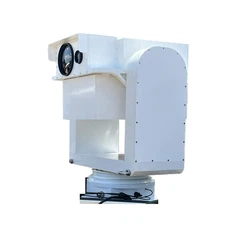
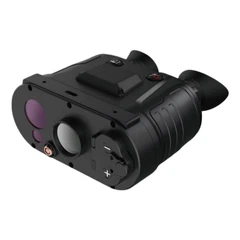
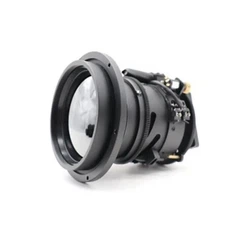
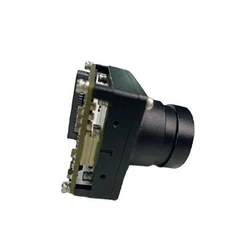
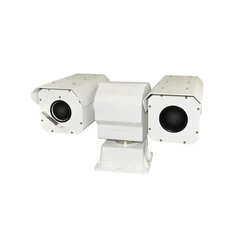
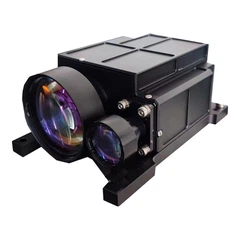
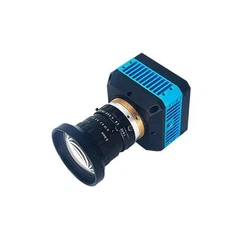

CCTV Thermal Camera
What is CCTV Thermal Camera
A CCTV thermal camera is a thermal camera that is used for surveillance and security purposes. As such, its ability to detect heat signatures from a distance makes it a more ideal safety measure to prevent intrusion and foil a potential crime compared to traditional visible-light cameras. Small wonder why over time the IR camera has established itself as the most reliable 24-hour visual surveillance product option in the market today. A CCTV thermal camera is security at its finest. By showing capabilities far beyond the powers of traditional visible-light cameras, an infrared imaging camera (IR camera) pushes the envelope in early detection and crime prevention to greater heights.
Advantages of CCTV Thermal Camera
Low-light
As previously mentioned, regular CCTV cameras struggle to pick up on potential intruders during the night and low light. In this area, thermal imaging cameras truly shine, as infrared technology still picks up on heat, no matter the lack of lighting.
No visual limitations
Similar to our eyes, regular CCTV cameras have difficulty seeing through visual obscurants that block reflected light. As thermal radiation passes through visual barriers, thermal CCTV cameras can see what's happening when visible cameras can't.
Camouflaging foliage
Regular CCTV cameras only capture visible light, which means, in some cases, colours or patterns can blend together and make objects or people harder to detect. This isn't an issue for thermal CCTV cameras.
Fewer false alarms
Thermal imaging cameras use advanced analytics software applications that perform at higher calibres than other cameras. As a result, the use of high contrast images and video reduces the number of false alarms.
Fire detection
Fires are a hazard on building sites and can cause significant damage. A thermal CCTV camera can detect hotspots and temperature rises before they ignite, allowing you to proactively manage fire risks rather than reactively. This makes it an essential piece of equipment, as the early warning response avoids full-on conflagration or compromising safety and assets.
Higher ROI
Thermal imaging CCTV is not only affordable but also provides an excellent return on investment (ROI). Due to their high performance, fewer thermal imaging CCTV cameras are required in comparison to regular CCTV cameras. Plus, as most CCTV cameras can't see further than 200 metres at night and need extra lighting, thermal imaging CCTV cameras are more cost-effective to install and maintain.
-
![Outdoor Thermal Camera]()
-
![Thermal Security Camera For Outdoor]() Thermal Security Camera For OutdoorThe SC-BMH3/6 series are budget solution of fixed on-site video surveillance bullet camera for CCTV.read more
Thermal Security Camera For OutdoorThe SC-BMH3/6 series are budget solution of fixed on-site video surveillance bullet camera for CCTV.read more -
![Thermal Security Camera Outdoor]() Thermal Security Camera OutdoorMiddle range Thermal security camera outdoor SC-PTD 30/60 Series, dual spectrum Pantilt.read more
Thermal Security Camera OutdoorMiddle range Thermal security camera outdoor SC-PTD 30/60 Series, dual spectrum Pantilt.read more -
![Thermal Video Monitoring Pan&Tilt Camera]() Thermal Video Monitoring Pan&Tilt CameraLong range Dual spectrum PTZ camera, with IR thermal camera and Daylight camera empowered.read more
Thermal Video Monitoring Pan&Tilt CameraLong range Dual spectrum PTZ camera, with IR thermal camera and Daylight camera empowered.read more -
![Thermal Surveillance Systems]() Thermal Surveillance SystemsLong range double spectrum PTZ camera forest fire prevention IR thermal cameraread more
Thermal Surveillance SystemsLong range double spectrum PTZ camera forest fire prevention IR thermal cameraread more -
![Thermal Imaging Dual Spectrum IP Camera BDT3/6]() Thermal Imaging Dual Spectrum IP Camera BDT3/6The BDT3/6 series are budget dual Spectrum bullet camera.Ideal for preventing hazards in solar power plants, chemical processing centers, combustible warehouses, petrochemical factories, coal...read more
Thermal Imaging Dual Spectrum IP Camera BDT3/6The BDT3/6 series are budget dual Spectrum bullet camera.Ideal for preventing hazards in solar power plants, chemical processing centers, combustible warehouses, petrochemical factories, coal...read more -
![Dual spectrum Fusion Security Camera]() Dual spectrum Fusion Security CameraBD3/6 series Dual -spectrum Fusion Network Thermal Imaging Bullet camera, with advanced AI analytic functionsread more
Dual spectrum Fusion Security CameraBD3/6 series Dual -spectrum Fusion Network Thermal Imaging Bullet camera, with advanced AI analytic functionsread more -
![Bullet Dual SpectrumThermal Camera]() Bullet Dual SpectrumThermal CameraThe SC-BDH3/6 series are budget of fixed on-site video surveillance bullet camera for CCTV. It goes with dual spectrum configuration.read more
Bullet Dual SpectrumThermal CameraThe SC-BDH3/6 series are budget of fixed on-site video surveillance bullet camera for CCTV. It goes with dual spectrum configuration.read more -
![Bullet Thermal Camera]() Bullet Thermal CameraThe SC-BMH3/6 series are budget solution of fixed on-site video surveillance bullet camera for CCTV.read more
Bullet Thermal CameraThe SC-BMH3/6 series are budget solution of fixed on-site video surveillance bullet camera for CCTV.read more


Our Factory
Founded in 2019 and located both in Beijing and Hangzhou city, IR-EO CAMERAS & SYSTEMS Co., Ltd is a system integrator and reseller of a large scope of InfraRed(IR) Electro-Optical (EO) cameras, including related their parts (e.g., electronic circuits and lenses, etc.).
Services
As a prominent solution provider, we also render consultancy and remote after-sales service to our valuable customers. We can help our potential customer to provide both highlevel and low-level system design, bring to our valuable customer the additional value-add services.
One-stop Solution
Cooperated with several elite partners in the industry, Sense&Com is dedicated in providing consultancy, integrated EO (Electro-Optics) product solution to our customers.
Rich experience
Taking advantage of the industry standards (such as ONVIF, etc.) and the sophisticated engineers, our integration work is now becoming more and more productive and effective, which bring more benefits to our customer by choosing the optimal solution, and which in turn, will convert to more positive effects to the economical profits.

CCTV thermalcameras work by ‘seeing' heat energy from objects. As all things have heat energy, infrared cameras ‘see' this to produce an image. Thermal cameras convert the infrared information into an image that shows the surface temperature of the object it is measuring and assigns it a different colour or grey shade.
For example, a person will stand out lighter as they are hotter than their surroundings on a cooler day. However, a person will be presented in a darker colour on a hot day because they are cooler than their surroundings.
Thermal cameras provide the ability to ‘see'in the dark. At night, a person's surroundings tend to be cooler than a person, which means people stand out. Ultimately, thermal cameras are particularly useful because they are effective at detecting people in situations where they may be invisible to the human eye. This is ideal for environments such as constructions sites, as the landscapes are more complex and are often victims of theft.
This is why we see law enforcement also adopt thermal CCTV cameras. It allows officers to track, locate and capture criminals efficiently, especially in adverse weather conditions, in woodland, through dense foliage and other factors that hide criminals.
Different Types of CCTV Thermal Camera
Dome cameras
A dome camera is a type of CCTV camera that incorporates a camera with a wide-angle lens inside a clear dome-shaped enclosure that protects the device from damage and harsh weather conditions. These security cameras can be mounted on walls or ceilings and in indoor or outdoor environments, and it has a discreet appearance that blends in with the surroundings.
Dome cameras have many pros, but they also have some disadvantages. While the discreet appearance is ideal for subtle surveillance in locations like casinos, retail stores and malls, it also means these types of CCTV cameras are not suited as visible crime deterrents. Dome models also can't be repositioned without being removed and reinstalled. However, the wide-angle lens can provide great coverage of large open spaces if they are carefully positioned.
Bullet cameras
Bullet cameras are the most recognizable type of security camera. They have a cylindrical shape and a clear, visible presence that effectively deters crime. These types of security cameras have good long-range capability for observing large open areas, meaning they're often installed to cover outdoor areas like building perimeters and parking lots. Bullet cameras are also easier to install compared to dome cameras, and usually come with low-light or night vision settings.
Although bullet cameras are suitable for outdoor use, these security cameras aren't effective in situations where cameras need to be operated discreetly and may produce blindspots when installed in tight indoor locations like offices and storage rooms. In addition, these types of CCTV cameras can only be adjusted manually and may be vulnerable to vandalism without additional protection like tamper-proof external casings.
PTZ (Pan, Tilt, Zoom) cameras
PTZ cameras can be adjusted remotely to help security personnel monitor unfolding events in real time. Each camera's field of view can be moved up, down, left, or right, as well as zoomed in or out to view live activities. This enables PTZ cameras to provide 360-degree coverage of large spaces without the need to install multiple cameras. These CCTV camera types can be controlled from on-site control rooms or via secure smart devices and cloud management systems.
While PTZ cameras are ideal for viewing real-time events, they don't offer substantial wide-angle coverage, meaning they're most effective when viewing angles are manually adjusted by CCTV operators. These types of CCTV cameras are best used to monitor spaces like retail stores, warehouses and commercial buildings in situations where hired operators are expected to observe live activities.
Turret cameras
Turret cameras are among the most flexible CCTV camera types. They feature a three-axis ball and socket mount that allows each camera to be rotated in different directions to achieve optimal coverage of large indoor and outdoor spaces. These types of CCTV systems don't look like traditional cameras, making them ideal for discreet property surveillance.
Turret cameras can capture high-definition images at both short and long ranges and can be used to observe movements in high-traffic locations like lobbies, reception areas and retail floors. While some models feature durable casings designed to protect the camera from acts of vandalism, turret compared to dome cameras aren't as hard-wearing.
Additionally, turret cameras feature multiple moving parts that allow the camera to move during operation, making them prone to failure and needing frequent maintenance.
Fisheye cameras
A fisheye camera incorporates an ultra-wide-angle lens, which allows it to monitor a wide area or capture panoramic images of a target location. These security camera types can be a cost-effective solution, covering large spaces like parking lots and warehouses that would otherwise require multiple cameras to achieve optimal coverage. Fisheye cameras are also commonly used in conjunction with other cameras to cover blind spots in large installations.
The main drawback to these types of CCTV cameras is that captured footage is displayed as a circular image, which can become distorted if de-warping software is not utilized. In addition, the camera's field-of-view cannot be adjusted remotely, meaning the entire device will need to be removed and reinstalled to adjust viewing positions. However, this can be offset by the cameras' low general maintenance requirements.
Components of CCTV Thermal Camera


Visor
It is used so that unwanted light does not intervene in the image captured by the surveillance camera, in this way backlight is avoided and blind spots due to reflection are reduced.
Iris
It is part of the optics and controls the light that enters the sensor. The iris can be manual or automatic. If it is automatic (auto iris) it adapts to the light of the stage in the same way that the human eye does, avoiding white or completely dark images. In addition, the new box cameras have a blc and wdr (white dynamic range) backlight compensation system that illuminates the dark areas of the scene.
Optics
There are different types of optics that can be adapted to cameras depending on the characteristics of the sensor, iris opening, sensitivity, objectives (fixed, motorized zoom), focal length by being able to configure the camera with different optics, the field of view of the cctv camera can be optimized.
Box camera
This type of video surveillance camera allows you to change the type of lens depending on the angle of vision and zoom that is needed. You can also change the box camera for others of higher quality or different technologies (ip surveillance camera for example), keeping the rest of the main components of cctv camera.
Anti-vandal protection
Protects the cctv camera from any inclement weather such as snow, rain, hail and shocks, it remains fixed capturing images of everything that happens. It is indicated for its operation outdoors.
Power supply
Stabilizes the voltage safely, protecting the components of the camera in the event of an over power supply.
Infrared LEDs
They have activated automatically when there is little light, allowing the video surveillance camera to record in the dark and in low light situations in black and white (0.01 lux). If necessary, a longer-range external infrared spotlight can be added to the security camera.
How to Choose CCTV Thermal Camera
The first step in choosing a CCTV thermal camera is defining the purpose and requirements. Determine the areas you want to monitor, such as entrances, perimeters, interior spaces, or critical assets. Assess the level of detail required, whether you need facial recognition, license plate recognition, or general surveillance.
Image quality is critical for capturing clear and identifiable visuals. CCTV cameras come in various resolutions, typically measured in megapixels (MP). Higher resolution cameras offer more detailed images but may require more storage space. For general surveillance, 2MP to 4MP cameras are usually sufficient, while critical areas may benefit from 4MP to 8MP or higher.
Consider the camera's ability to capture clear images in low-light conditions or during nighttime. Cameras with infrared (IR) LEDs provide excellent night vision capabilities and are essential for 24/7 surveillance.
The field of view (FOV) determines how much area a camera can cover. Wide-angle lenses are suitable for capturing larger areas, while narrow-angle lenses are ideal for focusing on specific points of interest.
Modern CCTV systems offer various connectivity options, including wired, wireless, and Power over Ethernet (PoE). PoE cameras use a single Ethernet cable for both power supply and data transmission, simplifying installation. Additionally, consider the storage options – whether you'll use Network Video Recorders (NVRs), Digital Video Recorders (DVRs), or cloud-based storage solutions.
Ensure that the CCTV system allows for remote monitoring through computers, smartphones, or tablets. Mobile access enables you to view live footage and receive alerts from anywhere, enhancing the system's convenience and effectiveness.
Advanced CCTV systems may come equipped with video analytics features, such as motion detection, facial recognition, and object tracking. Integration with Artificial Intelligence (AI) can enhance security and automate certain surveillance tasks.
The camera lens plays a crucial role in determining the angle of view, which defines how much area the camera can cover. There are mainly two types of lenses
a. Fixed Lens
Cameras with fixed lenses offer a specific field of view and cannot be adjusted. They are suitable for scenarios where the monitoring area remains constant.
b. Varifocal Lens
Varifocal lenses are adjustable, allowing you to change the focal length and, consequently, the field of view. These lenses offer greater flexibility as you can adjust the angle of view based on your changing surveillance requirements.
How Often to Clean and Maintain Your CCTV Thermal Camera
Routine cleaning
Regularly cleaning your CCTV thermal cameras helps prevent the accumulation of dust, dirt, and grime that can obstruct the camera lens and affect image quality. Aim to clean your cameras at least once every three to six months, depending on the environment they are installed in.
Seasonal check-ups
Consider performing more thorough maintenance checks during seasonal changes. Dust and debris may accumulate more quickly during certain times of the year, so scheduling a camera inspection and cleaning every spring and autumn is a good practice. You can get help of professional CCTV repair company near you for the overall check- ups of your CCTV thermal camera.
Adverse weather conditions
If your CCTV thermal cameras are exposed to harsh weather conditions, such as heavy rain, snow, or extreme heat, they may require more frequent maintenance. Check and clean them after particularly severe weather events to ensure they remain fully functional.
High-traffic areas
Cameras installed in high-traffic or industrial areas may accumulate dirt and debris more rapidly. In such cases, increase the frequency of cleaning and inspections to every one to two months.
Exterior and interior cleaning
Remember to clean both the exterior and interior components of your CCTV thermal cameras. Wipe down the camera housing, lens, and any exposed cables. Be cautious not to scratch the lens or damage sensitive parts during cleaning.
Cleaning process
When cleaning your CCTV thermal cameras, follow these steps
Power off the camera to prevent accidental damage.
Gently remove any loose dirt and debris using a soft brush or compressed air.
Dampen a microfiber cloth with a mild lens cleaning solution or water and carefully wipe the lens and housing.
Allow the camera to dry completely before powering it back on.
Lens inspection
Regularly inspect the camera lens for scratches, condensation, or signs of damage. A clean and unobstructed lens is essential for clear image capture.
FAQ
Q: What is the purpose of a thermal camera?
Q: Are thermal cameras safe?
Q: What is the difference between a thermal camera and a normal camera?
Q: What can a thermal camera detect?
Q: Can a thermal camera see through walls?
Q: Can a thermal camera see hot air?
Q: How to detect leak with thermal camera?
Q: How do you read a thermal camera?
Q: How far away can a thermal camera see?
Q: Do thermal cameras need calibration?
IR-EO Cameras & Systems Co., Ltd. is one of the most professional cctv thermal camera manufacturers and suppliers in China, specialized in providing high quality customized service. We warmly welcome you to buy high-grade cctv thermal camera made in China here from our factory.
Security Camera With Thermal Imaging, infrared thermal imaging product, thermal camera solution