

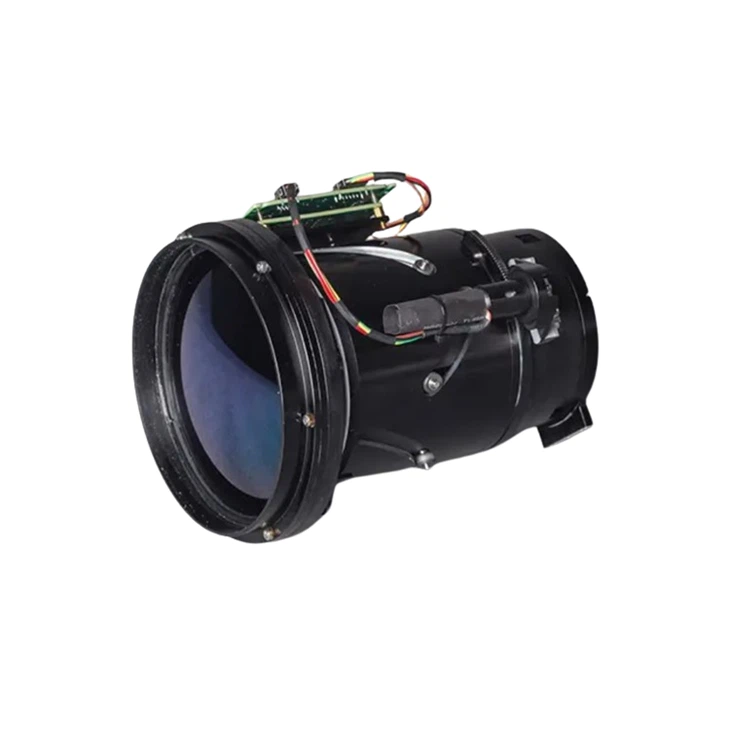
MWIR Thermal Lens
why choose us
With our Headquarter established since 2016, we design, integrate, manufacture, sell and distribute products and provides services concerning with Infrared thermal imaging technologies, especially in the domain of EO/IR systems and optics.
100% QC
Strict quality check before shipping,making sure of the full functionality of the equipment.
Timely Service
Covers the time zones from the US, the EU,all the way to Asia.Professional engineers are here to help.
Rich Experience
advanced production equipment and detection systems, sound sales networks and professional technicians.
Trusted Partner
we are ready to establish cooperation with new clients around the world based on mutual benefits and development.
-
![45-900mm MWIR F4.0]()
-
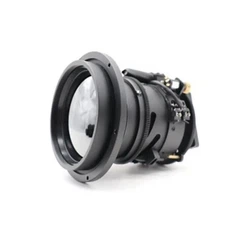
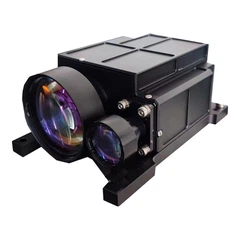
![MWIR Thermal Lens 80~1100mm]() MWIR Thermal Lens 80~1100mmSPEC: Focal Length:80~1100mm FOV:6.87°×5.50°~0.5°×0.4° F number:4.0 Cold stop to FPA Distance:19.8mm Total Length:397mm Weight:5279.8g Distortion: < 6.98% picture...read more
MWIR Thermal Lens 80~1100mmSPEC: Focal Length:80~1100mm FOV:6.87°×5.50°~0.5°×0.4° F number:4.0 Cold stop to FPA Distance:19.8mm Total Length:397mm Weight:5279.8g Distortion: < 6.98% picture...read more -
![MWIR Zooming Lens]() MWIR Zooming LensThese long-range zoom lenses are suitable for a wide range of commercial, security & surveillance, observation, UAV, and homeland security applications. The lenses are compatible with 15/10 µm VGA...read more
MWIR Zooming LensThese long-range zoom lenses are suitable for a wide range of commercial, security & surveillance, observation, UAV, and homeland security applications. The lenses are compatible with 15/10 µm VGA...read more


Key advantages of MWIR thermal lenses:
Clearer Images in Low Light
Unlike visible light cameras, MWIR lenses can capture thermal radiation emitted by objects, allowing for clear imaging even in complete darkness or low-light conditions.

Long-Range Detection
MWIR radiation travels through the atmosphere with less distortion compared to longer wavelengths, enabling detection of objects at greater distances.
Better Target Discrimination
MWIR lenses can differentiate between objects with slight temperature differences, providing better target identification and detail compared to other infrared bands.
Weather Resistance
MWIR imaging is less affected by fog, haze, rain, and other atmospheric conditions, making it suitable for challenging environments.
High Sensitivity
MWIR detectors can detect subtle temperature variations, enabling precise thermal imaging for applications like machinery monitoring and medical diagnostics.
Compact Design
Compared to other infrared bands, MWIR cameras can be smaller and lighter, making them suitable for portable or airborne applications.
4 Types Infrared Lens Differents
The Differences among Short-Wave Infrared lens, Near-Infrared lens, Mid-Wave Infrared lens and Long-Wave Infrared lens.
Near-Infrared (NIR)
Near-Infrared (NIR) lens: Well, the wavelength of near-infrared lens is between 0.75 and 1.4 micrometers. It's defined by the absorption of water. You know, because it has a low attenuation rate in quartz glass, it's usually used in optical fiber communications. And the wavelengths in this area are super sensitive to image enhancement. For example, it's applied in night vision devices like night vision goggles.
Night vision goggles can greatly improve the visibility in low light or dark conditions by taking advantage of the features of near-infrared lens. They're widely used in military operations, night security patrols and some outdoor exploration activities where clear vision in the dark is needed.
Short-Wave Infrared (SWIR)
Short-Wave Infrared (SWIR) lens: Its wavelength is within the range of 1.4 to 3 micrometers. The water absorption rate increases significantly at 1,450 nanometers. And the spectral region from 1,530 to 1,560 nanometers is the main area that dominates long-distance communications.
In a lot of modern telecommunication systems, this specific spectral range plays a really crucial role. It enables signals to be transmitted over long distances with relatively low loss and high stability, which is really important for maintaining efficient and reliable communication links between different places, like between cities or across vast regions.
Mid-Wave Infrared (MWIR)
Mid-Wave Infrared (MWIR) lens, also known as Mid-Infrared lens: The wavelength is from 3 to 8 micrometers. Passive infrared heat-seeking missile technology is designed to work by using the atmospheric window in the 3 - 5 micrometer band. When it comes to the homing of aircraft infrared markers, they usually aim at the plume emitted by the aircraft engines.
In military combat situations, heat-seeking missiles rely on detecting the infrared radiation in this wavelength range to accurately lock onto the target aircraft by sensing the heat signature of the engine plume. And for aircraft identification and tracking systems based on infrared technology, focusing on the infrared emissions from the engine is an important way to tell different aircraft apart and follow them.
Long-Wave Infrared (LWIR)
Long-Wave Infrared (LWIR) lens: Its wavelength ranges from 8 to 15 micrometers. This is the area of "thermal imaging". Sensors in this band can get complete passive images of thermal radiation without the need for additional light or external heat sources like the sun, the moon, or infrared light sources.
Thermal imaging cameras based on long-wave infrared technology are widely used in all kinds of fields. For instance, in search and rescue operations at night or in areas with poor visibility, they can help rescuers quickly find missing people by detecting body heat. In building inspections, it can be used to identify heat leakage or abnormal heat distribution in walls and roofs, which is good for saving energy and finding potential safety hazards.
Sometimes, NIR and SWIR are called "Reflective Infrared", while MWIR and LWIR are sometimes called "Thermal Infrared".
Material of LMWIR Thermal Lens
Germanium
A crystalline material with a wide optical transmission range that's commonly used in thermal imaging systems
Silicon
A crystalline material that's transparent in the MWIR spectral range and is used in imaging, biomedical, and military applications
Zinc selenide
Transmits in the IR and the visible
Zinc sulfide
A common material used in both the MWIR and the LWIR
Chalcogenide glass: A common material used for manufacturing objective lenses of thermal imaging devices
Key components of MWIR thermal lenses
Substrate materials
Germanium (most common)
Zinc selenide (ZnSe)
Chalcogenide glass
Silicon
Zinc sulfide (ZnS)
AR coating
Broadband AR coating designed for the MWIR band
Protective coating (optional)
Diamond-like carbon (DLC) for scratch resistance
Defense and Security: Long-range surveillance, target identification, night vision systems
Industrial Inspection: Identifying hot spots in machinery, detecting potential failures
Medical Diagnostics: Thermal imaging for detecting skin abnormalities or blood flow issues
Environmental Monitoring: Identifying heat sources or gas leaks
Autonomous Vehicles: Nighttime navigation and obstacle detection
How to maintain LMWIR Thermal Lens
Lens Maintenance
-
Cleaning: The lens is a key part of a thermal imaging night vision device, and its surface is easily contaminated with dust, fingerprints, or other stains. Use a clean, soft lens-specific wipe to gently wipe the lens, wiping in a circular motion from the center of the lens outward to avoid scratching the lens. If the stain is stubborn, use a small amount of special lens cleaning fluid, but do not use alcohol or other cleaners that may damage the lens coating.
Avoid collisions and scratches: The optical performance of the lens is easily damaged by collisions and scratches. When the night vision device is not in use, it should be placed in a special protective box, and during carrying or transportation, ensure that the lens is not squeezed or collided.
Body maintenance
-
Cleaning the outer shell: Clean the body of the night vision device regularly. Use a clean, slightly damp soft cloth to wipe the outer shell to remove dust and dirt. Avoid moisture from entering the device. Make sure the body is completely dry after wiping. For stubborn stains, you can use a mild detergent, but test it on a small, inconspicuous area first to ensure that it will not damage the body material.
Check the sealing performance: If the night vision device is waterproof and dustproof, check the sealing performance of the device regularly. Check whether the sealing gasket is intact and whether there are signs of aging, deformation or damage. Especially after use or after being placed for a long time, pay attention to maintaining a good seal to prevent moisture and dust from entering the interior and affecting the normal operation of the device.
Detector maintenance
-
Avoid overheating and overcooling environments: Thermal imaging detectors are sensitive to temperature. During use, avoid exposing the night vision device to high or extremely low-temperature environments for a long time. High temperatures may cause the detector to degrade or even damage its performance, while extremely low temperatures may affect its startup and normal operation. If used in extreme temperature environments, the device should be allowed to gradually return to normal operating conditions in a suitable temperature environment.
Prevent damage to the detector: The detector is a precision component and should be protected from strong vibration, impact or electromagnetic interference. When using and storing, be careful to prevent the device from falling. At the same time, avoid placing the night vision device near a strong magnetic field source, such as around large motors, transformers and other equipment.
Battery maintenance
-
Proper charging and use: Charge and use the battery in accordance with the requirements of the device manual. Use the matching charger to avoid overcharging or over-discharging. If the night vision device is not used for a long time, the battery should be charged to an appropriate level and then removed and stored separately. Charge and discharge the battery once every period of time to maintain the battery performance.
Battery storage environment: The battery should be stored in a dry and cool environment, away from direct sunlight and humid environments. Different types of batteries (such as lithium batteries, nickel-metal hydride batteries, etc.) may have different storage requirements and should be properly stored according to the characteristics of the battery.
Regular calibration and inspection
-
Function inspection: Turn on the thermal imaging night vision device regularly to check whether its various functions are normal, including image quality, temperature measurement function (if any), zoom function, menu operation, etc. Observe whether the image is clear, whether there are abnormal noise points, whether the temperature measurement is accurate, etc.
Calibration: Calibrate the thermal imaging night vision device regularly according to the recommendations of the equipment manufacturer. Calibration can ensure the accuracy and stability of the equipment, especially for equipment with high-precision temperature measurement function. Calibration usually requires professional equipment and technicians. Some high-end equipment may have an automatic calibration function, which can be operated according to the operating manual.
FAQ
How does the LightIR 16-180 mm f/3.6 conform to SWaP constraints?
A: LightIR 16-180 mm f/3.6 continuous zoom lens is a compact, folded design that reduces size while maintaining a long effective focal length (EFL). It uses fewer optical elements than similar focal-length lenses to reduce weight. It is designed with low power consumption to meet design criteria.
What applications require SWaP constraints found in the LightIR 16-180 mm lens?
A: Almost any application can benefit from reducing size, weight, and power, but in some applications it is essential. Drone and UAV designers are constantly balancing the size and lift capacity of aerial vehicles with the sophisticated technology needed in the payloads. The LightIR 16-180 mm f/3.6 lens allows for a sophisticated, long-range MWIR sensor while limiting the payload size, weight, and power consumption. This makes it ideal for airborne gambles on SWaP-constrained platforms. It is specifically designed to enhance imagery in MWIR 640x512 10 µm pitch sensors preferred by engineers with SWaP constraints.
What performance parameters found in the LightIR 16-180 mm f/3.6 lens do SWaP designs need to maintain?
A: Even though SWaP constraints limit size, weight and power, the performance required of the systems cannot be compromised. Imaging systems must maintain the ability to produce clear, crisp images for the end user. OUR LightIR 16-180 mm f/3.6 lens maintains excellent MTF (modulation transfer function) as well as maintaining focus throughout the zoom. It also includes fast zoom and focus, tight boresight, low power consumption, wide operational temperature range, and high durability in harsh environmental conditions. WE have created a unique design that implements strict quality control to achieve the best images any given sensor can produce.
How are strict performance criteria maintained in the LightIR 16-180 mm f/3.6 lens?
A: Maintaining high performance in any lens begins in the design phase, the key to the designs is to build in performance and manufacturability. Near diffraction limit MTF with a design that allows for some minor tolerances in the build cycle leads to a superior product that meets or exceeds its testing requirements. OUR state-of-the-art manufacturing facilities maintain tight quality control over the entire manufacturing process from design to delivery, to ensure a superlative product.
How does the LightIR 16-180 mm f/3.6 continuous zoom lens support SWaP constraints?
A: Single- and dual-FOV (field of view) lenses are not well suited to SWaP constraints. Single FOV does not provide the flexibility required by systems engineers and dual-FOV cannot meet size and weight constraints. OUR LightIR 16-180 mm f/3.6 lens provides a wide FOV for detection and situational awareness and continuously narrowing FOV for identification of objects of interest. The folded optical design allows this in a smaller volume package perfect for SWaP design constraints. In order to withstand harsh environmental conditions, the lens is offered with high durability (HD) and low reflection hard carbon (LRHC) AR coatings.
Why are SWaP constraints important in drone and UAV applications?
A: Drone and UAV design engineers are perpetually balancing size and capability requirements for each aerial system. Larger aerial vehicles have larger lift capacities, but cannot be readily moved by the people who operate them. Smaller aerial vehicles have limited range and limited lift capability. In order to balance these constraints, design engineers detail the size, weight, and power requirements for each subsystem used in a particular design. WE works with sensor manufacturers as well as drone and UAV designers to provide the best optics to meet these rigorous needs. LightIR 16-180 mm f/3.6 is the culmination of this teamwork between optics designers and the end users of complex aerial systems.
What are the limitations to reducing optical payloads to meet ever-demanding size, weight, and power (SWaP) goals in small autonomous aerial systems?
A: When it comes to developing optical components and optical systems for UAV payloads, three factors must be measured. These factors can be summarized by the acronym SWaP – size, weight, and power consumption. UAV payloads, especially for smaller commercial UAVs, impose strict size and weight restrictions. Power consumption must be reduced to minimize fuel usage, thus maximizing flight time.
The optical payloads for small autonomous aerial systems must be able to provide high optical performance despite their compact form. Detectors are increasing in both resolution (number of pixels) and format (size) while decreasing in pixel size, which puts pressure on optical manufacturers to make smaller, lighter optics with lens quality that will still allow for maximum imaging performance.
Various technologies are being used to meet these optical needs. These technological solutions include innovative optical and mechanical designs, free-form optics, and unique lens coatings.
Why is multi-spectral optics important for today's defense and national security sectors?
A: Over the last 10 years, multi-spectral optical systems have been used by system integrators in the defense and aerospace industries, in surveillance and monitoring, and certain commercial applications. Multi-spectral optics enable many new possibilities for defense and national security missions on land and sea. Multi-spectral imaging systems enable the combining of multiple cameras into one, to significantly improve performance without increasing size and weight. These systems generally have long focal lengths and are meant for long-distance surveillance, possibly tens of kilometers. The multi-spectral optics enable maximum error correction and allow for a wider field of view, performing to a high level across a wide range of wavelengths (Short-wave IR, Mid-wave IR, Long-wave IR, Visible and Near IR). They allow for high day/night performance in situations where vision is obscured, such as low lighting and adverse weather conditions.
For example, multi-spectral optics is integrated into the optical systems of large unmanned aerial vehicles (UAVs) for the long-distance aerial monitoring of agricultural field temperature using IR, as well as in the aerospace industry, for satellites and long-range telescopes.
What are multispectral optical systems?
A: A multispectral electro-optical system (EOS) combines multiple optical channels into one, allowing significantly improved performance while reducing size and weight – all thanks to the inclusion of large mirrors. An electro-optical day/night system built for aircraft payloads providing high performance in harsh weather conditions is a perfect example of a multispectral EOS.
What applications use multispectral optical systems?
A: Long-range defense, surveillance, and monitoring applications use multi-spectral optical systems. Certain commercial applications also use a multi-spectral EOS. For example, aircraft or large UAVs often carry a multi-spectral EOS with an integrated large mirror in the payload.
What role do large mirrors play in multispectral optical systems?
A: Unlike lenses that are often bandwidth-limited, large mirrors combine several imaging bands in the visible, NIR, SWIR, MWIR, and LWIR, allowing significantly improved performance without increasing the size and weight of the EOS. Large mirrors perform to a high level across a wide range of wavelengths including laser-based applications such as laser range finders (LRF) and laser designators.
The mirror's reflection angles are identical for all wavelengths and, therefore, all optical channels can be combined, creating the multispectral system.
The mirrors are also the key enabler for a folded optics design contributing to reducing the size of the multispectral system.
Large mirrors play an important role in long-range reflective systems, for long-distance surveillance, such as reflective telescopes. These telescopes use a combination of refractive and reflective optics to maximize error correction and allow for a wider field of view.
Furthermore, Large mirrors are often integrated with the optical systems of defense and surveillance systems, for example, in large aircraft. These mirrors allow for the production of high-resolution imagery during long-distance surveillance and monitoring. To produce high-quality images from a distance, the mirrors must meet a strict set of requirements. Detectors are increasing in resolution all the time, necessitating mirrors with increasingly accurate surfaces, meeting tight tolerances in terms of shape and irregularities. The multi-spectral nature of the optical systems means that mirrors must also be able to perform throughout a variety of wavelengths. They must have minimum roughness, especially when they are used in VIS wavelength, under 40Å rms (root mean square), to prevent light from scattering.
What is the narcissus effect?
A: With its name taken from Greek mythology, narcissus is one of the unwanted effects of thermal imaging, whereby a cold detector images the reflection of itself and displays it in the processed video output. Whenever the thermal detector senses variations in background radiation caused by reflections from lens surfaces, the phenomenon of narcissus may occur.
What causes narcissus?
A: Typically, the narcissus effect comes from the detector cold shield. The cold shield is kept at cryogenic temperatures, while the lens' temperature is usually near ambient temperature. Narcissus occurs when the image of the cold shield is reflected from a surface in the lens train and is focused on the detector. In such cases, the image of the cold shield shows in the middle of the display as a dark or bright circle. Because of the difference in temperature between the cold shield and the lens assembly, every infrared zoom lens in a system with a cooled detector is prone to narcissus.
How can narcissus be analyzed and simulated?
A: To test levels of narcissus when manufacturing a lens system, WE set up a narcissus simulation. Every surface of the lens system is examined through the entire zoom sequence, at many intervals. If the narcissus effect occurs at any point, it is measured and analyzed, and methods are put into place to correct it.
How can narcissus be reduced?
A: Narcissus reduction should be addressed during the manufacturing of a lens system. Here at WE, this is done through unique lens designs and anti-narcissus coatings that will prevent the production of back reflections that could focus on the detector and cause the narcissus effect.
How does OUR address boresight retention with optical design?
A: OUR addresses boresight retention using tight tolerances for all optical and mechanical elements, as well as backlash-free design. Using OUR zoom lenses, once the zoom position is changed, the boresight is maintained, meaning that no adjustments are needed during optical system operation. This is an integral feature in zoom lens design, which we consider as part of the standard requirements and quality tests.
What is the boresight error during zoom operations?
A: OUR boresight error ranges from 0.15 mm to 0.35 mm at the focal plane.
How does the long EFL with large optics capabilities affect the DRI?
A: The focal length determines the field of view (FOV) of the thermal imaging camera. The longer the focal length, the smaller the FOV, which translates into more pixels across a target at a fixed range (meaning, the target angle divided by the IFOV angle).
For example, consider a man at a range of 1 km. The effective angle of the target is about 1 mRad (1 m/1000 m). If we consider, for example, a 500 mm focal length combined with a 15 μm pixel detector, the IFOV would be 30 μRad. Therefore, the number of pixels on a target is equal to the target angle divided by the aIFOV angle, which is about 30 pixels on the target 1000/30 (>8 pixels required for identification based on Johnson's criteria).
What are the advantages and disadvantages of using extenders?
A: Extenders allow flexibility. A lens can be replaced easily, using the same basic lens body, with no need for hardware or software modifications. This lowers the complexity of the design and can also result in reduced NRE costs. Yet, reduced cost is not always achieved. Size and weight are mostly a disadvantage, as a second optical assembly is added to an existing one.
What do OUR long-range zoom lenses offer in terms of performance in harsh/ extreme weather conditions?
A: Most of OUR lenses cover a wide range of temperatures, from -30°/40°C to 70°c, and even 85°c. Using proper coating and sealing techniques, the lenses are also resistant to high humidity. Dust and vibration are also environmental factors that are tested, to ensure resistance to harsh environmental conditions. Thanks to these features, OUR lenses answer a wide range of application demands. In commercial applications, such as UAVs and drones, vibration management is crucial, as is the temperature range.OUR key competitive advantage in IR zoom lenses is the ability to maintain a high level of optical performance, which is, for example, characterized by the modulation transfer function (MTF) throughout the temperature range, and in different environmental conditions. OUR lenses provide outstanding performance, and an MTF close to the diffraction limit, over the entire temperature range, which is a critical demand for many applications.
IR-EO Cameras & Systems Co., Ltd. is one of the most professional mwir thermal lens manufacturers and suppliers in China, specialized in providing high quality customized service. We warmly welcome you to buy high-grade mwir thermal lens made in China here from our factory.
thermal optics operation, thermal optics limited, MWIR Thermal Lens 80 1100mm