

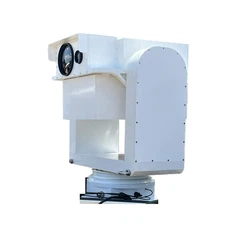
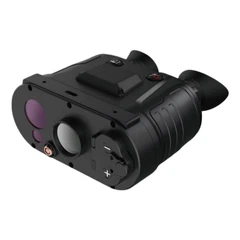
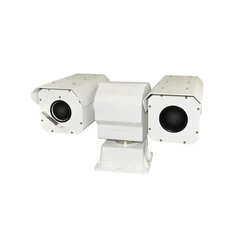


4MP Wide-Spectrum All-Weather(UltralowIllumination)Intelligent Full-Color Network
Camera BMWS-4EA
Night Vision Camera
What is Night Vision Camera
A night vision camera is a camera allows visualization of images in low levels of light. The device is widely used to monitor parking lots, offices, and to watch over pets and children.A night vision cameras is able to capture images clearly in the dark environment is produced by a night vision correction function. Night vision correction is a function that automatically corrects brightness even in dark places. Specifically, by increasing the sensitivity of the sensor that receives light inside the camera, the target is brightened even in places with low levels of light. It is also being called a "high-sensitivity camera" as it has higher sensitivity than other cameras.
Advantages of Night Vision Camera
Evidence Collection
Should a security incident occur, night vision cameras can capture crucial details that may not be visible to the human eye in low-light conditions. This can include faces, license plates, and other important identifiers. This footage can be invaluable for law enforcement when investigating and solving crimes.
Lower Lighting Costs
Night vision cameras with infrared technology can see in complete darkness, eliminating the need for installing high-intensity lighting around your property. This can save on energy costs and prevent light pollution, which can be especially important in residential areas.
Peace of Mind
Knowing that your property is under surveillance 24/7 provides an increased sense of security. Night vision cameras allow homeowners and business operators to keep an eye on their premises from anywhere, at any time, through live feeds and alerts to their smartphones or monitoring systems.
Around-the-Clock Surveillance
The most significant advantage of night vision cameras is their ability to provide continuous monitoring and surveillance, both day and night. Since many crimes or security breaches occur under the cover of darkness, having the ability to capture clear footage at any time is vital for overall safety and security.
-
![Industrial All-Weather AI Network Camera]()
-
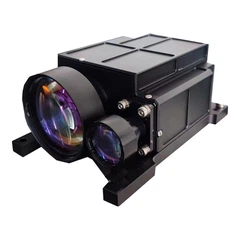
![ULH-100M 100-Megapixel Night Vision Camera]() ULH-100M 100-Megapixel Night Vision CameraULH-100M 100-Megapixel Night Vision Cameraread more
ULH-100M 100-Megapixel Night Vision CameraULH-100M 100-Megapixel Night Vision Cameraread more
HD Night Vision
Intelligent Anti-Glare
Intelligent Analysis
Dust & Fog Penetration
Self-Cleaning -
![High Performance Image Intensifier Tube HelmetMounted Night Vision Goggle NGE350]() High Performance Image Intensifier Tube HelmetMounted Nig...NGE350 is a high-performance military head mounted night vision goggle by advance Optoelectronics technology IIT (Image Intensifier Tube). With the ruggedized design, it ensures the...read more
High Performance Image Intensifier Tube HelmetMounted Nig...NGE350 is a high-performance military head mounted night vision goggle by advance Optoelectronics technology IIT (Image Intensifier Tube). With the ruggedized design, it ensures the...read more -
![Night Vision Image Intensifier Tube Sight]() Night Vision Image Intensifier Tube SightISW series IIT Image Intesifier Tube Sight are compatible with Standard Picatinny rail. The main application scenario is to use it at evening or night, where no ambient artificial lighting. With...read more
Night Vision Image Intensifier Tube SightISW series IIT Image Intesifier Tube Sight are compatible with Standard Picatinny rail. The main application scenario is to use it at evening or night, where no ambient artificial lighting. With...read more -
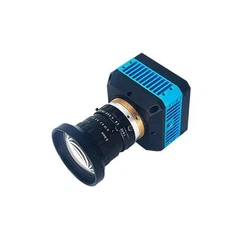
![HD 1280x1024 ULL Wide-spectrum Ultra Low Light Core]() HD 1280x1024 ULL Wide-spectrum Ultra Low Light CoreSC-CUL2M (-E) is a wide-spectrum and ultra-low light core with new the cutting-edge night vision sensing technology to provide both excellent color and b/w night vision. It has a wide spectrum...read more
HD 1280x1024 ULL Wide-spectrum Ultra Low Light CoreSC-CUL2M (-E) is a wide-spectrum and ultra-low light core with new the cutting-edge night vision sensing technology to provide both excellent color and b/w night vision. It has a wide spectrum...read more


Why Choose Us
01/
Our Factory
Founded in 2019 and located both in Beijing and Hangzhou city, IR-EO CAMERAS & SYSTEMS Co., Ltd is a system integrator and reseller of a large scope of InfraRed(IR) Electro-Optical (EO) cameras, including related their parts (e.g., electronic circuits and lenses, etc.).
02/
Services
As a prominent solution provider, we also render consultancy and remote after-sales service to our valuable customers. We can help our potential customer to provide both highlevel and low-level system design, bring to our valuable customer the additional value-add services.
03/
One-stop Solution
Cooperated with several elite partners in the industry, Sense&Com is dedicated in providing consultancy, integrated EO (Electro-Optics) product solution to our customers.
04/
Rich experience
Taking advantage of the industry standards (such as ONVIF, etc.) and the sophisticated engineers, our integration work is now becoming more and more productive and effective, which bring more benefits to our customer by choosing the optimal solution, and which in turn, will convert to more positive effects to the economical profits.
How To Choose Night Vision Camera
Resolution
Resolution is a critical property that helps the cameras capture clearer and sharper images. The higher the resolution, the clearer the footage. You must choose a camera with a good resolution to enhance visibility in low-light conditions. 4K is preferred, but you can also go with 2K resolution.
Sensor Sensitivity
Night vision cameras with high sensor sensitivity will capture the objects in low light, providing more visibility. They are highly efficient for darker areas, resulting in better and clearer vision.
The sensor's sensitivity is measured in LUX (Lumens per square meter); the lower the LUX value, the greater the visibility.
Large Aperture
The aperture is the lens opening that lets the light enter the camera, providing a noiseless and bright image. In night vision cameras, people prefer a larger aperture because it lets more light enter the camera and contact the sensor.
Power And Connectivity
Power and connectivity are the primary things you must consider before buying a night vision camera. Check for the camera if it is battery-powered or wired. Moreover, you must check that it must have remote real-time monitoring.
Durability And Weatherproofing
You must check the camera's build quality and be resistant to bad weather conditions. Look for the higher IP-rated cameras for longer life and resistance to dust and water. Additionally, check its body material that holds higher temperatures and is flexible to place anywhere.
How Does Night Vision Camera Work

Optoelectronic Image Enhancement
Almost all classic cameras, binoculars, monoculars, and night vision camera are based on the optoelectronic enhancement method. It uses a unique image intensifier and several optical lenses. The operating principle of such a camera is conventionally divided into five key stages. In the first, the optics lens collects all visible light. It then passes through the lenses to the image intensifier. The latter is a device in which photons are converted into electrons and amplified many times using a microchannel plate. At the next conversion stage, the amplified electrons fall on a particular screen with a phosphor coating. The result is an image that becomes brighter and more contrasting several times than the original. The picture is displayed, and the user sees what is happening in the dark.
Cameras using an optical-electronic image enhancement system can efficiently cope with their tasks at any light level. The main thing is that when the night mode is turned on, some source of light radiation is available. This could be a bright object in the sky (star clusters, comets, the Moon, etc.), a street lamp or spotlight burning somewhere far from you, and much more. The generated image will never be multi-colored (primarily green, but sometimes there are filters of other colors), allowing you to see objects in detail. Modern models lack numerous defects that prevent the eyes from correctly perceiving the picture.
Digital Image Enhancement
Unlike the standard type of night vision cameras, digital ones use a more straightforward principle of picture enhancement. This is most effective in dark conditions and almost always guarantees high definition, so digital enhancement is used in nearly all modern devices.
The whole process starts with the lens. It collects available light and sends it to a unique converter. The latter has in its design a CMOS sensor that converts the received information into a digital signal. This lasts only a few fractions of a second but is the most important in forming the final result. After conversion, the image is finalized by an electronic system. This stage allows you to increase sharpness and brightness and eliminate various defects. The created image is sent to the display where the user sees it.
The digital amplification method produces better results than the optoelectronic one. The generated image almost always has good detail and is as informative as possible. In addition, the digital amplification process is faster, eliminating any delays or stuttering when viewing fast-paced scenes. Another advantage of digital amplification is the ability to use additional functionality. It allows you to adapt the camera's operation to the individual needs of each user.
Infrared Night Vision
Security cameras use infrared night vision, which relies on IR light to function. It is entirely invisible to the naked eye, so it does not unmask the user and does not interfere with other people performing various actions simultaneously. To understand this better, think about your current TV remote. It has a red LED on the front of the device and sends an infrared signal to your TV. You cannot see this beam transmitted to the TV in the infrared focal plane. The same can be said for IR illuminators or flashlights. These devices are usually mounted on the camera and emit an infrared light that allows you to capture images/videos and view them in complete darkness. Manufacturers have begun to equip most modern security cameras with built-in infrared LEDs, providing night vision in low-light conditions. In addition, they are effective in complete darkness, which makes them indispensable assistants for representatives of many professions.
Most security cameras released today with night vision capabilities will also come with an IR cut filter. It is a mechanical shutter between the camera lens and the image sensor. This filter automatically detects ambient light (natural or artificial) and applies an IR-blocking filter throughout the day to preserve the image and clarity of daylight. The light sensor on the surveillance camera controls the IR cut filter. At dusk, it simply sends a removal signal to the IR cut filter so that more light can reach the security camera's image sensor. This allows more light to come through, including IR light from the camera. Typically, all digital infrared cameras display a black-and-white image in night vision mode rather than the green tint popularized by the color phosphor of analog night vision systems.
Low-Light Night Vision
Low-light night vision is based on amplification technology that provides color night vision images in very low-light conditions. When ambient light falls on a charged photocathode plate, electrons are emitted through a vacuum tube that hits the microchannel plate, resulting in an image appearing on the screen in the same pattern as the light incident on the photocathode and at a frequency that the human eye can see. Most existing analog systems today can display images in green or black and white. The specific option depends on the type of image intensifier used (green or white phosphorus). Because this technology uses optical viewing rather than a digital amplifier, the clarity and resolution of analog devices are usually much higher than digital devices. The difference in this indicator is insignificant, but it is still observed. This will be especially important in cases where you need to see small details of an object in the dark.
People who use such cameras should always remember one important detail. Due to the tube's photosensitivity, there is a high risk of damage from bright light. In this regard, it is necessary to use special filters or take additional precautions. Otherwise, light coming from the sun, nearby spotlights, car headlights and other objects may damage the tube and make it impossible to use the night vision camera further.
Four Common Types of Night Vision Cameras
IR Night Vision
IR (Infrared) Night Vision cameras are equipped with infrared LEDs that illuminate the camera's field of view with light that's invisible to the human eye but detectable by the camera's sensors. This allows the camera to capture clear images even in total darkness. The footage usually appears in black and white due to the camera's reliance on IR lighting.
Starlight Night Vision
Starlight night vision cameras utilize advanced image sensors capable of capturing minimal ambient light, such as moonlight or starlight, to produce a clearer and more detailed color image in low-light conditions. These cameras operate effectively under very low illumination, providing better image quality compared to traditional IR cameras, but still require some light to function.
Color Night Vision
Color Night Vision technology expands on traditional night vision capabilities by producing full-color video in low-light conditions. These color night vision cameras often combine large image sensors, specialized lenses, and advanced signal processing to maintain color fidelity and enhance detail and clarity, even in challenging lighting environments.
Thermal Night Vision
Thermal night vision cameras detect heat emitted from objects and individuals, creating an image based on thermal radiation, instead of relying on visible light. They can detect subjects in total darkness, through smoke, fog, and even some obstructions. The thermal imaging provides a stark contrast between objects of different temperatures, which can be vital in detecting intruders or other heat-emitting objects.
Where to Use Night Vision Cameras
Outdoor Premises
Night vision cameras can be used to monitor outdoor spaces such as parking lots, yards, and building exteriors. These cameras can help to deter vandalism and theft and provide an extra layer of security for businesses.
Commercial Settings
Night vision cameras are often used in surveillance applications, such as in banks, retail stores, and other places where valuables are kept. These cameras can help to detect any unusual activity and provide a clear view of any potential threats.
Facility Safety
Ensure your facility – whether it be a manufacturing one or a warehouse – is protected from intrusions, vandalism, and other crime with night vision cameras.
How to Improve the Night Vision Camera of Night Vision Cameras
Tip 1: Optimizing Visible Lighting
Though it might sound counterintuitive, visible lighting can play a substantial role in improving the camera's efficiency. Ensure that the areas you want to monitor have a well-planned lighting system. Soft, ambient lighting can enhance visibility while not overpowering the camera's sensors. Also, consider the placement of lights; strategically placed lighting can eliminate shadows and dark spots, providing a clearer and more detailed image. You might want to explore different lighting options as well. LED lights, for instance, can offer excellent lighting solutions that are energy-efficient and provide a high-quality light output.
Tip 2: Utilizing Infrared Light Sources
Supplement your cameras with external infrared light sources to cover a broader area or to enhance illumination in specific zones. When choosing an infrared light source, ensure to match the wavelength with your camera specifications to get the best results. Keep in mind, infrared light can substantially improve image clarity, allowing you to see details that would otherwise be hidden in the dark.
Tip 3: Avoiding Bright Lights in Camera's Perspective
While having adequate lighting is essential, having extremely bright lights within the camera's field of view can be a detriment. Bright lights can cause a glare in the footage, reducing the visibility of the surroundings and potentially hiding important details. To avoid this, strategically position your cameras and lights so that bright lights are not directly facing the camera. If necessary, adjust the settings on your camera to manage the exposure and reduce glare.
Tip 4: Minimizing IR Reflection
Reflections from IR lights can cause a white haze on the footage, reducing the clarity and visibility. Ensure that the camera is not installed near reflective surfaces such as windows or glossy walls. If avoiding such placements is not possible, consider installing IR light sources at a different location to reduce direct reflections. Also, tweak the camera settings to find a balance between illumination and reflection. Sometimes, reducing the IR intensity can help in minimizing reflections and improving the overall quality of the footage.
Tip 5: Keeping the Camera Lens or Glass Dome Clean
Maintaining the cleanliness of your camera's lens or glass dome is a must. Dust, water spots, and spider webs can hinder the quality of your footage. Establish a regular cleaning routine, using a soft, lint-free cloth to clean the lens or glass dome. For stubborn dirt or grime, use a cleaner designed specifically for camera lenses to avoid damaging the surface. A clean lens ensures that your camera can function at its best, providing you with clear and crisp images.
FAQ
Q: What do night vision cameras do?
A: The term night vision tells you much of what you need to know. These cameras are capable of seeing in the dark, therefore giving you images at night. This is achieved through the capture of infrared light, also known as thermal radiation.
Q: What is the difference between night vision camera and normal camera?
A: Night vision cameras cannot shoot in the dark or in dark places where there is no light at all. At night, a light source similar to a street lamp or a light bulb is required. On the other hand, infrared cameras use infrared rays, so they can shoot even in dark or dark places where there is no light at all.
Q: Do night vision cameras work in complete darkness?
A: Thermal night vision captures images based on heat emitted by objects, thereby avoiding dependence on available light. Thermal cameras detect temperature differences, which they then translate into clear images—even in total darkness. This technology is ideal for security.
Q: How far can night vision cameras see?
A: On average, night vision security cameras can see in a range between 100 to 200ft at night. Yet, exact viewing ranges vary depending on a variety of factors like lighting conditions and lens aperture. Also, types of night vision capabilities can affect their range.
Q: Do all night vision cameras have red lights?
A: We can usually see faint red lights coming from the LEDs on the camera. That said, not all night vision cameras have red lights visible. Some trail cameras have no or "low glow" infrared lights.
Q: How do I know if the camera is recording?
A: Check for a blinking or solid light on the camera itself. A red or green light may indicate whether it's actively recording. Recording Icons or Text: Some cameras display a recording icon or text on the video feed when they are actively recording. Look for any on-screen indicators within the camera's live view.
Q: How to test a night vision camera?
A: If it's an infrared IP security camera, you are able to see small red lights around the lens of the security camera in the dark, when this security camera is on. It's also a quick way to tell if a security camera has night vision.
Q: How to tell if a camera is on at night?
A: Search for Indicator LEDs: In the dark, carefully look for small, blinking lights. Many hidden cameras have red or green LEDs that either blink or stay illuminated in low-light conditions. These are telltale signs of a camera's presence.
Q: What makes a good night vision camera?
A: Look for cameras that produce 100 feet of IR illumination. In addition, consider infrared illuminators that match the security camera field of view. The beam needs to illuminate the entire area captured by the lens. If that's not the case, some parts of the picture will still be in darkness.
Q: Why is my night vision camera quality blurry?
A: Dirt and grime on camera lenses cause blurry photos. Even a small speck of dust on a lens can make part of a photo blurry. This is not always clear to see when you're but you'll notice it when editing. Always check the front and rare elements of your lens to make sure they are clean.
IR-EO Cameras & Systems Co., Ltd. is one of the most professional night vision camera manufacturers and suppliers in China, specialized in providing high quality customized service. We warmly welcome you to buy high-grade night vision camera made in China here from our factory.