

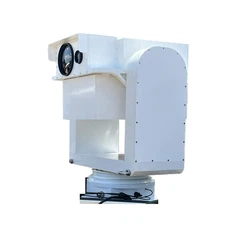
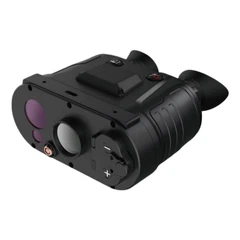
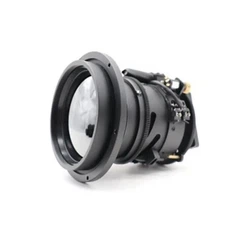
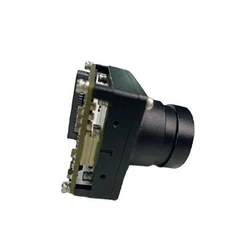
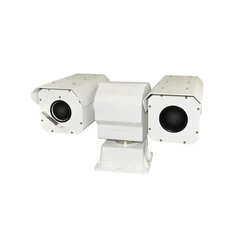
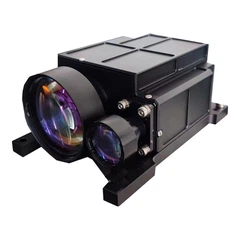
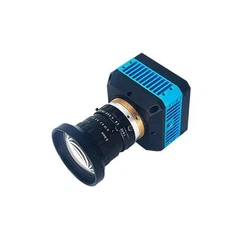

How Thermal Vision Cameras Work
Thermal Vision cameras, also known as thermal imagers, are advanced devices that detect and visualize the infrared energy (heat) emitted by objects. This technology is based on the principle that all objects emit infrared energy, which is directly related to their temperature. Generally, Infrared (Thermal imaging) cameras are working by the next steps:
1. Infrared Energy Detection
- Heat Signature: Every object with a temperature above absolute zero (-273.15°C) emits infrared energy, known as its heat signature.
- Infrared Sensors: Infrared cameras are equipped with specialized sensors, typically made of materials like indium gallium arsenide (InGaAs) or microbolometers, which detect this infrared radiation.
2. Conversion to Electrical Signals
- Thermal Data Capture: The camera's sensors capture the infrared energy emitted by objects in its field of view.
- Signal Conversion: The infrared energy is converted into electrical signals. Each pixel in the sensor array corresponds to a specific temperature value.
3. Image Processing
- Data Processing: The electrical signals are processed by the camera's internal electronics to create a thermal map of the scene.
- Color Mapping: The camera assigns different colors to different temperature ranges, creating a false-color image that represents the apparent surface temperatures of objects. For example:
- Warmer areas are often displayed in red, orange, or yellow.
- Cooler areas are shown in blue or purple.
4. Displaying the Thermal Image
- Visual Output: The processed thermal data is displayed on the camera's screen as a thermal image.
- Temperature Measurement: Many infrared cameras also provide temperature readings for specific points or areas within the image.

Key Components of an Thermal Vision Camera
- Infrared Lens (Objective): Focuses the infrared energy onto the sensor.
- Infrared Sensor Array: Detects the infrared radiation and converts it into electrical signals.
- Signal Processing Unit: Converts the raw data into a thermal image.
- Display Screen: Shows the thermal image and temperature data.
- Software: Provides additional features like temperature analysis, color palettes, and image storage.

(An exemplary structure of a Handheld thermal vision camera)
Applications of Thermal vision Cameras
Thermal vision cameras are used in a wide range of applications due to their ability to visualize heat signatures. Some common uses include:
- Building Inspections: Detecting heat loss, insulation gaps, and moisture intrusion.
- Electrical Maintenance: Identifying overheating components in electrical systems.
- Industrial Monitoring: Monitoring machinery and processes for overheating or malfunctions.
- Search and Rescue: Locating people or animals in low-visibility conditions.
- Medical Imaging: Detecting fever or inflammation in medical diagnostics.
- Security and Surveillance: Monitoring areas in complete darkness or through smoke and fog.
Advantages of Thermal vision Cameras
- Non-Contact Measurement: Can measure temperature from a distance without touching the object.
- Works in Complete Darkness: Does not rely on visible light, making it ideal for nighttime or low-light conditions.
- Penetrates Obstacles: Can see through smoke, fog, and dust.
- Real-Time Imaging: Provides instant thermal images and temperature data.
Limitations of Thermal vision Cameras
- Surface Temperature Only: Measures the apparent surface temperature, not internal temperatures.
- Reflection Issues: Highly reflective surfaces (e.g., glass or metal) can distort readings.
- Cost: High-quality thermal cameras can be expensive.
- Image Resolution: Thermal images typically have lower resolution compared to visible light cameras.