
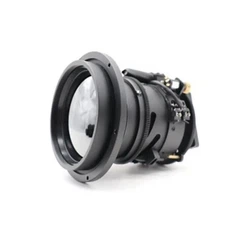

As a provider of Manual Focusing LWIR (Long-Wave Infrared) Lenses, I often encounter questions from customers interested in understanding the optical distortion level of these lenses. In this blog post, I'll delve into the concept of optical distortion in Manual Focusing LWIR Lenses, explain how it's measured, its impact on performance, and what customers should consider when evaluating distortion levels.
Understanding Optical Distortion in LWIR Lenses
Optical distortion refers to the deviation of an image from a true, undistorted representation of the object being observed. In the context of LWIR lenses, distortion can occur due to various factors related to the lens design, materials, and manufacturing processes. There are mainly two types of optical distortion: barrel distortion and pincushion distortion.
Barrel distortion is characterized by straight lines in the object appearing to bulge outwards, resembling the shape of a barrel. This type of distortion is more common in wide - angle lenses. On the other hand, pincushion distortion causes straight lines to appear to bend inwards, like the shape of a pincushion. It is often found in telephoto lenses.
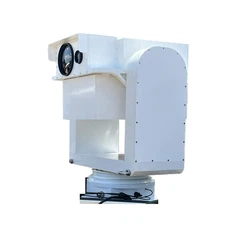
In Manual Focusing LWIR Lenses, these distortions can affect the accuracy of image analysis, especially in applications where precise measurements or identification of objects are required. For example, in surveillance applications using an E380 Advanced Multi - Purpose Heavy - load EO/IR ISRT System, distortion can lead to misinterpretation of the size and position of targets.
Measuring Optical Distortion
The optical distortion level of a Manual Focusing LWIR Lens is typically measured as a percentage. The most common method for measuring distortion is by using a test target with a grid of straight lines. The lens is then used to image this target, and the deviation of the lines in the image from their true, straight positions is measured.
The distortion percentage is calculated using the following formula:
[ Distortion (%)=\frac{y - y_0}{y_0}\times100]
where (y) is the measured distance of a point from the optical axis in the distorted image, and (y_0) is the distance of the corresponding point in the undistorted image.

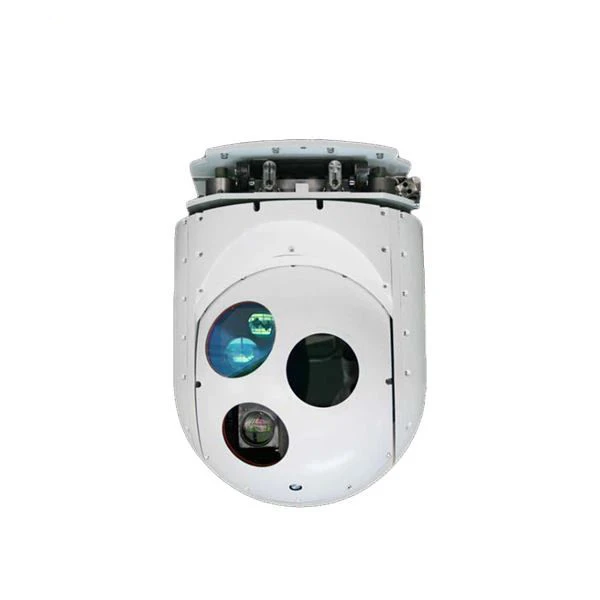
Manufacturers usually provide distortion specifications in their lens datasheets. These specifications give customers an idea of how much distortion they can expect from the lens at different focal lengths and apertures.
Factors Affecting Optical Distortion in Manual Focusing LWIR Lenses
Several factors can influence the optical distortion level of a Manual Focusing LWIR Lens.
Lens Design: The complexity and quality of the lens design play a crucial role. A well - designed lens with multiple elements arranged in an optimized way can minimize distortion. For example, using aspherical lens elements can help correct for distortion more effectively compared to traditional spherical elements.
Material Properties: The materials used in the lens construction can also affect distortion. Different materials have different refractive indices, and variations in these indices can lead to distortion. High - quality materials with consistent refractive properties are preferred to reduce distortion.
Manufacturing Tolerances: The precision of the manufacturing process is essential. Even small errors in the grinding, polishing, or assembly of the lens elements can introduce distortion. Tight manufacturing tolerances ensure that the lens meets the desired distortion specifications.
Impact of Optical Distortion on LWIR Lens Performance
The optical distortion level can have a significant impact on the performance of Manual Focusing LWIR Lenses in various applications.
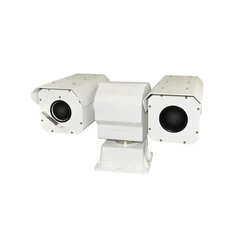
Surveillance and Reconnaissance: In surveillance systems such as the ISRT EO Systems for Mobile Platform, distortion can affect the accuracy of target detection and tracking. Distorted images may make it difficult to accurately measure the size and distance of objects, which is crucial for threat assessment.
Industrial Inspection: In industrial applications, distortion can lead to errors in the inspection of components. For example, when using an LWIR lens to inspect the thermal properties of a machine part, distortion can cause misinterpretation of the heat distribution patterns, leading to incorrect assessments of the part's condition.
Scientific Research: In scientific research, accurate imaging is essential. Distortion in an LWIR lens can affect the results of experiments, especially those involving the measurement of small objects or precise temperature distributions.
Evaluating Optical Distortion for Your Application
When choosing a Manual Focusing LWIR Lens, it's important to evaluate the optical distortion level based on your specific application requirements.
If your application requires high - precision measurements, such as in scientific research or some industrial inspection tasks, you should look for lenses with very low distortion levels, typically less than 1%. These lenses may be more expensive, but the accuracy they provide is worth the investment.
For general surveillance applications, a slightly higher distortion level may be acceptable. However, you should still consider the impact of distortion on target identification and tracking. For example, a lens with a distortion level of up to 3% may be suitable for wide - area surveillance where the focus is on detecting the presence of objects rather than precise measurements.
Our Manual Focusing LWIR Lenses and Distortion Control
At our company, we take great pride in our ability to control optical distortion in our Manual Focusing LWIR Lenses. We use advanced lens design software to optimize the arrangement of lens elements, ensuring minimal distortion across the entire field of view. Our manufacturing processes are highly precise, with strict quality control measures in place to maintain low distortion levels.
We offer a range of Manual Focusing LWIR Lenses suitable for different applications, from surveillance to industrial inspection. Our lenses can be integrated with various thermal imaging systems, such as the Bullet Dual SpectrumThermal Camera, to provide high - quality, low - distortion images.
Contact Us for Your LWIR Lens Needs
If you're in the market for a Manual Focusing LWIR Lens and want to learn more about our products' optical distortion levels and how they can meet your specific requirements, we encourage you to contact us. Our team of experts is ready to assist you in selecting the right lens for your application and can provide detailed information about our lenses' performance characteristics. Whether you're involved in surveillance, industrial inspection, or scientific research, we have the solutions to meet your needs.
References
- Smith, J. (2018). "Optical Design Principles for Infrared Lenses". Journal of Optical Engineering, 57(3), 034101.
- Johnson, A. (2019). "Measurement and Analysis of Optical Distortion in Thermal Imaging Lenses". Applied Optics, 58(12), 3210 - 3218.
- Brown, C. (2020). "Impact of Optical Distortion on Surveillance System Performance". International Journal of Video Surveillance, 22(4), 102 - 110.