

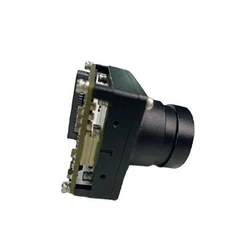
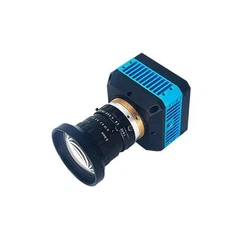

Shutterless LWIR (Long-Wave Infrared) cores have been making waves in the field of thermal imaging, and as a supplier of these state-of-the-art cores, I'm super stoked to share with you how they enhance the accuracy of temperature mapping.
The Basics of Temperature Mapping and Thermal Imaging
Before we dig into how shutterless LWIR cores boost temperature mapping accuracy, let's quickly go over what temperature mapping is. Temperature mapping is all about creating a visual representation of the temperature distribution across an object or a scene. It's used in a ton of different fields, like industrial inspections, building diagnostics, and even in the medical world.
Thermal imaging is the technology that makes temperature mapping possible. It works by detecting the infrared radiation emitted by objects and converting it into an image where different colors represent different temperatures. Traditional thermal imaging systems often use a mechanical shutter to calibrate the camera and compensate for any variations in the sensor's response. But here's where shutterless LWIR cores come in, and they're changing the game.
How Shutterless LWIR Cores Work
Shutterless LWIR cores are designed to eliminate the need for a mechanical shutter. Instead, they use advanced algorithms and on-chip calibration techniques to constantly adjust for sensor variations. This continuous calibration ensures that the image data is accurate and reliable, without the need for interruptions caused by the shutter closing and opening.
One of the key components of shutterless LWIR cores is the on-chip non-uniformity correction (NUC) algorithm. This algorithm analyzes the output of each pixel in the sensor and adjusts it to compensate for any differences in sensitivity. It does this in real-time, so the image quality remains consistent even as the temperature or other environmental conditions change.
Enhancing Accuracy in Temperature Mapping
Continuous Monitoring
One of the biggest advantages of shutterless LWIR cores is their ability to provide continuous monitoring. With traditional shutter-based systems, the shutter has to close periodically for calibration, which means there are brief moments when the camera is not capturing any data. This can be a problem in applications where real-time temperature monitoring is critical, such as in industrial process control or in monitoring the health of electrical equipment.
Shutterless LWIR cores, on the other hand, can capture data continuously without any interruptions. This allows for more accurate temperature mapping over time, as there are no gaps in the data. For example, in a manufacturing plant, continuous monitoring with a shutterless LWIR core can help detect small temperature changes in machinery that could indicate a potential problem before it becomes a major issue.
Faster Response Time
Another way shutterless LWIR cores enhance accuracy is by having a faster response time. The mechanical shutter in traditional systems takes time to open and close, which can slow down the imaging process. Shutterless cores, however, can update the image data much more quickly, allowing for faster temperature measurements.
This faster response time is especially important in applications where the temperature is changing rapidly, such as in high-speed manufacturing processes or in monitoring fast-moving objects. For instance, in a conveyor belt system, a shutterless LWIR core can quickly detect any temperature variations in the products passing by, ensuring that they meet the required quality standards.
Improved Image Quality
Shutterless LWIR cores also offer improved image quality, which directly translates to more accurate temperature mapping. The on-chip calibration techniques used in these cores help to reduce noise and artifacts in the image, resulting in a clearer and more detailed thermal image.
A clearer image means that it's easier to distinguish between different temperature regions, which is essential for accurate temperature mapping. For example, in building diagnostics, a high-quality thermal image can help identify areas of heat loss or insulation problems more precisely.
Real-World Applications
Industrial Inspections
In industrial settings, shutterless LWIR cores are being used for a wide range of inspections. For example, they can be used to monitor the temperature of electrical transformers, motors, and other equipment. By accurately mapping the temperature distribution, maintenance personnel can detect any overheating components and take preventive action before a breakdown occurs.
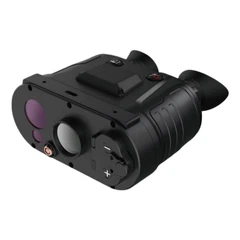
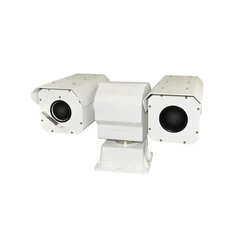
Our Thermal Imaging Dual Spectrum IP Camera BDT3/6 is equipped with a shutterless LWIR core and is ideal for industrial inspections. It provides high-resolution thermal images and can be integrated into existing monitoring systems.
Building Diagnostics
In the field of building diagnostics, shutterless LWIR cores are used to detect heat loss, air leaks, and moisture problems in buildings. The continuous monitoring and high image quality of these cores allow building inspectors to accurately map the temperature distribution inside and outside the building, helping to identify areas that need improvement.
Medical Applications
In the medical field, thermal imaging is used for various applications, such as detecting inflammation, blood flow disorders, and even early signs of cancer. Shutterless LWIR cores offer the accuracy and speed needed for these applications, allowing for more precise temperature mapping of the human body.
The Role of Optics
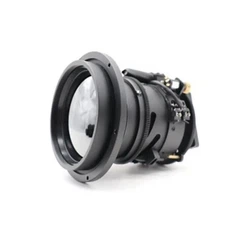
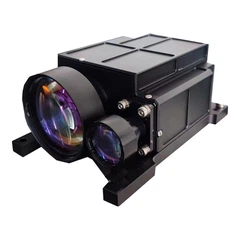
The accuracy of temperature mapping also depends on the quality of the optics used in the thermal imaging system. Our MWIR Thermal Lens 80~1100mm is designed to work seamlessly with our shutterless LWIR cores, providing excellent image quality and accurate temperature measurements.
The lens is carefully engineered to minimize aberrations and ensure that the infrared radiation is focused precisely onto the sensor. This helps to further enhance the accuracy of the temperature mapping, especially in applications where long-range or high-resolution imaging is required.
Integration with PTZ Systems
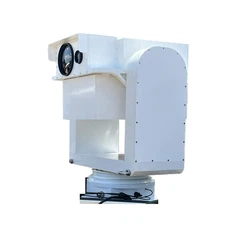
For applications that require pan-tilt-zoom (PTZ) functionality, our 384 640 Middle Range Dual Spectrum PTZ System is a great choice. It combines the benefits of a shutterless LWIR core with the flexibility of a PTZ system, allowing for wide-area monitoring and detailed inspections.
The system can be easily controlled remotely, and the high-resolution thermal images provided by the shutterless LWIR core ensure accurate temperature mapping across the entire field of view.
Conclusion
Shutterless LWIR cores are revolutionizing the field of temperature mapping by providing continuous monitoring, faster response times, and improved image quality. Whether you're in the industrial, building diagnostics, or medical field, these cores offer a reliable and accurate solution for your thermal imaging needs.


If you're interested in learning more about our shutterless LWIR cores or any of our other products, I encourage you to reach out to us for a procurement discussion. We're here to help you find the best thermal imaging solution for your specific application.
References
- [1] Thermal Imaging Handbook, Second Edition, edited by Daniel Reimann
- [2] Infrared Thermal Imaging: Fundamentals, Research and Applications, by J. M. Maldague