


Hey there! I'm a supplier of Shutterless LWIR (Long-Wave Infrared) Cores, and today I wanna chat about the noise equivalent temperature difference (NETD) of these amazing cores.
First things first, you might be wondering, what on earth is NETD? Well, NETD is a crucial parameter in thermal imaging. It basically tells us how sensitive a thermal sensor is. In simple terms, it's the smallest temperature difference that the sensor can detect. The lower the NETD value, the better the sensor's ability to distinguish between different temperatures.
Let's dive a bit deeper into how NETD impacts the performance of Shutterless LWIR Cores. When we have a low NETD, it means that the core can pick up on very subtle temperature variations. This is super important in applications where precision is key, like surveillance, industrial inspections, and scientific research.
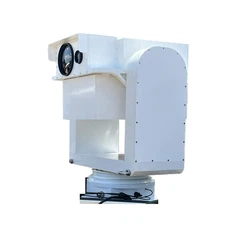
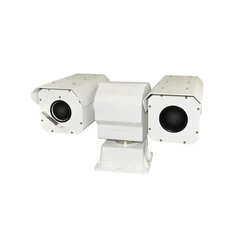
For example, in the EO IR Thermal Radar Scan and Search (EO - RST) System, a low NETD Shutterless LWIR Core can help in accurately detecting and tracking targets. Whether it's spotting a person in the dark or monitoring the heat signatures of machinery, a low NETD ensures that the images are clear and detailed.
Now, let's talk about the advantages of using Shutterless LWIR Cores in terms of NETD. Traditional LWIR cores often come with mechanical shutters. These shutters are used to calibrate the sensor and reduce noise. However, they have their drawbacks. Shutters can add weight, complexity, and cost to the system. They also introduce downtime as they need to close periodically for calibration.
Shutterless LWIR Cores, on the other hand, tackle these issues head - on. They use advanced algorithms to continuously calibrate the sensor and reduce noise. This means that the core can operate without the need for a mechanical shutter, resulting in a more reliable and lightweight system.
But how does this connect to NETD? Well, the continuous calibration in Shutterless LWIR Cores helps in maintaining a stable and low NETD. Since there's no interruption from a shutter closing for calibration, the sensor can consistently detect small temperature differences. This leads to a better overall performance and higher - quality thermal images.
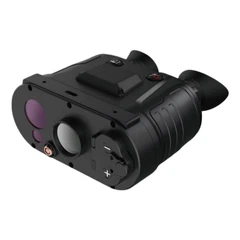
Another great application where our Shutterless LWIR Cores with excellent NETD come in handy is the Dual Spectrum Thermal Ultra - low Light Image Fusion Vision Handheld Binocular. In low - light or no - light conditions, the low NETD of the core allows users to clearly see the heat signatures of objects. Whether you're out hunting at night or conducting a surveillance mission, the ability to detect even the slightest temperature differences can make all the difference.
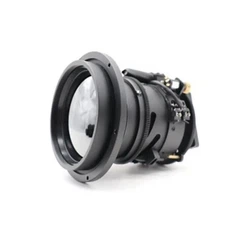
Our 640 X 512 MCT Anti - shock MWIR Thermal Image Core 20x Zoom CMP620 also benefits greatly from a well - optimized NETD. The high resolution of 640 X 512, combined with a low NETD, results in incredibly detailed thermal images. The 20x zoom feature can further enhance the ability to observe distant objects with precision.
In the market, there are a lot of factors that can affect the NETD of Shutterless LWIR Cores. Things like the quality of the detector materials, the design of the optical system, and the efficiency of the signal processing algorithms all play a role. At our company, we've spent years researching and developing the best combination of these elements to ensure that our cores have an outstanding NETD.
We use high - quality detector materials that have excellent thermal sensitivity. Our optical system is carefully designed to minimize noise and maximize the amount of infrared light reaching the detector. And our signal processing algorithms are constantly being refined to further reduce noise and improve the overall performance of the core.
When it comes to the testing of NETD, we follow strict industry standards. We use a calibrated blackbody source to create a known temperature difference and then measure how well our Shutterless LWIR Core can detect it. This allows us to accurately determine the NETD value and ensure that our cores meet or exceed the requirements of our customers.
If you're in the market for Shutterless LWIR Cores, it's important to consider the NETD value. A low NETD means better performance, clearer images, and more reliable operation. Whether you're integrating the cores into a surveillance system, a handheld device, or an industrial inspection tool, the NETD can significantly impact the end - user experience.
So, if you're interested in learning more about our Shutterless LWIR Cores and their amazing NETD performance, don't hesitate to reach out. We're here to answer all your questions and help you find the perfect core for your application. Whether you're a small business looking for a cost - effective solution or a large corporation in need of high - end technology, we've got you covered.
Let's start a conversation about how our Shutterless LWIR Cores can revolutionize your thermal imaging needs. Contact us today to start the procurement and negotiation process, and let's work together to take your thermal imaging projects to the next level.


References
- Thermal Imaging Handbook, various industry - standard publications on thermal imaging technology and sensor performance.
- Research papers on the development of Shutterless LWIR Cores and the optimization of NETD values.