

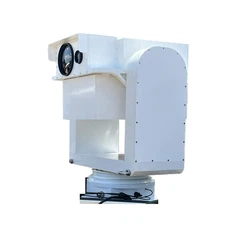
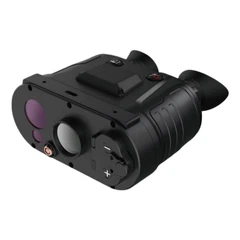
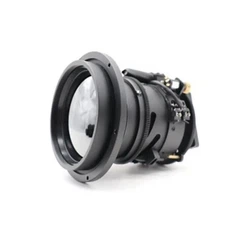

As an IR Optics supplier, I often get asked about the differences between single - band and multi - band IR optics. It's a topic that can seem a bit technical at first, but I'm here to break it down in a way that's easy to understand.


What are Single - Band IR Optics?
Single - band IR optics are designed to work within a specific, narrow range of infrared wavelengths. Think of it like a radio tuned to a single station. These optics are optimized for that particular wavelength band, which means they can offer really high performance in that specific area.
One of the big advantages of single - band IR optics is their simplicity. Since they're focused on just one wavelength range, they're generally easier to design and manufacture. This can lead to cost savings, which is great for customers who are on a budget. For example, if you're using an IR system for a very specific application, like detecting a particular type of gas that emits in a certain IR wavelength, a single - band optic can be a perfect choice. It'll give you a clear and accurate signal from that specific emission source.
However, there are also some limitations. Because single - band optics are so specialized, they're not very flexible. If your application needs to detect multiple types of infrared emissions or if the conditions change and you need to look at a different wavelength range, a single - band optic won't be able to do the job. You'd have to switch to a different optic, which can be time - consuming and expensive.
What are Multi - Band IR Optics?
Multi - band IR optics, on the other hand, are like a radio that can tune into multiple stations at once. They're designed to work across multiple infrared wavelength bands. This gives them a lot more versatility.
One of the main benefits of multi - band IR optics is their ability to gather more information. In many real - world scenarios, different objects or phenomena emit infrared radiation in different wavelength bands. For example, in thermal imaging for security purposes, a multi - band optic can detect both the heat signatures of humans (which are in one wavelength band) and the heat from mechanical equipment (which might be in a different band). This allows for a more comprehensive view of the situation, which can be crucial in security and surveillance applications.
Another advantage is adaptability. If the conditions of your application change, a multi - band optic might be able to handle it without the need for a complete system overhaul. You can simply adjust the detection settings to focus on different wavelength bands as needed.
But multi - band optics also come with their own set of challenges. They're more complex to design and manufacture. The optical components need to be carefully engineered to work well across multiple wavelength ranges, which can increase the cost. Additionally, the data processing required to analyze the signals from multiple bands can be more complicated, which might require more powerful and expensive processing equipment.
Performance Comparison
When it comes to performance, single - band and multi - band IR optics have their own strengths and weaknesses.
In terms of sensitivity, single - band optics can often be more sensitive within their specific wavelength range. Since they're optimized for that one band, they can pick up weaker signals more effectively. This makes them great for applications where detecting very faint infrared emissions is important, like astronomical observations or some scientific research.
Multi - band optics, however, can provide a more complete picture of the infrared environment. They sacrifice a bit of sensitivity in each individual band for the sake of being able to detect a wider range of wavelengths. This is useful in applications where having a broad view is more important than extreme sensitivity in one particular area, such as environmental monitoring or industrial process control.
In resolution, single - band optics can also sometimes offer better performance. The simplicity of their design allows for more precise focusing of the infrared light within the single band, which can result in sharper images. Multi - band optics have to balance the needs of multiple wavelength ranges, which can sometimes lead to a slight compromise in resolution.
Applications
The choice between single - band and multi - band IR optics often depends on the specific application.
Let's start with single - band applications. One common use is in medical infrared imaging. For example, detecting skin temperature changes for early diagnosis of certain diseases often requires looking at a specific infrared wavelength. A single - band IR optic can be used to get a very accurate measurement in that particular wavelength range, helping doctors make more informed decisions.
In the military, single - band optics can be used for anti - missile systems. These systems need to detect the specific infrared signature of a missile, which is usually in a narrow wavelength band. A high - performance single - band optic can quickly and accurately identify the threat.
Now, let's look at multi - band applications. In the field of environmental science, multi - band IR optics are used to monitor different aspects of the environment. They can detect the infrared emissions from vegetation, water bodies, and the atmosphere all at once. This helps scientists study things like climate change, deforestation, and water pollution on a larger scale.
For industrial inspection, multi - band optics are invaluable. They can be used to check for defects in materials, monitor the temperature of machinery, and detect the presence of gases. Since different materials and processes emit infrared radiation in different bands, a multi - band optic can provide a comprehensive inspection in one pass.
Our Product Offerings
At our company, we offer a wide range of both single - band and multi - band IR optics. If you're looking for a high - quality single - band solution, we have options that are designed to meet the most demanding applications. And for those who need the versatility of multi - band optics, we've got you covered too.
We also offer some specialized products. For example, our MWIR Zooming Lens is a great option for applications where you need to adjust the field of view in the mid - wave infrared range. It provides excellent image quality and flexibility.
If you're working in the long - wave infrared range, our Manual Focusing LWIR Lens is a reliable choice. It allows you to manually adjust the focus to get the best possible image.
And for those who need a custom - designed IR optical system, we offer IR Optical System Design and Customization. Our team of experts can work with you to create an optic that's tailored to your specific needs.
Contact Us for Procurement
If you're interested in learning more about our single - band and multi - band IR optics or if you're ready to make a purchase, we'd love to hear from you. Whether you have a specific application in mind or just want to explore your options, our sales team is here to help. Contact us to start a discussion about how our IR optics can meet your requirements.
References
- Smith, J. (2020). Infrared Optics Handbook. Publisher XYZ.
- Johnson, A. (2019). Advances in Multi - Band Infrared Imaging. Journal of Infrared Science.
- Brown, C. (2018). Single - Band IR Optics for Specialized Applications. Proceedings of the Optics Conference.