


Hey there! As a supplier of IR optics, I've had my fair share of chats about how these bad boys stack up against other optical systems. So, let's dive right in and break it down.
First off, what exactly are IR optics? Well, infrared (IR) optics are designed to work with infrared light, which has longer wavelengths than visible light. This means they're super useful in a bunch of applications where you can't rely on visible light alone.
One of the big differences between IR optics and other optical systems is the way they interact with light. Visible light optics, like the ones in your everyday camera or binoculars, are optimized for the wavelengths of light that our eyes can see. They're great for things like taking pictures of your friends or bird-watching. But when it comes to situations where visibility is low, like in the dark or through fog, visible light optics just don't cut it.
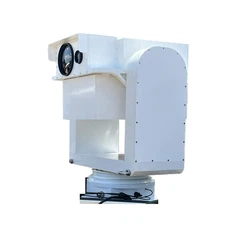
That's where IR optics come in. They can detect and focus infrared light, which is emitted by all objects with a temperature above absolute zero. This means that even in complete darkness, IR optics can "see" heat signatures. For example, in security and surveillance, IR cameras with IR optics can spot intruders at night by picking up their body heat. It's like having X-ray vision, but for heat!
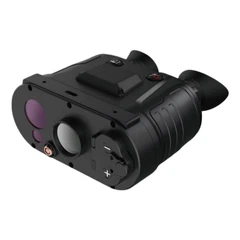
Another cool thing about IR optics is their use in thermal imaging. Thermal cameras with IR optics are used in all sorts of industries. In building inspection, they can find heat leaks in a house's insulation. In the medical field, they can help detect inflammation or blood flow issues. And in the military, they're essential for night operations, allowing soldiers to see enemy movements even when it's pitch black.
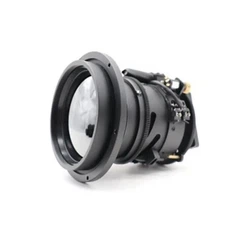
Now, let's talk about some of the specific types of IR optics we offer. We've got the 45 - 900mm MWIR F4.0. The MWIR stands for mid-wave infrared. This lens is really versatile, with a wide focal length range. It's great for applications where you need to zoom in and out, like in long-range surveillance or wildlife monitoring.
Then there's the Motorized Focusing LWIR Lens. The LWIR is long-wave infrared. This lens has a motorized focusing system, which means you can adjust the focus remotely. It's perfect for situations where you can't physically reach the lens, like in a high-up security camera or a drone.
And for those who prefer a more hands-on approach, we have the Manual Focusing LWIR Lens. This one gives you full control over the focus, allowing you to fine-tune the image according to your needs. It's great for photographers or researchers who want to have that extra level of precision.
But it's not all sunshine and rainbows with IR optics. They do have some limitations compared to other optical systems. For one, they're generally more expensive. The materials and manufacturing processes used to make IR optics are more complex and costly. So, if you're on a tight budget, it might be hard to justify investing in IR optics.
Also, IR optics are more sensitive to environmental factors. Things like temperature and humidity can affect their performance. For example, extreme cold can cause the lens to fog up, which can blur the image. And high humidity can lead to moisture buildup inside the lens, which can damage it over time.
In terms of resolution, visible light optics often have an edge. They can produce sharper and more detailed images, especially when it comes to small objects or fine details. IR optics, on the other hand, are more focused on detecting heat differences, so the images might not be as crisp in terms of visual details.


Another thing to consider is compatibility. Some devices are designed specifically for visible light optics and might not work well with IR optics without some modifications. So, you need to make sure that the IR optics you choose are compatible with your existing equipment.
But despite these limitations, the benefits of IR optics are hard to ignore. In many applications, they're the only option that can get the job done. Whether it's for security, scientific research, or industrial inspections, IR optics offer a unique perspective that other optical systems just can't match.
If you're in the market for IR optics, I'd love to have a chat with you. We can go over your specific needs and figure out which of our products would be the best fit for you. Whether you're a small business looking to upgrade your security system or a large research institution in need of high-quality IR optics, we've got you covered.
So, don't hesitate to reach out and start a conversation. Let's see how we can work together to get you the right IR optics for your project.
References
- Smith, J. (2020). Introduction to Infrared Optics. Optics Publishing.
- Johnson, A. (2019). Applications of IR Optics in Modern Industries. Industrial Optics Journal.