

Yo, what's up everyone! I'm a supplier of LWIR Fixed Focus Lenses, and today I wanna talk about how altitude affects these lenses. It's a topic that's super important, especially for those who use our lenses in high - altitude environments.
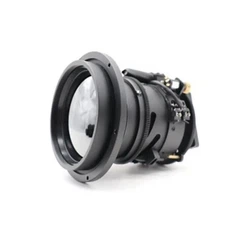
First off, let's quickly understand what LWIR Fixed Focus Lenses are. LWIR stands for Long - Wave Infrared. These lenses are designed to work in the long - wave infrared spectrum, which is great for detecting heat signatures. Fixed focus means they're set at a particular focal length and don't need to be adjusted constantly. They're used in a bunch of applications like thermal imaging for surveillance, military operations, and even some scientific research.
Now, when it comes to altitude, there are a few key factors that can mess with how our LWIR Fixed Focus Lenses perform.
Temperature and Pressure Changes
One of the most obvious effects of increasing altitude is the drop in temperature and pressure. At higher altitudes, the air is thinner, and the temperature can be way colder. These changes can have a direct impact on the lens materials.
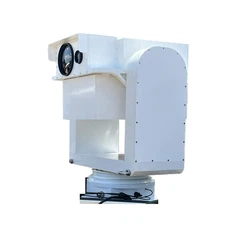
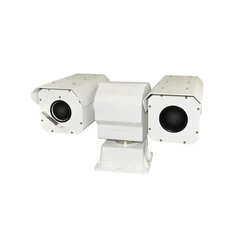
Most LWIR lenses are made from materials like germanium, zinc selenide, or chalcogenide glasses. These materials expand and contract with temperature changes. When the temperature drops at high altitudes, the lens material contracts. This can cause the focal length of the lens to change. A change in focal length means that the image you're trying to capture might go out of focus. You might start seeing blurry images, which is a big no - no, especially in applications where clear thermal imaging is crucial, like in the 384 Long - range Surveillance EO PTZ Systems.


The pressure changes can also be a problem. The thin air at high altitudes can cause stress on the lens coatings. Some of the coatings on LWIR lenses are there to improve the transmission of infrared light. If the pressure is too low, these coatings can start to delaminate or crack. Once the coatings are damaged, the lens won't be able to transmit infrared light as efficiently, and the image quality will suffer.
Atmospheric Absorption
The atmosphere plays a huge role in how LWIR light travels. At different altitudes, the composition of the atmosphere changes. There are more water vapor and other gases closer to the ground. These gases absorb LWIR light to some extent.
As you go higher in altitude, the amount of water vapor and other absorbing gases decreases. This might seem like a good thing at first because less absorption means more LWIR light can reach the lens. However, it's not that simple. The change in absorption can also affect the contrast and clarity of the image.
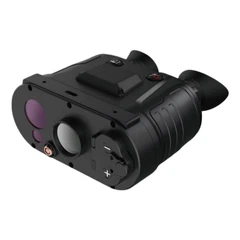
In lower altitudes, the absorption can actually help in creating a more balanced image by reducing the amount of stray light. But at high altitudes, with less absorption, there might be more stray light reaching the lens. This can lead to a decrease in image contrast, making it harder to distinguish between different heat sources. For example, in a thermal imaging device like the 640 VGA VOX Dual Spectrum Thermal Fusion Vision Goggle, this loss of contrast can make it difficult to spot targets clearly.
Radiation and Particles
Higher altitudes also mean more exposure to cosmic radiation and high - energy particles. These can have a negative impact on the detector in the LWIR imaging system. The detector is what converts the infrared light that passes through the lens into an electrical signal that can be turned into an image.
Cosmic radiation can cause single - event effects in the detector. These are like little glitches that can show up as bright spots or artifacts in the image. Over time, repeated exposure to radiation can also damage the detector, reducing its sensitivity and lifespan.
There are also more dust and other particles at high altitudes, especially in areas near mountains or deserts. These particles can scatter the LWIR light before it reaches the lens. This scattering can cause the image to become hazy and reduce the overall resolution of the image.
Solutions and Adaptations
So, what can we do to make our LWIR Fixed Focus Lenses work better at high altitudes?
First, we can use materials that are more resistant to temperature changes. Some new types of chalcogenide glasses are being developed that have a lower coefficient of thermal expansion. This means they won't change shape as much when the temperature drops.
For the lens coatings, we can use more robust materials and better manufacturing processes. Some coatings are now being designed to be more resistant to pressure changes and delamination.
To deal with the atmospheric absorption and stray light issues, we can use special filters in the lens system. These filters can help in reducing the amount of stray light and improving the contrast of the image.
For the radiation and particle problem, we can add shielding to the detector. This shielding can protect the detector from cosmic radiation and reduce the risk of single - event effects.
In addition, we can also do more testing at different altitudes. By testing our lenses in high - altitude environments, we can identify any potential problems early on and make the necessary adjustments.
Real - World Applications
Let's take a look at some real - world scenarios where these altitude effects matter.
In military applications, soldiers might use thermal imaging devices with LWIR Fixed Focus Lenses in mountainous regions. The high altitudes in these areas can cause all the problems we've talked about. If the lenses don't work properly, it can be difficult for soldiers to detect enemy movements or identify potential threats. That's why having lenses that can perform well at high altitudes is crucial.
In scientific research, especially in astronomy or high - altitude atmospheric studies, LWIR lenses are used to detect heat sources in the sky or in the upper atmosphere. Any issues with the lenses due to altitude can lead to inaccurate data collection.
Conclusion
So, as you can see, altitude can have a significant impact on how LWIR Fixed Focus Lenses perform. From temperature and pressure changes to atmospheric absorption and radiation, there are many factors at play. But don't worry, as a supplier, we're constantly working on improving our lenses to overcome these challenges.
If you're in the market for LWIR Fixed Focus Lenses, whether it's for military, scientific, or other applications, we've got you covered. Our team of experts is always ready to help you choose the right lens for your specific needs, especially if you're going to be using it at high altitudes.
If you're interested in learning more or want to start a procurement discussion, just reach out. We're here to make sure you get the best LWIR Fixed Focus Lenses for your projects.
References
- Smith, J. (2018). "Thermal Imaging in Extreme Environments." Journal of Infrared Science.
- Johnson, A. (2019). "The Effects of Altitude on Optical Systems." Optics Today.
- Brown, C. (2020). "Advances in LWIR Lens Technology." Applied Optics Review.