


INTRODUCTION
In the realm of aerial surveillance, capturing clear and stable imagery from a moving platform-such as an aircraft traveling at high speeds-presents significant challenges. Vibrations, turbulence, and rapid maneuvers can degrade image quality, making it difficult to monitor targets effectively. To address these challenges, advanced stabilization systems have been developed, combining active and passive techniques to ensure steady imagery. One such approach is the integration of 4-axis active gyro-stabilization with 6-axis passive isolation, a technology that leverages Degrees of freedom (DOF) to achieve exceptional performance. This essay explores the mechanics, benefits, and applications of this dual stabilization system, shedding light on its importance in modern aerial surveillance.
What is 4-Axis Active Gyro-Stabilization?
The term "4-axis active gyro-stabilization" refers to a system that actively controls four degrees of freedom to stabilize a camera payload on a moving platform. In this context, degrees of freedom represent the independent ways in which an object can move in three-dimensional space. For aerial surveillance systems, these movements are typically rotational, as the goal is to maintain the camera's line of sight on a target despite the platform's motion.
The four axes in this system correspond to the following DOF:
- Yaw: Rotation around the vertical axis, allowing the camera to pan left or right.
- Pitch: Rotation around the lateral axis, enabling the camera to tilt up or down.
- Roll: Rotation around the longitudinal axis, compensating for side-to-side tilting.
- Sensor Control Axis: A fourth axis dedicated to fine adjustments of the camera sensor itself, often involving micro-tilts or rotations to precisely align the sensor with a target.
The "active" aspect of this system indicates that stabilization is achieved through real-time adjustments powered by motors and guided by gyroscopes. Gyroscopes, which are highly sensitive sensors, measure the angular velocity and orientation of the platform. When the platform moves-due to turbulence, wind gusts, or maneuvers-the gyroscopes detect these changes and send data to a control system. The control system then commands motors on each axis to move the camera payload in the opposite direction of the platform's motion, effectively canceling out the movement and keeping the camera steady.
This active stabilization is particularly effective for correcting larger, slower movements, such as those caused by an aircraft turning or climbing. The fourth axis, the sensor control axis, adds an additional layer of precision, allowing operators to make fine adjustments to the camera's orientation. This is crucial for applications requiring high accuracy, such as tracking small targets over long distances or focusing on specific areas of interest during surveillance missions.
What is 6-Axis Passive Isolation?
Complementing the active stabilization is the "6-axis passive isolation" system, which addresses all six degrees of freedom in three-dimensional space. These six DOF include both rotational and translational movements:
- X-Axis Translation: Linear movement forward or backward.
- Y-Axis Translation: Linear movement left or right.
- Z-Axis Translation: Linear movement up or down.
- Yaw Rotation: Rotation around the vertical axis.
- Pitch Rotation: Rotation around the lateral axis.
- Roll Rotation: Rotation around the longitudinal axis.
Unlike the active system, passive isolation does not rely on motors or power. Instead, it uses mechanical components-such as springs, dampers, or elastomeric mounts-to absorb and dissipate energy from vibrations and shocks. These components are designed to filter out high-frequency vibrations that the active system may not fully address, such as those caused by engine noise, propeller rotation, or aerodynamic turbulence.
The passive isolation system works by physically isolating the camera payload from the platform's vibrations. When the platform experiences a high-frequency disturbance, the mechanical components absorb the energy, preventing it from transferring to the camera. This reduces jitter-small, rapid movements that can blur images-and ensures that the camera remains steady even in challenging conditions.
The Combined Effect: A Dual Approach to Stability
The integration of 4-axis active gyro-stabilization with 6-axis passive isolation creates a powerful dual approach to stabilizing aerial surveillance systems. Each component addresses different types of disturbances, working together to deliver clear, high-quality imagery.
The active gyro-stabilization system excels at correcting larger, slower movements. For example, when an aircraft banks during a turn, the yaw, pitch, and roll axes adjust to keep the camera pointed at the target. The sensor control axis further refines the camera's alignment, ensuring precision even at high speeds or over long distances. This active system is essential for maintaining a stable line of sight during dynamic flight conditions.
Meanwhile, the passive isolation system tackles high-frequency vibrations that the active system cannot fully mitigate. Vibrations from engines or turbulence often occur at frequencies above 100 Hz, which are too rapid for active motors to counteract effectively. The 6-axis passive isolation system absorbs these vibrations across all translational and rotational DOF, reducing jitter and preventing image blur. This is particularly important for maintaining image quality during high-speed flight or in turbulent environments.
Together, these systems ensure that the camera payload remains stable in all six DOF, providing a seamless and reliable solution for aerial surveillance. The active system handles the "big picture" movements, while the passive system fine-tunes the stability by filtering out smaller disturbances. The result is a steady, high-resolution image that operators can rely on for critical missions.
Applications and Benefits in Aerial Surveillance
This dual stabilization approach is particularly valuable in aerial surveillance applications, where image stability is paramount. For instance, in environmental monitoring, such as tracking forest fires, operators need to detect small hotspots from a distance while flying at high speeds. The 4-axis active stabilization ensures the camera remains locked on the target, while the 6-axis passive isolation prevents vibrations from blurring the image, allowing for accurate detection and temperature measurement.
In search and rescue operations, the ability to capture clear imagery from a moving platform can mean the difference between locating a missing person and missing critical details. The active system compensates for the platform's motion, while the passive system ensures that high-frequency vibrations-common in rotor-wing aircraft-don't degrade the image quality. This combination enables operators to scan large areas efficiently and identify targets with precision.
The technology also enhances system durability. By absorbing shocks and vibrations, the passive isolation system reduces mechanical stress on the camera payload, extending its lifespan and ensuring reliability during long-endurance missions. This is a significant advantage for operations that require extended flight times, such as border patrol or wildlife monitoring.
Conclusion
The combination of 4-axis active gyro-stabilization with 6-axis passive isolation represents a sophisticated solution for stabilizing aerial surveillance systems. By addressing all six degrees of freedom-three rotational and three translational-this dual approach ensures that cameras remain steady in the face of dynamic flight conditions and high-frequency vibrations. The active system corrects larger movements with precision, while the passive system filters out smaller disturbances, delivering clear, high-quality imagery for a wide range of applications. Whether monitoring environmental hazards, conducting search and rescue, or performing surveillance, this technology provides the stability and reliability needed to succeed in challenging aerial environments.
Please refer to
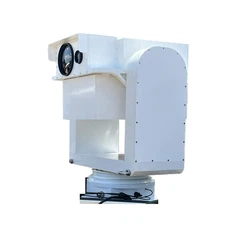
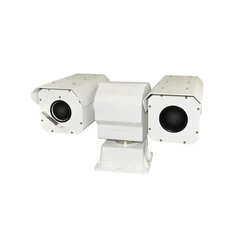
OUR new 4 axis (4-DOF) system POD-125-T4 .