

TABLE OF CONTENTS:
- Introduction: Seeing Through the Dark
- Classification: Four Ways to Conquer the Night
- Applications: Where Night Vision Shines
- Conclusion: Lighting Up Tomorrow
- A Comparison of Active and Passive Infrared Night Vision Technologies

1. Introduction: Seeing Through the Dark
Imagine peering into a pitch-black night and suddenly seeing the world come alive-soldiers moving silently through a forest, a deer grazing under moonlight, or a factory machine glowing with hidden heat. Night vision technology makes this possible, turning darkness into a canvas of discovery. It's a field that's fascinated me for years, blending science and practicality to extend what our eyes can do. IREOCAM first laid out three core types-image intensification, active illumination, and thermal imaging- Now, I'm adding a fourth player to the mix: low-light CMOS technology, which catches near-infrared (NIR) and even some short-wave infrared (SWIR) light. In this essay, I'll break down these technologies, explore where they shine in the real world, and peek at what's coming next. Let's dive in and see how they light up the night.
2. Classification: Four Ways to Conquer the Night
Night vision isn't one-size-fits-all-it's a family of technologies, each with its own trick for beating the dark. Here's how they stack up.
2.1 Active Illumination: GEN 0, Shining a Secret Light
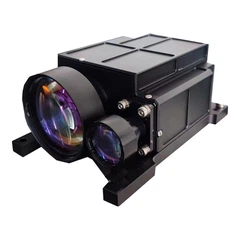
Next, active illumination takes a different tack. Instead of waiting for light, it brings its own, beaming out infrared (IR) that bounces back to an IR-sensitive sensor. It use this with CMOS sensors and IR illuminators stretching 400-500 meters. It's the budget-friendly option, a nod to Gen 0's old-school IR tricks, but it's got quirks-other night vision can spot that IR glow, and the range drops off fast as the light weakens. Still, it's a solid pick when you need a quick boost in dim conditions.
The main issue of this type of device is that the enemy can find you by using special detection cameras, actually, most of these illumination rays locates at the NIR or SWIR band, so basically you can detect the spots , either from ordinary illuminator or laser, by using the cameras which have the response in that band. Please click here to review our wide-band camera.
2.2 Image Intensification: Passive, Amplifying the Faint
First up is image intensification, the classic night vision you might picture with that iconic green glow. Optics Trade's video walks us through it: light slips through a lens, hits a photocathode, and turns into electrons. Those electrons zip through a microchannel plate (MCP), multiplying like crazy, then splash onto a phosphor screen to create a green image-green because it's easy on our eyes and the phosphor loves it. This tech has evolved over generations:
- Gen 0 from WWII needed an infrared spotlight (please see 2.1)
- Gen 1 (about 1000x amplification) is cheap but fuzzy,
- Gen 2 (20,000x) sharpens up with an MCP, and
- Gen 3 (up to 50,000x) uses fancy gallium arsenide for crisp, military-grade views.
Please click here to review our Image Intensifier Goggles.
2.3 Thermal Imaging: Passive, Seeing Heat, Not Light
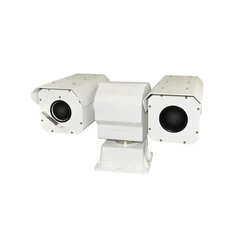
Then there's thermal imaging, which doesn't care about light at all. It picks up heat-think infrared radiation from 8-14 microns-emitted by anything warm, like a person or a car engine. A microbolometer turns that into a visible image, often in shades of gray or color-coded heat maps. Resolutioncan be 640x480, modern technology allows 1280x1080 (1080p) civillian application avaible-but it's about spotting shapes, not fine details.
Please click here to review our Thermal Imaging sights and scopes etc..
2.4 Low-Light CMOS: Passive, Digital Sensitivity Unleashed
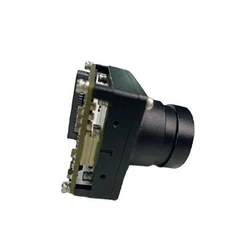
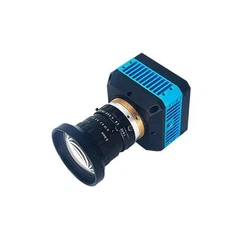
Finally, meet low-light CMOS technology, the digital newcomer. These sensors, like Sony's IMX series, are built to grab every last photon, even in crazy-low light-down to 0.001 lux-and they stretch into NIR (700-1100 nm) and some SWIR (1100-2500 nm) with the right tweaks. Unlike IITs amplifying light or active illumination adding it, CMOS just sees better, thanks to tricks like back-illumination. It's not an amplifier, so pitch-black is tough, but with a sliver of light, it's a detail machine.
Please click here to review our low-light CMOS sights
These four- illumination, amplification, heat detection, and digital sensitivity-each tackle the night their own way, making them perfect for different jobs.
3. Applications: Where Night Vision Shines
So, where do these technologies show up in real life? Let's take a tour through their playgrounds.
3.1 Military and Tactical Edge
Night vision started with the military, and it's still a powerhouse there. Gen 3 IITs give soldiers a 500-meter edge in low light, per Optics Trade, while thermal imaging spots enemies through bushes or haze. Active illumination's handy for close-up work, though it's less stealthy. Low-light CMOS? It's popping up in drones and surveillance cams, delivering high-res NIR views without tipping off the enemy-think silent perimeter sweeps.
3.2 Civilian Adventures
For the rest of us, night vision opens up the dark in cool ways. The digital goggles are a hit with hunters and campers, blending active illumination and CMOS sensitivity for 400-500m of night-time fun. Affordable Gen 1 or Gen 2 IITs suit hobbyists on a budget, while thermal imaging helps rescuers find lost hikers by their body heat. CMOS shines in consumer tech too-night photos on your phone or wildlife cams owe a lot to its NIR tricks.
3.3 Industrial and Scientific Wins
In the industrial world, thermal imaging catches hot spots in machinery before they fail, and CMOS sensors check products under IR light-think semiconductor flaws. Scientists love it too: thermal tracks nocturnal critters, IITs watch their habits, and CMOS's SWIR range peers into the cosmos or digs up buried relics.
From battlefields to backyards, these tools turn night into day, each playing to its strengths.
4. Prospects: The Future of Night Vision
What's next for night vision? The horizon's packed with possibilities, and I'm excited to see where it goes.
4.1 Tech on the Rise
IITs might swap green for white phosphor screens-easier on the eyes-and push Gen 3's 500m range with better lenses. Active illumination could get stealthier IR beams, stretching its reach. Thermal imaging's chasing higher resolution-imagine 1280x1024-and smaller gear. Low-light CMOS is the one to watch: NIR/SWIR sensitivity could dip below 0.0001 lux with AI boosting the signal, rivaling IITs digitally. I'd bet on hybrids too-CMOS plus thermal, blending detail and heat in one package.
4.2 New Frontiers
Military's already eyeing CMOS for smart drones and thermal for precision strikes. Civilians might get cheap CMOS night vision in glasses or cars. Industry could use SWIR CMOS to spot material stress, and thermal might green up buildings with energy audits. Science? Think SWIR archaeology or CMOS stargazing-night vision's going cosmic.
4.3 Hurdles and Hopes
Cost's the biggie-Gen 3's €10,000 tag stings, but CMOS keeps dropping. IITs need longer range, thermal wants sharper images, and CMOS craves that last bit of light. Durability's key too-protecting IITs and CMOS from bright flashes. The original essay's right: solving these opens doors everywhere.
5. Conclusion: Lighting Up Tomorrow
Night vision-image intensification, active illumination, thermal imaging, and low-light CMOS-is a marvel, each type cracking the dark in its own way. From IITs' green glow to CMOS's NIR finesse, they've reshaped how we work and play after sunset. Their applications are vast, their futures thrilling. As tech marches on, night vision's poised to reveal even more, making the unseen a little less mysterious-and a lot more exciting.
6. A Comparison of Active and Passive Infrared Night Vision Technologies
| Feature | Active Infrared Night Vision (GEN 0) | Passive Infrared Night Vision (Thermal Imaging) |
|---|---|---|
| Light Source | Requires active infrared illumination | No external light source required |
| Image Quality | High-resolution, detailed images | Lower resolution, less detail |
| Detection Range | Up to 1000~2000m (with laser light source) | Up to 2000m, or 30+km with ultra-long focus lens |
| Environmental Resilience | Limited by fog, smoke, and dust | Works in smoke, fog, and complete darkness |
| Cost | Affordable | More Expensive |
| Applications | Traffic monitoring, security systems | Military, search and rescue, critical infrastructure |
Here is a very interesting video from youtube Veritasium about:
A comparison of thermal imaging and other Night Vision
Thermal imaging cannot read letters, while other (here's Image intensifier) can
