

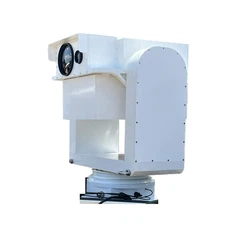
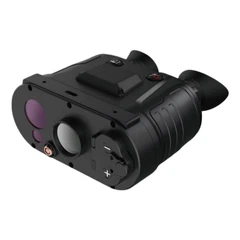
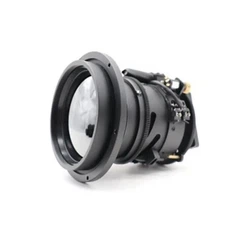
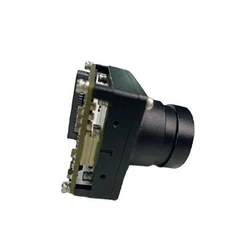
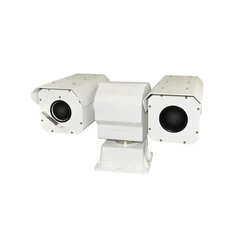
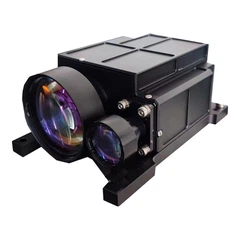
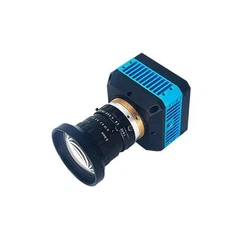

Wildlife monitoring is a crucial aspect of conservation efforts, enabling researchers and conservationists to track animal populations, behavior, and habitats. In recent years, technological advancements have provided new tools for this purpose, among which infrared (IR) imaging technology has shown significant potential. As a supplier of Network LWIR (Long-Wave Infrared) Cores, I often encounter the question: Can Network LWIR Cores be used for wildlife monitoring? In this blog post, I will delve into this topic, exploring the features of Network LWIR Cores and their applicability in wildlife monitoring.
Understanding Network LWIR Cores
LWIR technology operates in the long - wave infrared spectrum, typically ranging from 8 to 14 micrometers. At this wavelength, all objects above absolute zero emit thermal radiation, making LWIR sensors highly effective in detecting heat signatures. Network LWIR Cores, in particular, are designed to be integrated into various imaging devices and can transmit data over a network, allowing for remote monitoring and data analysis.
These cores are equipped with advanced detectors that can capture high - resolution thermal images. They offer several advantages such as high sensitivity to temperature differences, the ability to operate in low - light or no - light conditions, and robustness against environmental factors. For example, they can work in fog, smoke, and darkness, which are often challenging conditions for traditional optical cameras.
Suitability for Wildlife Monitoring
Detection in Low - Light Conditions
One of the most significant challenges in wildlife monitoring is observing animals during their active hours, which are often at dawn, dusk, or at night. Network LWIR Cores excel in these low - light conditions. Since they detect thermal radiation rather than visible light, they can easily spot animals in the dark. For instance, nocturnal animals like owls, foxes, and bats are difficult to track with normal cameras, but their body heat makes them stand out clearly in LWIR images.
Monitoring in Challenging Environments
In addition to low - light scenarios, wildlife often inhabits areas with dense foliage, fog, or smoke. Traditional optical cameras may struggle to penetrate these obstacles, but LWIR technology can. The long - wave infrared radiation can pass through many non - metallic materials and aerosols, allowing the cores to capture images of animals hidden behind vegetation or in hazy conditions. For example, in a forest with thick underbrush, an LWIR - equipped camera can detect the heat signatures of deer or wild boars that are otherwise obscured from view.
Remote Monitoring and Data Transmission
The network capabilities of Network LWIR Cores are a game - changer for wildlife monitoring. Conservationists can set up multiple cameras in a wildlife area and connect them to a central monitoring system. This allows for continuous monitoring of a large area without the need for constant on - site presence. The cores can transmit real - time thermal images and data over the network, enabling researchers to analyze the behavior and movement patterns of animals from a remote location. For example, in a large nature reserve, a network of LWIR - based cameras can be used to monitor the migration routes of large mammals like elephants or the nesting habits of birds.


Comparing with Other Thermal Imaging Solutions
There are various thermal imaging solutions available in the market, and it's important to understand how Network LWIR Cores stack up against them.
Cooled vs. Uncooled Cores
Cooled thermal imaging cores offer higher sensitivity and better image quality but are more expensive and require more power. In contrast, uncooled Network LWIR Cores are more cost - effective and power - efficient. For wildlife monitoring projects with limited budgets or long - term deployment requirements, uncooled Network LWIR Cores are a more practical choice. They can still provide sufficient image quality for detecting and tracking animals.
Handheld vs. Fixed - Mounted Systems
Handheld thermal imagers like the Easy - Port Mini Handheld Thermal Imager are useful for short - term field surveys and close - range observations. However, for long - term and large - scale monitoring, fixed - mounted systems with Network LWIR Cores are more appropriate. Fixed - mounted cameras can be strategically placed in a wildlife area to provide continuous coverage, and their network capabilities allow for seamless data collection and analysis.
Applications in Specific Wildlife Monitoring Scenarios
Population Estimation
Accurate population estimation is essential for wildlife conservation. Network LWIR Cores can be used to count animals in a given area. By analyzing the thermal images captured over a period of time, researchers can identify individual animals and track their movements. For example, in a wetland area, LWIR cameras can be used to count the number of waterfowl present, which helps in assessing the health of the wetland ecosystem.
Behavior Analysis
Understanding animal behavior is crucial for conservation efforts. Network LWIR Cores can provide valuable insights into the behavior of animals. By monitoring the thermal patterns of animals, researchers can study their feeding, mating, and social behaviors. For instance, in a primate habitat, LWIR cameras can be used to observe the interactions between different groups of primates, which can help in understanding their social structure.
Habitat Monitoring
Wildlife habitats are constantly changing due to natural and human - induced factors. Network LWIR Cores can be used to monitor these changes. By detecting changes in the thermal signatures of the environment, such as changes in vegetation cover or water temperature, researchers can assess the health of the habitat. For example, in a coral reef area, LWIR cameras can be used to monitor the temperature of the water, which is an important factor in the health of the coral reef.
Limitations and Challenges
While Network LWIR Cores offer many advantages for wildlife monitoring, there are also some limitations and challenges.
Cost
Although uncooled Network LWIR Cores are more cost - effective than cooled ones, they still represent a significant investment, especially for large - scale monitoring projects. Additionally, the cost of setting up a network infrastructure for data transmission and storage can also be high.
Image Interpretation
Interpreting LWIR images requires some expertise. The thermal signatures of animals can be affected by factors such as body size, activity level, and environmental temperature. Misinterpretation of images can lead to inaccurate data analysis. Therefore, proper training is needed for researchers and conservationists using this technology.
Limited Penetration in Some Materials
Although LWIR radiation can penetrate many non - metallic materials, it cannot penetrate metals or some dense materials. This means that animals hiding inside metal structures or deep underground may not be detected by LWIR cameras.
Conclusion
In conclusion, Network LWIR Cores have great potential for wildlife monitoring. Their ability to detect heat signatures, operate in low - light and challenging environments, and transmit data over a network makes them a valuable tool for conservationists. However, like any technology, they also have limitations and challenges that need to be addressed.
If you are interested in exploring the use of Network LWIR Cores for your wildlife monitoring project, we invite you to reach out to us for more information. Our team of experts can provide detailed product information and customized solutions based on your specific needs. Whether you are a researcher, a conservation organization, or an individual passionate about wildlife, our Network LWIR Cores can help you achieve your monitoring goals.
For more detailed technical specifications of our related products, you can refer to the CMPT6 MW IR Camera Specifications. And if you are interested in other thermal imaging applications such as fire detection, you can visit Thermal Camera Fire Detection.
References
- Smith, J. (2018). Thermal Imaging Technology in Wildlife Research. Journal of Wildlife Conservation, 25(3), 45 - 52.
- Johnson, A. (2019). Advances in Infrared Imaging for Environmental Monitoring. Environmental Science Review, 12(2), 67 - 75.
- Brown, C. (2020). Application of Network - based Thermal Imaging in Biodiversity Conservation. Biodiversity Journal, 18(4), 89 - 96.