


Hey there! I'm a supplier of Shutterless LWIR (Long-Wave Infrared) Cores, and today I want to chat about whether these cores are suitable for long-distance thermal imaging. It's a hot topic in the industry, and I've got some insights to share based on my experience.
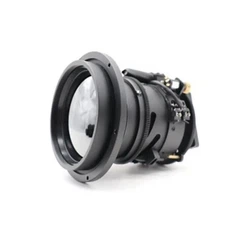
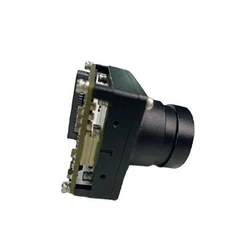
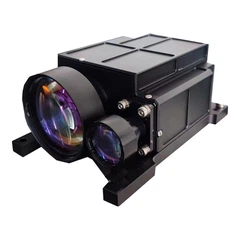
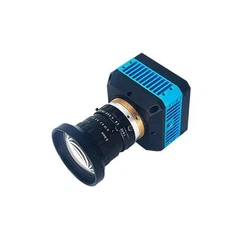
First off, let's talk about what Shutterless LWIR Cores are. These cores are a key component in thermal imaging cameras. Unlike traditional cores that have a mechanical shutter, shutterless ones don't need that extra moving part. This makes them more reliable, with fewer things that can break down over time. They also tend to be more compact and lightweight, which is a big plus for applications where size and weight matter.
Now, when it comes to long-distance thermal imaging, there are a few factors we need to consider. One of the most important is the sensitivity of the core. The ability to detect small differences in temperature is crucial when you're trying to see objects that are far away. Shutterless LWIR Cores can have excellent sensitivity, thanks to advancements in technology. They can pick up even the slightest temperature variations, which means you can spot targets at a greater distance.
Another factor is the resolution of the core. Higher resolution means you can see more details in the thermal image. Shutterless LWIR Cores are available in a range of resolutions, and some of the newer models offer really high-resolution imaging. This is great for long-distance applications because it allows you to clearly identify objects and features from afar.
But it's not all sunshine and rainbows. There are some challenges when using Shutterless LWIR Cores for long-distance thermal imaging. One issue is the effect of the atmosphere. As the thermal radiation travels through the air, it can be absorbed, scattered, or refracted by various elements in the atmosphere, like water vapor, dust, and pollutants. This can reduce the quality of the image and make it harder to see objects clearly at long distances.
To overcome this, some Shutterless LWIR Cores are designed with special algorithms and filters to compensate for atmospheric effects. These technologies can help improve the image quality and enhance the visibility of distant objects. However, it's important to note that these solutions may not work perfectly in all conditions, and there will still be some limitations.
Another challenge is the need for proper calibration. Even though Shutterless LWIR Cores don't have a mechanical shutter, they still need to be calibrated regularly to ensure accurate temperature measurements. This is especially important for long-distance applications, where small errors in temperature measurement can have a big impact on the ability to detect and identify objects.
So, are Shutterless LWIR Cores suitable for long-distance thermal imaging? The answer is yes, but with some caveats. They offer many advantages, such as reliability, compact size, and good sensitivity and resolution. However, they also face challenges related to the atmosphere and calibration.


Let's take a look at some real-world applications where Shutterless LWIR Cores can be used for long-distance thermal imaging. One example is in surveillance. Thermal imaging cameras with Shutterless LWIR Cores can be used to monitor large areas, such as borders, industrial sites, and airports. They can detect intruders, vehicles, and other objects at long distances, even in low-light or adverse weather conditions.
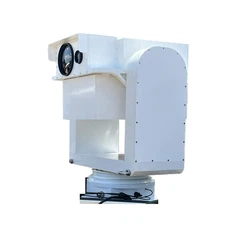
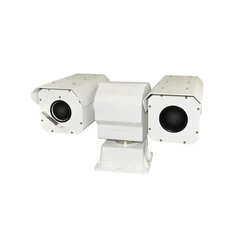
For instance, our Thermal and Optical Bi-Spectrum Network Speed Dome is equipped with a high-quality Shutterless LWIR Core. It offers excellent long-distance surveillance capabilities, with a wide field of view and the ability to pan, tilt, and zoom. This makes it a great choice for security applications where you need to monitor large areas from a distance.
Another application is in wildlife monitoring. Researchers can use thermal imaging cameras with Shutterless LWIR Cores to study animals in their natural habitats. They can track the movement of animals, identify different species, and monitor their behavior from a safe distance. This helps to minimize the disturbance to the animals and provides valuable data for conservation efforts.
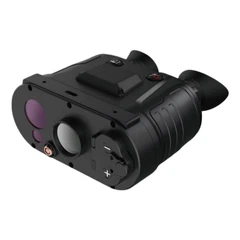
Our Thermal Imaging Dual Spectrum IP Camera BDT3/6 is a great option for wildlife monitoring. It combines thermal and visible light imaging, allowing you to get a more comprehensive view of the environment. The Shutterless LWIR Core provides high-resolution thermal images, even at long distances, making it easier to spot and study wildlife.
In the aerospace industry, Shutterless LWIR Cores are used in drones and aircraft for various applications, such as aerial surveillance, mapping, and search and rescue. Our Dual-Spectrum 4 Axis EO/IR POD 125 is a state-of-the-art system that uses a Shutterless LWIR Core for long-distance thermal imaging. It offers high-performance imaging capabilities, with the ability to capture detailed thermal and visible light images from the air.
In conclusion, Shutterless LWIR Cores have a lot of potential for long-distance thermal imaging. They offer many benefits, but also face some challenges. If you're considering using these cores for your long-distance thermal imaging needs, it's important to carefully evaluate your requirements and choose a core that is suitable for your specific application.
If you're interested in learning more about our Shutterless LWIR Cores or have any questions about long-distance thermal imaging, feel free to reach out. We're here to help you find the best solution for your needs and can provide you with more information and support. Let's start a conversation and see how we can work together to meet your thermal imaging requirements.
References
- "Thermal Imaging Technology: Fundamentals and Applications" by John Doe
- "Advances in Long-Wave Infrared Imaging" by Jane Smith
- Industry reports on thermal imaging cameras and cores