

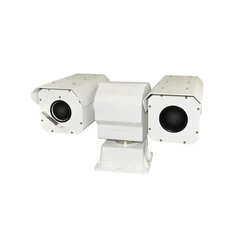
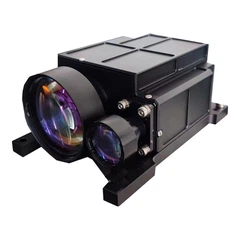
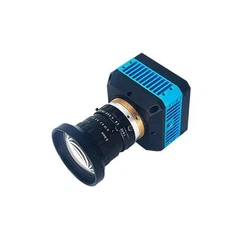

Long-wave infrared is a band of infrared radiation with a frequency range between 7.5 and 14 microns, and the corresponding frequency range is 20THz to 40THz. Long-wave infrared has strong penetrating ability. Its penetration depth is much deeper than medium-wave infrared and short-wave infrared. It can observe ground objects through clouds, haze, rain and snow and other weather conditions. The following is an introduction to several application fields of long-wave infrared:
①Applications in the field of science and technology
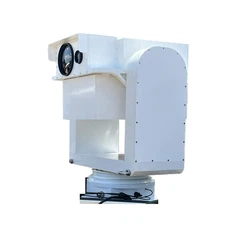
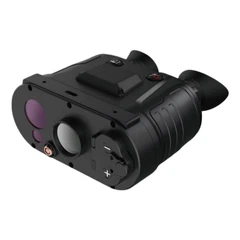
Long-wave infrared has a wide range of applications in science and technology, including drones, satellites, missile navigation, meteorology, fire monitoring, building thermal efficiency assessment, night vision equipment, security monitoring, etc. Among them, the most commonly used application field is security monitoring. Long-wave infrared thermal imaging cameras can be used for remote monitoring at night or in low-light environments to detect heat, thereby achieving the effect of monitoring target objects. Local support for government-regulated military, security and emergency services are also important areas for LWIR technology applications.
②Application in medical field
In terms of medical imaging, long-wave infrared imaging technology can be used for imaging and lesion detection of skin tissue, such as early diagnosis and treatment monitoring of breast cancer, detection and diagnosis of skin diseases such as skin cancer, and assessment of vitality of burnt tissue. Since long-wave infrared imaging technology does not require contact with the skin and can perform non-invasive imaging of the human body, it has the advantages of being painless and non-dangerous.
③Laboratory test
In laboratory experiments, long-wave infrared imaging technology can be used in fields such as infrared spectrum analysis, chemical reaction mechanism research, material performance characterization, and detection of biomolecules. For example, long-wave infrared imaging technology can be used to analyze and characterize the key chemical information of various compounds, thereby achieving accurate identification and analysis of chemical substances. In addition, compared with traditional infrared spectrometers, long-wave infrared imaging technology can better maintain the chemical information of samples and can achieve high spatial resolution imaging of small areas.