



Space-Based ISR and EO/IR Investment Accelerates Across Europe, the UK, and Israel
- Cluster of contract announcements over the past two weeks points to a sustained global build-out of space-based intelligence, surveillance and reconnaissance (ISR) infrastructure, alongside steady demand for electro-optical and infrared (EO/IR) targeting systems - two areas at the core of where defense budgets are now flowing.
- The largest single move came from Belgium's Aerospacelab, which was awarded a €2.4 billion contract by the European Commission to manufacture 264 low-Earth-orbit (LEO) satellite platforms for the IRIS² sovereign connectivity constellation. It is the largest satellite manufacturing mandate in EU space history, and Aerospacelab says its purpose-built "Megafactory" will carry the production load through the constellation's planned 2030 completion. The award cements the company's transition from a 2018 startup to one of Europe's primary satellite manufacturers, and signals that Europe intends to build, not just buy, its way to space autonomy.
- The UK followed with its own signal of intent: an £7.8 billion space strategy running through 2030, of which £880 million is earmarked specifically for space control and ISR capability, alongside £2.8 billion for military connectivity and £149 million toward the European Space Agency's Vigil space-weather mission. Taken together with over £3 billion allocated under the UK's Defence Investment Plan for detecting and responding to orbital threats, the strategy reflects a broader pattern among NATO allies: space domain awareness is shifting from a niche capability to a funded line item in national defense planning.
- That same logic is playing out at the tactical level. Spain's military intelligence service, CIFAS, has opened a roughly €7.4 million, three-year framework agreement to acquire very-high-resolution satellite imagery from a notably broad commercial supplier base - Vantor, Airbus Pléiades Neo, Planet Labs, BlackSky, Satellogic, Iceye and Capella Space among them. The inclusion of optical, infrared and synthetic-aperture radar sources in a single framework, with Vantor imagery specifically validated for "Category I" precision targeting coordinates, illustrates how thoroughly commercial Earth-observation constellations have been folded into fire-support targeting chains. It is also a reminder that companies like Satellogic - with roots and commercial footprint spanning Latin America - are now embedded in European military procurement, a cross-regional dynamic worth tracking closely.
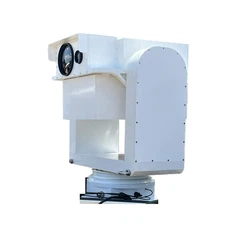
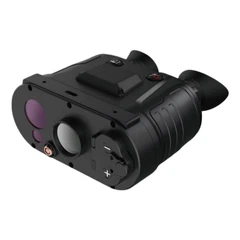
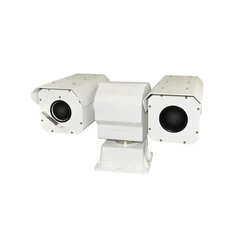
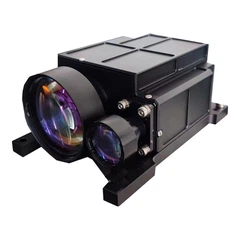
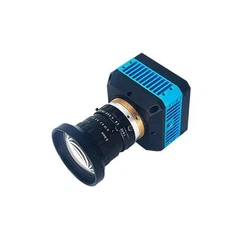
- On the systems side, Israel's Elbit Systems disclosed a six-year, approximately $270 million contract to supply an undisclosed international customer with ISR and targeting payloads built around its SPECTRO family of multispectral EO/IR sensors. The airborne AMPS NG variant, which combines infrared imaging, AI-assisted analytics and laser designation for day/night target identification, underscores that even as attention gravitates toward space-based sensing, airborne EO/IR remains a steady, high-value export category for established optronics suppliers.
- Space domain awareness itself also advanced on the US side. The Space Force confirmed Texas as the US site for the trinational Deep Space Advanced Radar Capability (DARC) network, intended to track threats to satellites in geostationary orbit. Construction is expected to wrap in 2029 with operations beginning in 2030 - a multi-year timeline, but one that adds another node to the growing web of space-surveillance infrastructure being built by the US and its partners.
- Elsewhere, the broader procurement conversation in Washington is turning toward composition rather than sheer volume. Speaking at the Air, Space & Cyber Conference, defense officials and industry leaders argued that after the Iran conflict drew down munitions stockpiles, the priority should be building inventories that can evolve with a conflict rather than simply replenishing what was spent - with slow software deployment cycles and acquisition authorization delays flagged as persistent bottlenecks. General Atomics, meanwhile, unveiled "Wildfire," a long-range modular combat drone pitched as a potential successor to the MQ-9 Reaper for massed-strike missions - a reminder that the sensor and payload requirements driving today's ISR contracts will only grow as next-generation unmanned platforms enter service.
- Collectively, these developments describe a market moving on two tracks at once: heavy institutional investment in space-based ISR infrastructure among the US, UK and EU, running in parallel with continued, steady demand for the EO/IR sensors and payloads that turn that infrastructure into usable targeting data. For companies positioned in either segment, the current window looks less like a spike than the early stage of a multi-year buildout.