

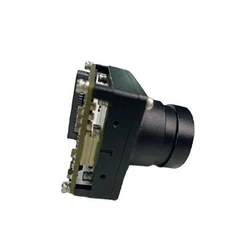

Shutterless LWIR (Long-Wave Infrared) cores have emerged as a revolutionary technology in the field of thermal imaging. As a supplier of these advanced components, I am often asked about various aspects of our products. One crucial question that frequently comes up is, "What is the weight of Shutterless LWIR Cores?" In this blog, we will delve into this topic, exploring the significance of weight, the factors influencing it, and how it relates to the overall performance and applications of our Shutterless LWIR Cores.
The Significance of Weight in Shutterless LWIR Cores
Weight plays a vital role in the design and usability of Shutterless LWIR Cores. In many applications, such as wearable devices, drones, and handheld thermal imagers, portability and ease of use are paramount. A lightweight core allows for more comfortable handling and extended periods of operation without causing excessive fatigue to the user. For example, in the case of a drone-based thermal inspection system, a heavy LWIR core could significantly reduce the flight time and maneuverability of the drone, limiting its effectiveness in covering large areas.
Moreover, weight also affects the integration of Shutterless LWIR Cores into other systems. In applications where space is limited, such as in small surveillance cameras or embedded systems, a lighter core can simplify the design process and reduce the overall size and weight of the final product. This not only makes the system more compact but also potentially lowers the manufacturing cost.
Factors Influencing the Weight of Shutterless LWIR Cores
Several factors contribute to the weight of Shutterless LWIR Cores. One of the primary factors is the size and complexity of the core itself. Larger cores with more pixels and advanced features generally tend to be heavier than smaller, less sophisticated ones. This is because they require more materials for the construction of the detector array, readout integrated circuit (ROIC), and other components.
The type of materials used in the core also has a significant impact on its weight. For instance, cores made with high-performance semiconductor materials may be heavier than those using lighter, more common materials. Additionally, the packaging and housing of the core can add to its overall weight. A robust and protective housing is necessary to ensure the durability and reliability of the core, but it also increases the weight.
Another factor to consider is the presence of additional components or features. Some Shutterless LWIR Cores may come with built-in signal processing units, cooling systems, or other accessories, which can significantly increase the weight. For example, a core with a built-in thermoelectric cooler (TEC) to maintain a stable operating temperature will be heavier than a core without this feature.
Weight Ranges of Shutterless LWIR Cores
The weight of Shutterless LWIR Cores can vary widely depending on the factors mentioned above. In general, smaller, low-resolution cores designed for simple applications may weigh as little as a few grams. These cores are often used in consumer-grade thermal imaging devices, such as smartphone attachments or small handheld thermal cameras.
On the other hand, larger, high-resolution cores with advanced features and built-in components can weigh several hundred grams or more. These cores are typically used in professional-grade applications, such as military surveillance, industrial inspection, and scientific research.
As a supplier, we offer a wide range of Shutterless LWIR Cores with different weights to meet the diverse needs of our customers. Our lightweight cores are ideal for applications where portability is a priority, while our heavier, more powerful cores are suitable for demanding applications that require high performance and reliability.


Applications and Weight Considerations
The weight of Shutterless LWIR Cores has a direct impact on their suitability for different applications. Let's take a look at some specific applications and how weight considerations come into play.
Wearable Devices
In the field of wearable technology, such as smart glasses or thermal vests, weight is a critical factor. A heavy LWIR core can make the device uncomfortable to wear for extended periods, reducing its usability. Our lightweight Shutterless LWIR Cores are well-suited for these applications, allowing for seamless integration into wearable devices without compromising on performance.
Drones
Drones are increasingly being used for thermal imaging applications, such as aerial surveys, wildlife monitoring, and search and rescue operations. The weight of the LWIR core affects the drone's flight time, payload capacity, and maneuverability. Our selection of lightweight cores enables drones to carry the thermal imaging equipment without sacrificing too much in terms of performance, allowing for longer flights and more efficient data collection.
Surveillance Cameras
In surveillance applications, the weight of the LWIR core can impact the installation and maintenance of the cameras. Heavier cores may require more robust mounting structures, which can increase the cost and complexity of installation. Our lightweight cores are easier to install and can be integrated into a variety of surveillance systems, whether they are fixed-mounted or mobile.
Industrial Inspection
In industrial settings, such as power plants, manufacturing facilities, and oil refineries, thermal imaging is used for equipment monitoring and predictive maintenance. The weight of the LWIR core can affect the ease of use of handheld thermal imagers used by technicians during inspections. Our lightweight cores make these devices more comfortable to hold and operate, allowing technicians to conduct thorough inspections without getting fatigued.
Comparing Our Shutterless LWIR Cores with Other Solutions
When considering the weight of Shutterless LWIR Cores, it's important to compare our products with other solutions on the market. Our cores are designed with a focus on achieving the optimal balance between weight and performance. We use advanced manufacturing techniques and high-quality materials to ensure that our cores are not only lightweight but also offer excellent thermal sensitivity and image quality.
In addition, our commitment to innovation means that we are constantly working to reduce the weight of our cores without compromising on functionality. We invest in research and development to explore new materials and design concepts that can further improve the performance-to-weight ratio of our products.
Conclusion
In conclusion, the weight of Shutterless LWIR Cores is an important consideration in the design and application of thermal imaging systems. It affects the portability, usability, and integration of the cores into various devices and systems. As a supplier, we understand the diverse needs of our customers and offer a wide range of Shutterless LWIR Cores with different weights to meet those needs.
Whether you are looking for a lightweight core for a wearable device or a high-performance core for a demanding industrial application, we have the solution for you. Our Shutterless LWIR Cores are designed to provide excellent thermal imaging performance while being as lightweight as possible.
If you are interested in learning more about our Shutterless LWIR Cores or would like to discuss your specific requirements, please [initiate a procurement negotiation]. We are committed to providing you with the best products and services to meet your thermal imaging needs.
References
- [1] Thermal Imaging Technology: Principles and Applications - A Comprehensive Guide
- [2] Advances in Long-Wave Infrared Detector Technology
- [3] The Role of Weight in the Design of Portable Thermal Imaging Devices