

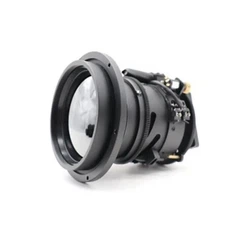
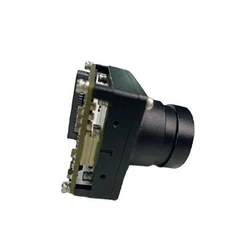
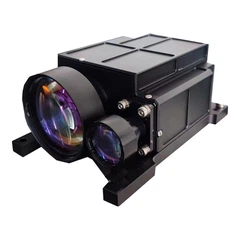
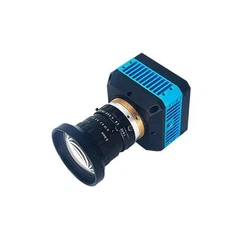

When it comes to the installation of MWIR (Mid-Wave Infrared) Zooming Lenses in different devices, understanding the specific requirements is crucial for optimal performance. As a leading MWIR Zooming Lens supplier, I've witnessed firsthand how the right installation can transform a device's functionality. In this blog, I'll delve into the installation requirements for MWIR Zooming Lenses across various devices.
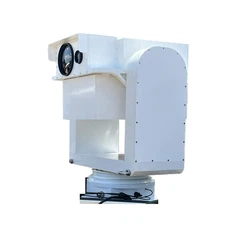
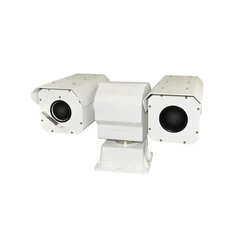
Installation in Gyro - stabilized Dual Spectrum Smart Pan Tilt
The Gyro - stabilized Dual Spectrum Smart Pan Tilt is a sophisticated device often used in vehicle - mounted applications. The installation of an MWIR Zooming Lens in this device requires a high level of precision.
First and foremost, the mechanical alignment is of utmost importance. The lens must be precisely centered within the device's housing. Any misalignment can lead to distorted images and inaccurate targeting. The mounting brackets provided with the lens should be carefully attached to the pan - tilt unit. These brackets are designed to ensure a stable and secure fit. It's essential to use the appropriate tools, such as torque wrenches, to tighten the screws to the specified torque values. Over - tightening can damage the lens or the device, while under - tightening can result in the lens shifting during operation.
Electrical connections are also critical. The MWIR Zooming Lens needs to be connected to the device's power supply and control system. The power supply must be able to provide the correct voltage and current to the lens. A power surge or insufficient power can cause the lens to malfunction. The control cables should be properly routed to avoid interference with other components in the device. Additionally, the communication protocol between the lens and the pan - tilt unit must be compatible. This allows for seamless control of the zoom function and other lens features.
Environmental factors also play a role in the installation. Since the Gyro - stabilized Dual Spectrum Smart Pan Tilt is often used in outdoor and vehicle - mounted environments, the lens must be protected from dust, moisture, and vibrations. Sealing gaskets should be installed around the lens to prevent dust and moisture ingress. Vibration isolation mounts can be used to reduce the impact of vibrations on the lens, which can affect image quality.
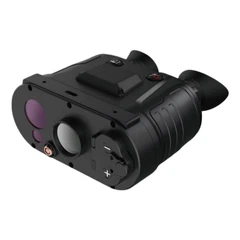
Installation in Enhanced 384 VOX Thermal Night Vision Goggle
The Enhanced 384 VOX Thermal Night Vision Goggle is a handheld device that requires a different set of installation considerations.
Size and weight are significant factors. The MWIR Zooming Lens must be lightweight and compact to ensure that the goggles remain comfortable to wear for extended periods. During installation, the lens should be carefully integrated into the goggle's housing without adding excessive bulk. The mounting mechanism should be simple yet secure, allowing for easy disassembly if maintenance is required.
Optical alignment is crucial in night vision goggles. The lens must be aligned with the goggle's eyepiece and detector. Any misalignment can result in a reduced field of view or a blurry image. A precise alignment tool may be needed to ensure that the lens is correctly positioned.
The power source for the goggles is typically a battery. The MWIR Zooming Lens should be designed to operate efficiently with the limited power available from the battery. The electrical connections should be made in a way that minimizes power loss. Additionally, the lens should be able to withstand the mechanical stress associated with the normal handling of the goggles. For example, it should be able to tolerate being bumped or dropped without losing its alignment or functionality.
Installation in 384 640 Thermal Night Vision Goggle
The 384 640 Thermal Night Vision Goggle also has its own unique installation requirements.
Similar to the Enhanced 384 VOX Thermal Night Vision Goggle, the size and weight of the MWIR Zooming Lens are important. However, the 384 640 goggles may have different internal dimensions and design features. The lens must be compatible with these specific characteristics.
The thermal management of the lens is a key consideration. In a thermal night vision goggle, the lens can generate heat during operation. This heat can affect the performance of the detector and other components. Adequate heat dissipation mechanisms, such as heat sinks or ventilation channels, should be incorporated into the installation design.
The user - interface of the goggles also impacts the installation. The controls for the zoom function of the lens should be easily accessible and intuitive for the user. The electrical connections between the lens and the control buttons should be reliable to ensure smooth operation.
General Considerations for All Devices
Regardless of the device, cleanliness is a fundamental requirement during the installation of an MWIR Zooming Lens. The lens surface should be kept free from dust, fingerprints, and other contaminants. A clean lens is essential for clear and sharp images. Special cleaning tools and solutions should be used to clean the lens before and after installation.
Calibration is another important step. After the lens is installed, it needs to be calibrated to ensure accurate image quality. This may involve adjusting the focus, zoom settings, and other parameters. Calibration procedures should be followed precisely according to the manufacturer's instructions.
Documentation is also crucial. The installation process should be documented, including details such as the torque values used for tightening screws, the electrical connections made, and the calibration results. This documentation can be useful for future maintenance and troubleshooting.
Conclusion
In conclusion, the installation requirements for MWIR Zooming Lenses in different devices vary significantly based on the device's design, function, and intended use. Whether it's a gyro - stabilized pan - tilt unit, a handheld night vision goggle, or other devices, precision, compatibility, and attention to detail are essential for a successful installation.


If you're in the market for high - quality MWIR Zooming Lenses and need assistance with installation or have any other questions, I encourage you to reach out to us. Our team of experts is ready to provide you with the best solutions and support for your specific needs.
References
- "Infrared Imaging Systems: Design, Analysis, and Testing" by John E. Greivenkamp
- "Thermal Imaging Handbook" by Peter Siegel