
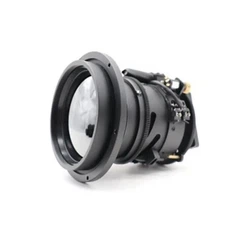

Hey there! I'm a supplier of LWIR Fixed Focus Lenses, and today I wanna have a chat about the disadvantages of these lenses. You know, every product has its ups and downs, and LWIR Fixed Focus Lenses are no exception.
First off, let's talk about the limited focus range. As the name suggests, these are fixed - focus lenses. That means they're set at a specific focal length and can't be adjusted easily. If you're in a situation where you need to focus on objects at different distances, it can be a real pain. For example, if you're using an LWIR Fixed Focus Lens for surveillance and suddenly you need to zoom in on a far - off object or a nearby one, you're out of luck. The lens won't be able to provide a clear image of both the distant and close - up objects simultaneously. In comparison, variable - focus lenses give you the flexibility to adjust the focus according to your needs.
Another big drawback is the lack of adaptability to changing environmental conditions. LWIR (Long - Wave Infrared) technology relies on detecting infrared radiation emitted by objects. But the amount of infrared radiation can vary depending on factors like temperature, humidity, and the presence of other infrared sources. With a fixed - focus lens, you can't make quick adjustments to compensate for these changes. Say it's a really cold day, and the infrared emissions from objects are lower than usual. The fixed - focus lens might not be able to pick up those faint signals as effectively as a more adaptable lens.
Cost is also a significant disadvantage. Developing and manufacturing LWIR Fixed Focus Lenses is a complex process. The materials used, such as special infrared - transmitting glasses, are often expensive. Also, the precision required in the manufacturing process to achieve the fixed focus adds to the cost. This high cost is then passed on to the customers. For small - scale businesses or individuals on a tight budget, it can be a major deterrent. They might be looking for more affordable alternatives that can still meet their basic infrared imaging needs.
Now, let's talk about image quality limitations. Since the lens has a fixed focus, the image quality can degrade when the object is not at the exact distance for which the lens is calibrated. There can be issues like blurring, distortion, and reduced sharpness. In applications where high - quality images are crucial, such as in scientific research or high - end surveillance, these limitations can be a deal - breaker.
In terms of compatibility, LWIR Fixed Focus Lenses may not be compatible with all infrared imaging devices. Different devices have different requirements in terms of the lens's focal length, aperture, and other specifications. If you have an existing infrared camera or device and you want to upgrade to an LWIR Fixed Focus Lens, there's a chance it might not fit properly or work as expected. This lack of compatibility can force users to invest in new imaging devices, which adds to the overall cost.
When it comes to maintenance, these lenses can be a bit of a hassle. Cleaning and servicing a fixed - focus lens need to be done with extreme care. Any misalignment during the maintenance process can permanently damage the lens's fixed focus, rendering it useless. Unlike some other types of lenses that can be more forgiving during maintenance, LWIR Fixed Focus Lenses require specialized knowledge and tools.
Now, I know all these disadvantages might seem like a lot, but don't get me wrong. LWIR Fixed Focus Lenses also have their advantages, like simplicity and reliability in certain applications. And we, as a supplier, are constantly working on improving these lenses to minimize these drawbacks.
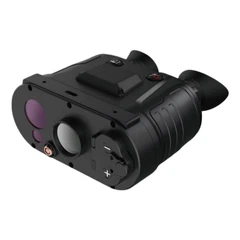
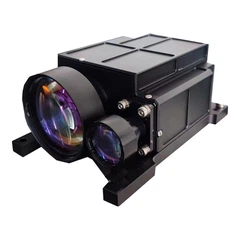
If you're in the market for infrared imaging equipment, you might also be interested in some of our other products. Check out our 20km LRF Module, which is great for long - range distance measurement. We also have the 384 640 Thermal Night Vision Goggle and the 640 VGA VOX Dual Spectrum Thermal Fusion Vision Goggle, which offer excellent night - vision capabilities.


If you're still considering an LWIR Fixed Focus Lens despite the disadvantages, or if you have any questions about our other products, feel free to reach out to us for a chat about procurement. We're always happy to help you find the best solution for your needs.
References:
- Infrared Imaging Technology Handbook
- Optics and Photonics: An Introduction