

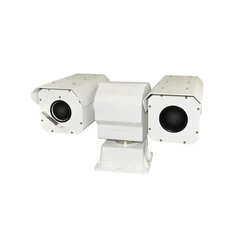
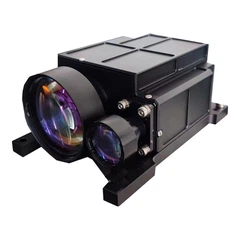
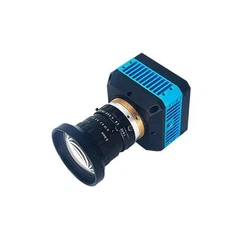

In recent years, the demand for night vision technology has grown significantly, driven by applications in security, military, wildlife observation, and more. Infrared (IR) optics play a crucial role in enhancing night vision capabilities. As an IR Optics supplier, we are well - versed in the numerous advantages that IR optics bring to night vision systems. In this blog, we will delve into these key benefits.
Enhanced Visibility in Low - Light Conditions
One of the most prominent advantages of IR optics in night vision is the ability to provide clear visibility in low - light or no - light environments. Traditional visible - light optics rely on ambient light, such as moonlight or streetlights, to function effectively. However, in areas with limited natural light or during complete darkness, visible - light optics are severely restricted.
IR optics, on the other hand, utilize infrared light. Infrared radiation is a part of the electromagnetic spectrum that is not visible to the human eye but is emitted by all objects with a temperature above absolute zero. Night vision devices equipped with IR optics can detect this infrared radiation and convert it into visible images. This enables users to see clearly in environments where the human eye would otherwise be completely blind, such as dense forests at night or poorly lit indoor spaces.
For example, in wildlife observation, researchers can use night vision equipment with IR optics to monitor nocturnal animals. These optics allow them to track the movements of animals without disturbing their natural behavior, as the animals are not aware of the infrared light being used.
Improved Detection Range
IR optics can significantly extend the detection range in night vision applications compared to traditional visible - light optics. In a military or security setting, being able to detect threats at a greater distance is crucial for maintaining safety and gaining a tactical advantage.
The infrared light used in IR optics has the ability to travel longer distances with less scatter compared to visible light. Additionally, modern IR optical systems are designed to have high - quality lenses and detectors that can pick up even the faintest infrared signals. This means that objects, whether they are humans, vehicles, or other potential threats, can be detected at much farther distances at night.
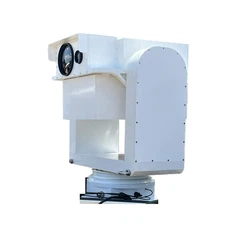
For instance, border security forces can use night vision cameras equipped with IR optics to monitor long stretches of borders. These devices can detect any unauthorized movement miles away, providing early warning and allowing for appropriate responses.
High Resolution and Image Quality
Advancements in IR optics technology have led to the production of night vision devices with high - resolution and excellent image quality. Our company is at the forefront of developing IR optical components that can capture detailed images in the infrared spectrum.
High - quality IR lenses are designed to minimize aberrations, such as chromatic and spherical aberrations, which can degrade image quality. Additionally, the detectors used in IR night vision systems are becoming more sensitive and have a higher pixel count. This combination results in sharp, clear images that allow users to distinguish fine details, such as facial features or the markings on a vehicle.
In surveillance systems, high - resolution IR night vision is essential for identifying suspects or potential threats. With clear images, security personnel can make accurate identifications and take appropriate actions.
Range of IR Wavelengths for Different Applications
The infrared spectrum is divided into several sub - ranges, including near - infrared (NIR), short - wave infrared (SWIR), mid - wave infrared (MWIR), and long - wave infrared (LWIR). Each of these wavelength ranges has unique properties and is suitable for different night vision applications.
- Near - Infrared (NIR): NIR is commonly used in applications where active illumination is required. Night vision goggles often use NIR illuminators to enhance visibility in close - range situations. NIR is relatively easy to work with and can be detected by many types of sensors.
- Short - Wave Infrared (SWIR): SWIR is useful for applications such as surveillance through fog, smoke, or haze. It can penetrate these atmospheric conditions better than visible light and can also be used for detecting certain materials based on their unique absorption and reflection characteristics in the SWIR range.
- Mid - Wave Infrared (MWIR): MWIR is commonly used in military and aerospace applications. It offers a good balance between sensitivity and range, and can be used for detecting heat sources at medium distances.
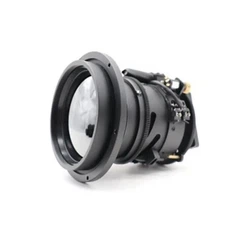
- Long - Wave Infrared (LWIR): LWIR is ideal for detecting the thermal signatures of objects. It can provide clear images even in complete darkness and is widely used in thermal imaging cameras for security, firefighting, and industrial applications. Our LWIR Zooming Lens and Athermalized LWIR Lens are designed to take full advantage of the LWIR spectrum for superior night vision performance.
Durability and Reliability
As an IR optics supplier, we understand the importance of durability and reliability in night vision applications. IR optics are designed to withstand harsh environmental conditions, including extreme temperatures, humidity, and vibrations.
The materials used in IR lenses are carefully selected for their optical properties as well as their resistance to environmental factors. For example, some IR lenses are made from materials such as germanium or zinc selenide, which have high transmission in the infrared spectrum and are also resistant to thermal shock and corrosion.
In military and outdoor applications, the durability of night vision equipment is crucial. Soldiers and outdoor enthusiasts need equipment that can perform in tough conditions without failing. Our IR optics are rigorously tested to ensure they meet the highest standards of quality and reliability.


Customization and Flexibility
Each night vision application has unique requirements, and our company offers IR Optical System Design and Customization services to meet these diverse needs. We can design and manufacture IR optics specifically tailored to the performance, size, and cost requirements of our customers.
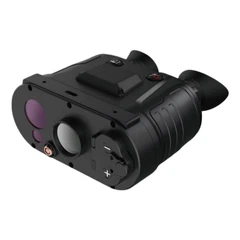
Whether it's a compact night vision device for law enforcement or a large - scale surveillance system for an industrial facility, we can work closely with our customers to develop the optimal IR optical solution. This level of customization allows us to provide the best - fitting products for different applications, ensuring optimal performance and user satisfaction.
Cost - Effectiveness in the Long Run
Although the initial investment in night vision equipment with IR optics may be higher than traditional visible - light optics, the long - term cost - effectiveness of IR optics cannot be overlooked.
IR night vision devices have a longer lifespan due to their robust design and high - quality components. They also require less maintenance compared to some visible - light systems. Additionally, the enhanced capabilities of IR optics, such as improved detection range and image quality, can lead to more efficient operations and better decision - making.
In a security setting, for example, a high - quality IR night vision system can prevent security breaches and reduce the need for additional security personnel, resulting in cost savings over time.
Contact Us for Your IR Optics Needs
If you are in the market for high - quality IR optics for your night vision applications, we invite you to contact us. Our team of experts is ready to discuss your specific requirements and provide you with the best solutions. Whether you need standard IR optical components or a customized system, we have the expertise and experience to meet your needs. Let's start a conversation about how our IR optics can enhance your night vision capabilities.
References
- Smith, J. (2018). Infrared Optics for Night Vision: Principles and Applications. Optics Publishing Group.
- Johnson, A. (2020). Advances in Infrared Technology for Night Vision. Journal of Night Vision Research, 12(3), 45 - 60.
- Brown, C. (2019). Thermal Imaging and IR Optics in Security Applications. Security Technology Journal, 25(2), 78 - 92.