

In the realm of night - vision technology, the choice of the right lens is paramount for achieving optimal performance. As a supplier of Long - Wave Infrared (LWIR) Zooming Lenses, I am often asked whether these lenses are suitable for night - vision applications. In this blog post, we will delve deep into the characteristics of LWIR Zooming Lenses and explore their viability for night - vision use.
Understanding LWIR Technology
Long - Wave Infrared radiation spans from approximately 8 to 14 micrometers in wavelength. LWIR technology operates on the principle that all objects with a temperature above absolute zero emit infrared radiation. The intensity of this radiation is related to the object's temperature. In the context of night - vision, LWIR sensors can detect these thermal signatures, allowing for visualization in complete darkness, through smoke, fog, and some obscurants.
Advantages of LWIR Zooming Lenses for Night - Vision
1. Thermal Detection Capability
One of the most significant advantages of LWIR Zooming Lenses in night - vision applications is their ability to detect thermal energy. Unlike visible - light - based night - vision devices that rely on ambient light (such as moonlight or starlight), LWIR systems can function in total darkness. This makes them ideal for military operations, law enforcement surveillance, and wildlife monitoring during the night. For example, in a military scenario, soldiers can use LWIR - equipped devices to detect the heat signatures of enemy personnel or vehicles, even when they are hidden in the shadows or behind natural barriers.
2. Zoom Functionality
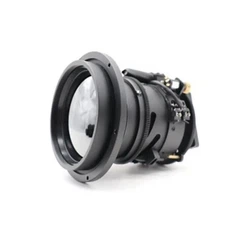
The zoom feature of LWIR lenses provides enhanced flexibility. In night - vision applications, users may need to quickly switch between a wide - field - of - view for general surveillance and a narrow - field - of - view for detailed inspection. For instance, a security guard patrolling a large area can use the wide - angle setting to scan the perimeter. Once a potential threat is detected, they can zoom in to get a closer look at the object. This zoom functionality is not as easily achievable with fixed - focal - length lenses.
3. Compatibility with Various Night - Vision Devices
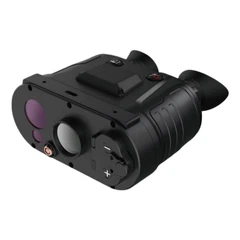
LWIR Zooming Lenses can be integrated into a wide range of night - vision equipment. From handheld thermal monoculars and binoculars to weapon - mounted thermal sights, these lenses can enhance the performance of different devices. For example, the Enhanced 384 VOX Thermal Night Vision Goggle can be equipped with our LWIR Zooming Lenses to provide users with a more versatile night - vision experience. Similarly, the 640 384 Uncooled Thermal Vision Sight Compact Model can benefit from the zoom capabilities of our lenses, enabling shooters to accurately identify targets at different distances.
4. Resistance to Environmental Conditions
LWIR technology is relatively immune to environmental factors such as fog, smoke, and light pollution. In a foggy or smoky environment, visible - light - based night - vision devices may lose their effectiveness, but LWIR devices can still detect thermal signatures. This makes LWIR Zooming Lenses a reliable choice for night - vision applications in challenging weather conditions. For example, in a fire - fighting scenario, firefighters can use LWIR - equipped devices to locate victims through the thick smoke.
Challenges and Considerations
1. Cost
One of the main challenges associated with LWIR Zooming Lenses is their cost. The technology involved in manufacturing high - quality LWIR lenses is complex and expensive. This can make the end - user devices more costly compared to other night - vision technologies. However, as the demand for LWIR technology increases and manufacturing processes become more efficient, the cost is gradually coming down.
2. Resolution and Image Quality
While LWIR technology has made significant progress in recent years, the resolution and image quality of LWIR devices may still be inferior to some visible - light - based systems. The thermal images produced by LWIR sensors are often less detailed, with a lower contrast compared to visible - light images. However, advancements in sensor technology and image - processing algorithms are continuously improving the image quality of LWIR devices.
3. Maintenance
LWIR Zooming Lenses require proper maintenance to ensure optimal performance. The lenses need to be kept clean and free from dust, dirt, and scratches. Additionally, the thermal sensors associated with the lenses may require periodic calibration to maintain accuracy.
Real - World Applications
1. Military and Defense
In the military, LWIR Zooming Lenses are widely used in night - vision goggles, thermal weapon sights, and surveillance systems. Soldiers can use these devices to conduct night - time operations, such as reconnaissance, target acquisition, and navigation. For example, in a night - time raid, soldiers can use LWIR - equipped goggles to identify enemy positions and navigate through unfamiliar terrain.
2. Law Enforcement
Law enforcement agencies use LWIR Zooming Lenses for surveillance, search and rescue operations, and apprehending suspects. Police officers can use thermal binoculars to scan large areas for missing persons or suspects hiding in the dark. The zoom functionality allows them to get a closer look at potential targets without getting too close.
3. Wildlife Monitoring
Wildlife researchers and conservationists use LWIR - based night - vision devices to study nocturnal animals. The ability to detect thermal signatures in the dark allows them to observe the behavior of animals without disturbing them. For example, researchers can use LWIR - equipped cameras to monitor the movement of endangered species at night.
4. Industrial Applications
In the industrial sector, LWIR Zooming Lenses can be used for equipment inspection and security. For example, in a power plant, technicians can use thermal imaging cameras with LWIR Zooming Lenses to detect overheating components. In a large industrial facility, security personnel can use LWIR - equipped surveillance systems to monitor the perimeter at night.


Conclusion
In conclusion, LWIR Zooming Lenses are highly suitable for night - vision applications. Their thermal detection capability, zoom functionality, compatibility with various devices, and resistance to environmental conditions make them a valuable asset in many fields. While there are challenges such as cost, resolution, and maintenance, the benefits far outweigh these drawbacks.
If you are in the market for high - quality LWIR Zooming Lenses for your night - vision needs, we are here to help. Our lenses are designed with the latest technology to provide optimal performance in various night - vision scenarios. Whether you are a military contractor, a law enforcement agency, a wildlife researcher, or an industrial user, we can offer customized solutions to meet your specific requirements. Contact us to start a procurement discussion and explore how our LWIR Zooming Lenses can enhance your night - vision capabilities.
References
- "Infrared Technology and Applications XXXVII", Proceedings of SPIE, Volume 8706
- "Thermal Imaging: Fundamentals, Research and Applications", edited by J. Minkina and T. Dudzik