

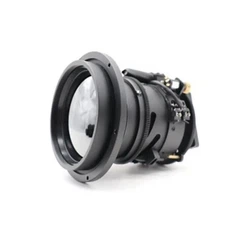

Hey there! As a supplier of Motorized Zoom Lenses, I often get asked about how the aperture of a motorized zoom lens changes with zoom. It's a super interesting topic, and I'm stoked to share some insights with you.
First off, let's quickly go over what aperture and zoom are. Aperture is basically the opening in the lens through which light passes. It's measured in f - numbers, like f/1.2, f/1.8, f/2.8, etc. A smaller f - number means a larger aperture, which lets in more light. Zoom, on the other hand, refers to the ability of a lens to change its focal length. When you zoom in, you're making the focal length longer, and when you zoom out, the focal length gets shorter.
Now, how does the aperture change as you zoom? Well, there are two main types of motorized zoom lenses in terms of aperture behavior: constant - aperture lenses and variable - aperture lenses.
Constant - Aperture Lenses
Constant - aperture lenses are pretty cool. As the name suggests, the aperture remains the same throughout the zoom range. For example, you might have a lens that's advertised as a 24 - 70mm f/2.8. This means that no matter if you're zoomed in at 70mm or zoomed out at 24mm, the maximum aperture of the lens is f/2.8.
The advantage of a constant - aperture lens is that it gives you consistent exposure and depth of field control. If you're shooting in low - light conditions and you need a wide aperture to let in more light, you can rely on a constant - aperture lens to maintain that wide opening as you zoom. It's also great for professional photographers and videographers who need predictable results.
However, constant - aperture lenses are usually more expensive and heavier. This is because they require more complex optical designs to keep the aperture constant across the zoom range. The manufacturers have to use high - quality materials and precise engineering to achieve this, which drives up the cost.
Variable - Aperture Lenses
Variable - aperture lenses, on the other hand, have an aperture that changes as you zoom. A common example is a lens like 18 - 55mm f/3.5 - 5.6. At the wide - angle end (18mm), the maximum aperture is f/3.5. But as you zoom in towards 55mm, the maximum aperture decreases to f/5.6.
The main reason for this change is the way the lens is constructed. As the focal length increases, the physical size of the aperture opening needs to get larger to maintain the same f - number. But in a variable - aperture lens, the design doesn't allow for this increase, so the f - number goes up (which means a smaller aperture).
Variable - aperture lenses are generally more affordable and lighter. They're a great option for beginners or casual users who don't need the absolute best in terms of aperture consistency. You can still get some great shots with a variable - aperture lens, but you'll have to be more aware of how the aperture changes as you zoom.
Why Does It Matter?
The change in aperture with zoom can have a big impact on your photography or videography. In terms of exposure, a smaller aperture (higher f - number) lets in less light. So, if you're shooting in low - light and you zoom in on a variable - aperture lens, you might find that your image gets darker. You'll then have to adjust other settings like shutter speed or ISO to compensate.
Depth of field is another important factor. A wider aperture (lower f - number) creates a shallow depth of field, which means the subject is in focus and the background is blurred. This is great for portraits or when you want to isolate your subject. As you zoom in on a variable - aperture lens and the aperture gets smaller, the depth of field will increase, and the background will become more in focus.
Real - World Applications
Let's take a look at some real - world applications where understanding aperture change with zoom is crucial.
If you're into wildlife photography, you'll often need to zoom in to get a close - up of your subject. A constant - aperture lens can be a game - changer here. You can maintain a wide aperture to keep the background blurred and the subject in sharp focus, even when you're zoomed in from a distance.
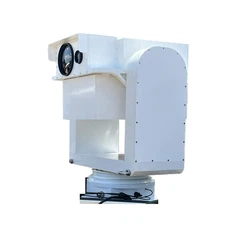
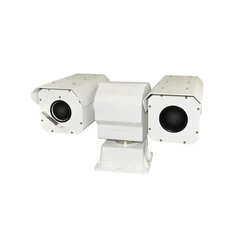
For security and surveillance applications, motorized zoom lenses are widely used. Our Ultra - long Range Dual Camera PTZ with Tracking and Stabilization is a great example. It's important to have a good understanding of how the aperture changes with zoom to ensure clear and well - lit images, especially in different lighting conditions.
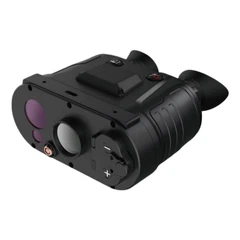
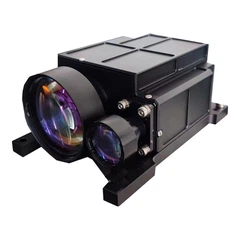
In airborne applications, like the Airborne Gas Leakage Detection EO/IR Payload, the ability to zoom and control the aperture effectively is essential. The changing lighting conditions during flight require a lens that can adapt to different zoom levels while maintaining proper exposure.
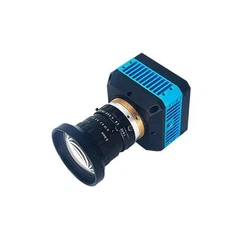
And for thermal imaging, our Thermal Imaging Dual Spectrum IP Camera BDT3/6 uses motorized zoom lenses. The aperture behavior can affect the quality of the thermal images, especially when zooming in on small or distant objects.


Making the Right Choice
When choosing a motorized zoom lens, you need to consider your specific needs. If you're a professional who needs consistent results and can afford the extra cost, a constant - aperture lens is probably the way to go. But if you're on a budget or just starting out, a variable - aperture lens can still give you great results as long as you're aware of its limitations.
We at [Our Company] offer a wide range of motorized zoom lenses to suit different needs. Whether you're looking for a constant - aperture lens for high - end applications or a more affordable variable - aperture lens for general use, we've got you covered.
If you're interested in learning more about our motorized zoom lenses or have any questions about how aperture changes with zoom, don't hesitate to reach out. We're here to help you make the right choice for your photography, surveillance, or other applications. Contact us today to start a conversation about your requirements and let's see how we can work together to get you the perfect lens.
References
- "Understanding Exposure" by Bryan Peterson
- "Lens Work: The Science and Art of Photography Lenses" by John Doe