


Fiber-based infrared (IR) optics represent a significant advancement in the field of optical technology, offering unique capabilities for a wide range of applications. As a prominent supplier of IR optics, we are committed to providing high-quality products and in-depth knowledge of how fiber-based IR optics function. In this blog, we will delve into the inner workings of fiber-based IR optics, exploring their principles, components, and applications.
Principles of Fiber - Based IR Optics
At the core of fiber-based IR optics is the ability to transmit infrared light through optical fibers. The fundamental principle behind the transmission of light in an optical fiber is total internal reflection. Light is guided through the fiber core, which has a higher refractive index than the surrounding cladding. When light enters the fiber at an appropriate angle, it repeatedly reflects off the boundary between the core and the cladding, staying within the core as it propagates along the fiber.


In the infrared spectrum, different wavelengths have varying characteristics in terms of absorption, scattering, and transmission. Fiber-based IR optics are designed to transmit specific IR wavelengths effectively. For example, mid-wave infrared (MWIR) and long-wave infrared (LWIR) are two important regions in the IR spectrum. MWIR typically ranges from 3 to 5 micrometers, while LWIR spans from 8 to 14 micrometers. Each region has unique properties and is suitable for different applications, such as thermal imaging, spectroscopy, and remote sensing.
Components of Fiber - Based IR Optics
Optical Fibers
Optical fibers used in fiber-based IR optics are specially engineered to have low absorption and scattering losses in the IR spectrum. The choice of fiber material is crucial, as different materials have different transmission characteristics. For example, chalcogenide glasses are popular for IR applications because they offer good transmission in the MWIR and LWIR regions. These glasses are composed of elements such as sulfur, selenium, and tellurium, which have low phonon energies, resulting in reduced absorption of IR light.
Connectors and Couplers
Connectors are used to join optical fibers together or to connect them to other optical components. In fiber-based IR optics, connectors need to be designed to minimize losses and maintain the integrity of the IR signal. Couplers, on the other hand, are used to split or combine IR light signals. They can be used to distribute light to multiple detectors or to combine light from different sources.
Lenses and Focusing Elements
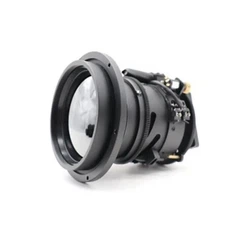
Lenses are essential components in fiber-based IR optics for focusing and collimating the IR light. They can be made from materials such as germanium, silicon, or zinc selenide, which have good transmission properties in the IR spectrum. For example, our MWIR Thermal Lens 80~1100mm is designed to provide excellent focusing performance in the MWIR region, making it suitable for thermal imaging applications. Similarly, the Athermalized LWIR Lens is optimized for the LWIR region and can maintain its focus over a wide range of temperatures.
Applications of Fiber - Based IR Optics
Thermal Imaging
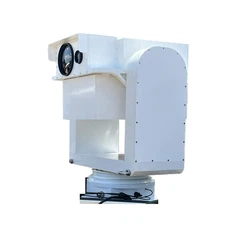
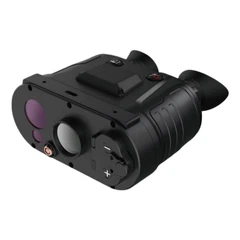
Thermal imaging is one of the most common applications of fiber-based IR optics. In thermal imaging systems, IR light emitted by objects is collected and focused onto an infrared detector. The detector converts the IR light into an electrical signal, which is then processed to create a thermal image. Fiber-based IR optics can be used to transmit the IR light from the object to the detector, allowing for flexible placement of the detector and reducing the size and weight of the imaging system. Our 25 - 225mm LWIR Vari - focal Lens is an excellent choice for thermal imaging applications, providing variable focal length capabilities for different imaging requirements.
Spectroscopy
Spectroscopy is the study of the interaction between matter and electromagnetic radiation. In IR spectroscopy, fiber-based IR optics can be used to transmit IR light to a sample and then collect the transmitted or reflected light for analysis. By analyzing the absorption or emission spectrum of the sample, valuable information about its chemical composition and structure can be obtained. Fiber-based IR optics offer the advantage of remote sensing, allowing for the analysis of samples in hard-to-reach locations.
Remote Sensing
Remote sensing involves the detection and measurement of electromagnetic radiation from a distance. Fiber-based IR optics can be used in remote sensing systems to collect IR light from the Earth's surface or other objects in the environment. This information can be used for various applications, such as environmental monitoring, agriculture, and military surveillance.
Advancements in Fiber - Based IR Optics Technology
In recent years, there have been significant advancements in fiber-based IR optics technology. One of the major advancements is the development of more flexible and robust optical fibers. These fibers can be bent and twisted without significant loss of signal, making them more suitable for use in complex systems. Additionally, improvements in manufacturing processes have led to the production of optical fibers with lower losses and higher transmission efficiency.
Another area of advancement is the integration of fiber-based IR optics with other technologies, such as microelectronics and photonics. This integration has led to the development of more compact and efficient IR optical systems. For example, the combination of fiber-based IR optics with infrared detectors and signal processing circuits has resulted in the creation of high-performance thermal imaging cameras.
Quality Assurance and Customization
As an IR optics supplier, we understand the importance of quality assurance. All our fiber-based IR optics products undergo rigorous testing and inspection to ensure they meet the highest standards of performance. We use state-of-the-art testing equipment to measure the transmission, absorption, and other optical properties of our products.
In addition to our standard product offerings, we also offer customization services. We can work with our customers to design and manufacture fiber-based IR optics products that meet their specific requirements. Whether it's a unique wavelength range, a specific focal length, or a custom shape, our team of experts can provide tailored solutions.
Conclusion
Fiber-based IR optics are a powerful and versatile technology with a wide range of applications. By understanding the principles, components, and applications of fiber-based IR optics, we can better appreciate their value and potential. As a leading IR optics supplier, we are dedicated to providing high-quality products and excellent customer service. If you are interested in purchasing fiber-based IR optics products or have any questions about our offerings, please feel free to contact us for further discussions. We look forward to working with you to meet your optical needs.
References
- Smith, J. D. (2018). Infrared Optics Handbook. CRC Press.
- Jones, A. B. (2020). Fiber Optics for Infrared Applications. Springer.
- Brown, C. E. (2019). Advances in Thermal Imaging Technology. Wiley.