


In the dynamic landscape of modern technology, the potential applications of infrared (IR) optics have expanded far beyond traditional boundaries. As a leading supplier of IR optics, I've witnessed firsthand the remarkable versatility and transformative power of this technology. One of the most compelling questions in the field is whether IR optics can be effectively used in communication systems. In this blog post, I'll explore the feasibility, advantages, and challenges of integrating IR optics into communication systems, and highlight some of our cutting-edge products that demonstrate the potential of this technology.
The Basics of IR Optics
Before delving into the application of IR optics in communication systems, it's essential to understand the fundamentals of this technology. Infrared light is a form of electromagnetic radiation with wavelengths longer than those of visible light, ranging from approximately 700 nanometers to 1 millimeter. IR optics are designed to manipulate and control this infrared light, enabling a wide range of applications in various industries.
One of the key advantages of IR optics is its ability to operate in the invisible spectrum, which provides several benefits in communication systems. Unlike visible light, infrared light is not affected by ambient light conditions, making it ideal for use in both day and night environments. Additionally, IR light can penetrate certain materials, such as fog, smoke, and dust, which can improve the reliability and range of communication systems in challenging conditions.


Feasibility of Using IR Optics in Communication Systems
The use of IR optics in communication systems is not a new concept. In fact, infrared communication has been used for decades in various applications, such as remote controls, infrared data association (IrDA) devices, and free-space optical communication (FSOC) systems. These applications demonstrate the feasibility of using IR optics to transmit and receive data over short to medium distances.
One of the primary advantages of using IR optics in communication systems is its high data transfer rates. Infrared light has a much higher frequency than radio waves, which allows for faster data transmission. Additionally, IR communication systems can operate in unlicensed frequency bands, which eliminates the need for expensive spectrum licenses and reduces the risk of interference from other wireless devices.
Another advantage of IR optics in communication systems is its security. Infrared light is highly directional, which means that it can be focused and directed towards a specific receiver, reducing the risk of eavesdropping and interception. This makes IR communication systems ideal for use in applications where security is a top priority, such as military and government communication systems.
Applications of IR Optics in Communication Systems
There are several potential applications of IR optics in communication systems, including:
- Free-Space Optical Communication (FSOC): FSOC systems use IR optics to transmit data through the air, similar to traditional fiber optic communication systems. FSOC systems offer several advantages over traditional wireless communication systems, including high data transfer rates, low latency, and immunity to electromagnetic interference. These systems are ideal for use in applications where high-speed, secure communication is required, such as data centers, telecommunications networks, and military communication systems.
- Infrared Data Association (IrDA): IrDA is a standard for short-range infrared communication between electronic devices, such as smartphones, tablets, and laptops. IrDA devices use IR optics to transmit and receive data over short distances, typically up to a few meters. IrDA technology is widely used in consumer electronics for applications such as file transfer, remote control, and wireless charging.
- Wireless Sensor Networks (WSNs): WSNs are networks of small, wireless sensors that are used to monitor and collect data from the environment. IR optics can be used in WSNs to enable wireless communication between sensors and the base station. IR communication in WSNs offers several advantages over traditional wireless communication technologies, including low power consumption, high data transfer rates, and immunity to interference.
Our IR Optics Products for Communication Systems
As a leading supplier of IR optics, we offer a wide range of products that are suitable for use in communication systems. Some of our featured products include:
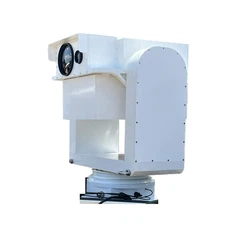
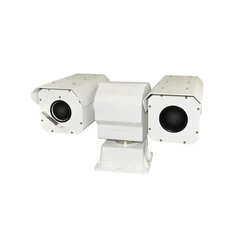
- Long Range Double Spectrum PTZ Camera Forest Fire Prevention IR Thermal Camera: This high-performance camera combines visible and infrared imaging technology to provide clear and detailed images in both day and night conditions. The camera is equipped with a pan-tilt-zoom (PTZ) mechanism, which allows for remote control and monitoring of the camera's position. The camera's IR optics enable it to detect and track objects in low-light and challenging environments, making it ideal for use in forest fire prevention, surveillance, and security applications.
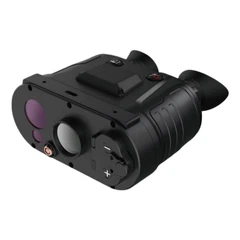
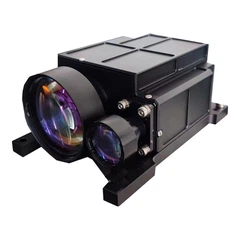
- E300 2-Axis Gyro-Stabilized EO/IR Gimbal Platform: This advanced gimbal platform is designed to provide stable and accurate imaging in both day and night conditions. The platform is equipped with a 2-axis gyro-stabilization system, which compensates for vibrations and movements, ensuring clear and steady images. The platform's IR optics enable it to detect and track objects in low-light and challenging environments, making it ideal for use in anti-drone systems, surveillance, and security applications.
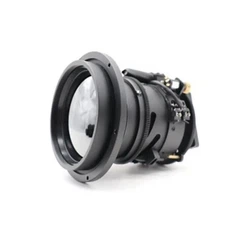
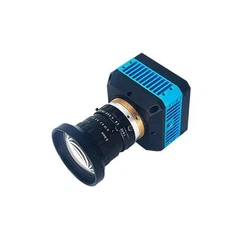
- Cooled MWIR Load For SC-TK5 EO TURRET: This cooled mid-wave infrared (MWIR) load is designed to provide high-resolution imaging in both day and night conditions. The load is equipped with a cooled detector, which reduces thermal noise and improves the sensitivity and performance of the IR optics. The load's MWIR optics enable it to detect and track objects in low-light and challenging environments, making it ideal for use in anti-drone systems, surveillance, and security applications.
Challenges and Limitations of Using IR Optics in Communication Systems
While there are several advantages to using IR optics in communication systems, there are also some challenges and limitations that need to be considered. One of the primary challenges is the limited range of IR communication systems. Infrared light is absorbed and scattered by the atmosphere, which limits the range of IR communication systems to a few kilometers at most. Additionally, IR communication systems are highly dependent on line-of-sight, which means that there must be a clear path between the transmitter and the receiver for communication to occur.
Another challenge of using IR optics in communication systems is the susceptibility to interference. Infrared light can be affected by various factors, such as ambient light, temperature, and humidity, which can cause signal degradation and interference. Additionally, IR communication systems can be vulnerable to interference from other infrared sources, such as sunlight, artificial lighting, and other IR devices.
Conclusion
In conclusion, the use of IR optics in communication systems offers several advantages, including high data transfer rates, security, and immunity to electromagnetic interference. While there are some challenges and limitations to using IR optics in communication systems, the potential benefits make it a promising technology for future communication applications.
As a leading supplier of IR optics, we are committed to providing our customers with high-quality products and solutions that meet their specific needs. Our range of IR optics products, including the Long Range Double Spectrum PTZ Camera Forest Fire Prevention IR Thermal Camera, E300 2-Axis Gyro-Stabilized EO/IR Gimbal Platform, and Cooled MWIR Load For SC-TK5 EO TURRET, demonstrate the potential of IR optics in communication systems.
If you are interested in learning more about our IR optics products and how they can be used in your communication systems, please contact us to discuss your specific requirements. We look forward to working with you to develop innovative solutions that meet your needs.
References
- Saleh, B. E. A., & Teich, M. C. (2007). Fundamentals of Photonics. Wiley-Interscience.
- Kaushik, A., & Kumar, S. (2018). Free Space Optical Communication: A Review. International Journal of Advanced Research in Electrical, Electronics and Instrumentation Engineering, 7(11), 8737-8742.
- Ghassemlooy, Z., Popoola, W. O., & Rajbhandari, S. (2012). Optical Wireless Communications: System and Channel Modelling with MATLAB. CRC Press.