


- The clearest signal came from the US Space Force, which awarded its first "operational" contracts under the Commercial Augmentation Space Reserve (CASR) initiative on October 23. Six commercial space-monitoring firms - Australia's EOS Space Systems, Canada's NorthStar Earth and Space, InTrack Radar, Anduril (via its ExoAnalytic acquisition), Slingshot Aerospace, and LeoLabs - split roughly $1.37 million in short-term awards modeled on the Civil Reserve Air Fleet concept. The dollar figures are modest, and unresolved questions remain about "shutter control" during a conflict and whether the Pentagon will indemnify commercial operators for satellites lost in wartime. But the structural signal matters more than the price tag: the US military is formalizing a pathway to surge commercial space-domain-awareness capacity, and CSIS analysts have already flagged that the current terms may be too thin to attract serious long-term investment from industry.
- That procurement caution sits against a starker strategic backdrop. The Defense Intelligence Agency's newly released 2026 edition of "Challenges to Security in Space," published October 26, included the first publicly released clear image of China's reusable spaceplane, commonly referred to as Shenlong, captured by Maxar imagery. The report assesses that China could field space-based directed-energy weapons by the late 2020s and reiterates longstanding US concerns about a Russian nuclear-capable satellite program that Moscow continues to describe as radiation-hardness testing. It also flags a rapidly congesting low Earth orbit, now home to roughly 15,000 satellites, with collision risk projected to keep rising through 2040. For companies building LEO constellations or space-based ISR payloads, the report is a reminder that the operating environment itself - debris, congestion, and adversary counterspace capability - is becoming as important a design constraint as the sensors themselves.
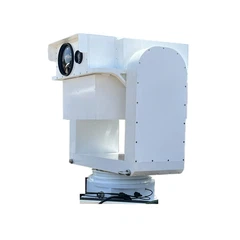
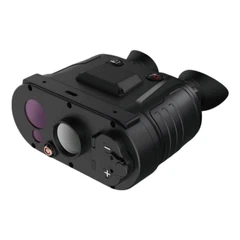
- On the EO/IR side proper, Greek night-vision and thermal-imaging manufacturer THEON disclosed roughly €45 million in new contracts from two unnamed European NATO member states, with deliveries expected to begin before year-end and management anticipating stronger order intake into early 2027. It's a useful data point that European night-vision and thermal-imaging demand remains active even as larger-ticket programs dominate headlines.
- Those larger programs were visible too. Germany and Norway used the one-year mark of their "Hansa Arrangement" to reaffirm plans for a joint imaging-reconnaissance satellite constellation, an idea German Defense Minister Boris Pistorius floated during a visit to Norway's Andøya spaceport earlier this year. Andøya's polar-orbit-friendly geography makes it a natural fit for reconnaissance satellite launches, and the two governments have already stood up a bilateral space working group covering launch capability, space-based surveillance, and secure communications - alongside more tangible industrial cooperation such as a new Leopard 2A8 tank line in Levanger, Norway.
- Meanwhile, NATO's own adoption problem took center stage at the alliance's DiBaX 2026 demonstrations in Latvia. Supreme Allied Commander Transformation Adm. Pierre Vandier told reporters on October 30 that NATO has the technology, engineers, industry, and funding it needs - what it lacks is the institutional speed to turn pilots into fielded capability. The exercise tested AI-assisted targeting workflows linking the Maven platform to a national system, along with counter-drone defenses against a cross-border drone flown from Lithuania into Latvia; notably, one demonstration failed outright, which Vandier framed as a necessary cost of honest testing.
- Elsewhere, two procurement stories illustrate how ISR and fighter modernization needs are playing out beyond the US and Europe. In Chile, outgoing air force chief Gen. Hugo Rodríguez used his October 30 change-of-command address to lay out the scale of preparation needed for a fifth-generation fighter transition - digital integration, sensor fusion, and trained personnel - as the FACh formally studies replacing its roughly 50-year-old F-5 Tigre III fleet, with Washington signaling that Chile is positioned to acquire the F-35A. And the US Army's ME-11B high-altitude reconnaissance jet, a Sierra Nevada Corporation conversion of the Bombardier Global 6500 carrying Raytheon's ASARS-2B radar, is on track for prototype completion by year-end, part of a fleet consolidated from 14 to six aircraft under a $991.3 million, 12-year contract - a reminder that even as the Army shrinks its crewed ISR fleet, it is betting on fewer, more capable sensor-equipped platforms.
Taken together, this week's news suggests the near-term opportunity in EO/IR and space-ISR markets lies less in dramatic new platform announcements and more in the unglamorous work of institutionalizing commercial-military data pipelines, sustaining and upgrading existing sensor fleets, and proving systems can move from demonstration to deployment faster than adversaries can adapt.