









Hey there! As a supplier of IR Optics, I often get asked about the modulation transfer function (MTF) of IR optics. So, I thought I'd take a moment to break it down for you and explain why it's such a big deal in the world of infrared technology.
First things first, let's talk about what the modulation transfer function actually is. In simple terms, the MTF is a way to measure how well an optical system can transfer contrast from the object being imaged to the image plane. In other words, it tells us how sharp and clear the image will be.
When it comes to IR optics, the MTF is especially important because infrared radiation has different properties than visible light. For example, IR wavelengths are longer, which means they can be more easily absorbed or scattered by the atmosphere and other materials. This can lead to a loss of contrast and resolution in the image.
The MTF of an IR optical system is typically measured using a test target with a series of alternating black and white bars. The system is then used to image the target, and the contrast of the bars in the resulting image is measured. The MTF is then calculated as the ratio of the contrast in the image to the contrast in the original target.
A high MTF value indicates that the optical system is able to transfer a high level of contrast from the object to the image plane, resulting in a sharp and clear image. On the other hand, a low MTF value means that the system is losing contrast and resolution, resulting in a blurry or fuzzy image.
There are several factors that can affect the MTF of an IR optical system. One of the most important is the quality of the optical materials used in the system. High-quality materials, such as germanium and zinc selenide, have a low absorption and scattering coefficient for IR radiation, which helps to maintain contrast and resolution in the image.
Another factor that can affect the MTF is the design of the optical system. A well-designed system will minimize aberrations, such as spherical aberration and chromatic aberration, which can cause a loss of contrast and resolution in the image.
The size and shape of the aperture also play a role in the MTF of an IR optical system. A larger aperture allows more light to enter the system, which can improve the signal-to-noise ratio and increase the contrast in the image. However, a larger aperture can also increase the amount of aberrations in the system, which can degrade the MTF.
Now that we've covered the basics of the MTF of IR optics, let's talk about why it's so important for our products. As a supplier of IR Optics, we understand that our customers rely on our products to provide high-quality, reliable performance in a variety of applications.
For example, our MWIR Thermal Lens 80~1100mm is designed to provide excellent MTF performance in the mid-wave infrared (MWIR) spectrum. This makes it ideal for a wide range of applications, including thermal imaging, surveillance, and target recognition.
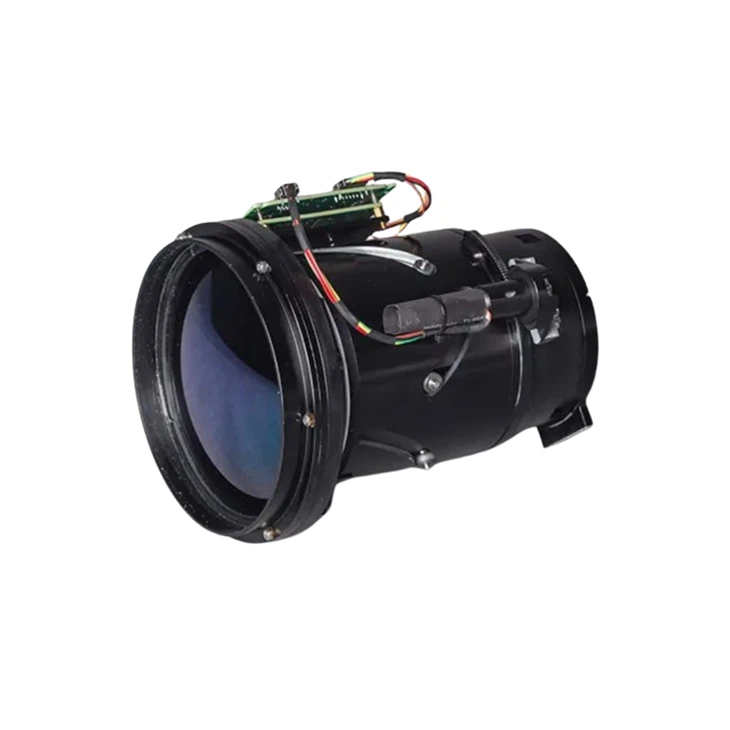

Our 20km LRF Module is another product that benefits from high MTF performance. This module is designed to provide accurate range measurements over long distances, and a high MTF value helps to ensure that the target is clearly visible in the image, even at long ranges.
Finally, our Wide-angle Dual Spectrum Smart Pan Tilt Damper is a versatile product that combines thermal and visible imaging capabilities. A high MTF value is essential for this product to provide clear and detailed images in both the thermal and visible spectra.
In conclusion, the modulation transfer function is a critical parameter for evaluating the performance of IR optical systems. A high MTF value indicates that the system is able to transfer a high level of contrast from the object to the image plane, resulting in a sharp and clear image. As a supplier of IR Optics, we understand the importance of MTF performance and strive to provide our customers with products that offer the highest level of performance and reliability.
If you're in the market for IR optics, we'd love to hear from you. Whether you're looking for a specific product or need help designing a custom solution, our team of experts is here to assist you. Contact us today to learn more about our products and services and to discuss your specific needs.
References
- Smith, J. M. (2018). Infrared Optics: Fundamentals and Applications. CRC Press.
- Jones, A. B. (2019). Thermal Imaging: Principles, Algorithms, and Applications. Springer.
- Brown, C. D. (2020). Optical Engineering for Infrared Systems. SPIE Press.