

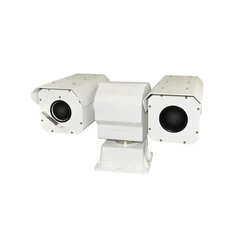
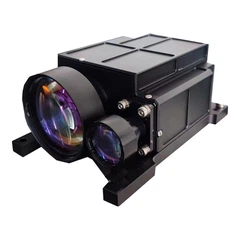
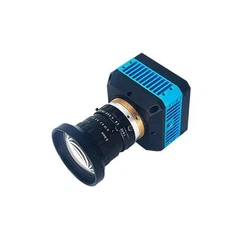

In the realm of modern technology, handheld thermal imaging equipments have emerged as indispensable tools across various industries, from security and surveillance to wildlife observation and industrial inspections. A key parameter that significantly influences the performance of these devices is the minimum detectable temperature difference (MDTD). Understanding MDTD is crucial for both end - users and suppliers like us, as it directly impacts the quality and effectiveness of thermal imaging solutions.
Defining the Minimum Detectable Temperature Difference
The minimum detectable temperature difference refers to the smallest temperature variation that a handheld thermal imaging equipment can distinguish. In other words, it is the threshold below which the device cannot accurately differentiate between two objects or regions based on their temperature differences. For example, if a thermal imager has an MDTD of 0.1°C, it means that the device can detect a temperature difference as small as 0.1°C between two adjacent areas in the field of view.
MDTD is typically measured in degrees Celsius (°C) or Kelvin (K). A lower MDTD value indicates a more sensitive thermal imaging device, capable of detecting even the subtlest temperature variations. This is particularly important in applications where small temperature differences can reveal critical information, such as detecting early signs of equipment malfunction in industrial settings or spotting a hidden intruder in security surveillance.
Factors Affecting the Minimum Detectable Temperature Difference
Several factors can influence the MDTD of handheld thermal imaging equipments.
Detector Technology
The type of detector used in the thermal imager is one of the most significant factors. There are two main types of detectors: cooled and uncooled detectors.
Cooled detectors, which are usually based on materials like mercury cadmium telluride (MCT), operate at very low temperatures, often using cryogenic cooling systems. These detectors offer extremely high sensitivity and low MDTD values, typically in the range of 0.02 - 0.05°C. However, they are more expensive, larger in size, and require more power to operate.
Uncooled detectors, on the other hand, are based on microbolometer technology. They are more cost - effective, smaller, and consume less power. The MDTD of uncooled detectors is generally in the range of 0.05 - 0.15°C, which is still sufficient for many applications.
Optics
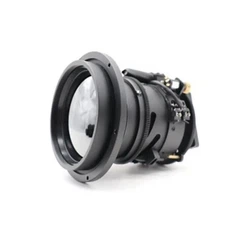
The quality of the optics in the thermal imager also plays a crucial role in determining the MDTD. High - quality lenses can focus the infrared radiation onto the detector more efficiently, reducing noise and improving the overall image quality. For instance, our Motorized Focusing LWIR Lens is designed to provide excellent optical performance, which can contribute to a lower MDTD and better thermal imaging results.
Signal Processing
Advanced signal processing algorithms can enhance the sensitivity of the thermal imager and reduce the MDTD. These algorithms can filter out noise, improve contrast, and enhance the details in the thermal image. Modern handheld thermal imaging equipments often incorporate sophisticated signal - processing techniques to optimize their performance.
Environmental Conditions
The operating environment can have a significant impact on the MDTD. Factors such as temperature, humidity, and atmospheric conditions can introduce noise and affect the accuracy of the temperature measurements. For example, in high - humidity environments, water vapor in the air can absorb and scatter infrared radiation, reducing the sensitivity of the thermal imager.
Importance of MDTD in Different Applications
The MDTD requirement varies depending on the specific application of the handheld thermal imaging equipment.
Security and Surveillance
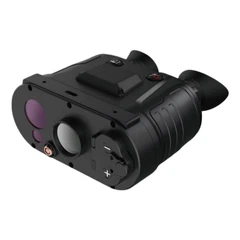
In security and surveillance applications, a low MDTD is essential for detecting hidden intruders. Even a small temperature difference between a human body and the surrounding environment can be used to identify a potential threat. For example, in a night - time surveillance scenario, a thermal imager with a low MDTD can detect a person hiding behind a bush or in a dark corner, where the temperature difference may be very subtle. Our Thermal Low Light Fusion Binocular With LRF offers high - sensitivity thermal imaging capabilities, making it an ideal choice for security and surveillance tasks.
Industrial Inspections
In industrial settings, thermal imaging is used to detect equipment malfunctions and prevent costly breakdowns. A low MDTD allows technicians to detect early signs of overheating in electrical components, motors, and other machinery. For example, a small temperature increase in a motor winding can indicate a potential problem, such as a short - circuit or a bearing failure. By using a thermal imager with a low MDTD, these issues can be detected before they cause significant damage.
Wildlife Observation
Wildlife researchers use thermal imaging to study the behavior and habitat of animals. A low MDTD enables them to detect animals in their natural environment, even in low - light conditions. For example, in a forest at night, a thermal imager can detect the body heat of small mammals or birds, which may be difficult to spot with the naked eye.
Measuring the Minimum Detectable Temperature Difference
There are several methods for measuring the MDTD of handheld thermal imaging equipments. One common method is the use of a blackbody radiator, which is a device that emits a known amount of infrared radiation at a specific temperature. The thermal imager is pointed at the blackbody radiator, and the output signal is measured as the temperature of the radiator is varied. The MDTD is then calculated based on the smallest temperature change that can be detected by the imager.
Another method is the use of a temperature - controlled test target. The test target consists of two regions with a known temperature difference, and the thermal imager is used to measure the temperature difference between these regions. The MDTD is determined by the smallest temperature difference that the imager can accurately measure.
Our Offerings and the Significance of MDTD
As a leading supplier of handheld thermal imaging equipments, we understand the importance of MDTD in different applications. Our product range is designed to meet the diverse needs of our customers, with a focus on providing high - quality thermal imaging solutions with low MDTD values.
For example, our 18km Laser Rangefinder Anti - vibration And Shocking is not only equipped with a long - range laser rangefinder but also features a high - sensitivity thermal imaging module with a low MDTD. This makes it suitable for applications such as long - range surveillance and military operations, where detecting small temperature differences at a distance is crucial.
We also offer a variety of handheld thermal imaging binoculars and monoculars, which are designed for different levels of sensitivity. Whether you need a device for general - purpose surveillance or high - precision industrial inspections, we have a solution that can meet your requirements.


Conclusion
The minimum detectable temperature difference is a critical parameter for handheld thermal imaging equipments. It determines the sensitivity and performance of the device, and its value can significantly impact the effectiveness of thermal imaging in various applications. As a supplier, we are committed to providing our customers with high - quality thermal imaging solutions that offer low MDTD values, ensuring accurate and reliable temperature detection.
If you are interested in our handheld thermal imaging equipments or have any questions about the minimum detectable temperature difference, please feel free to contact us for a detailed discussion and procurement negotiation. We look forward to working with you to meet your thermal imaging needs.
References
- "Thermal Imaging: Principles, Algorithms, and Applications" by J. G. Webster
- "Infrared Technology and Applications" by D. C. O'Shea
- Technical documents and specifications of handheld thermal imaging equipments from leading manufacturers.