


What is the bit depth of SWIR and NIR Wideband Imaging Cores?
As a supplier of SWIR (Short-Wave Infrared) and NIR (Near-Infrared) Wideband Imaging Cores, I often encounter questions about the bit depth of these imaging cores. Bit depth is a crucial parameter that significantly impacts the performance and quality of imaging systems. In this blog, I will delve into the concept of bit depth in SWIR and NIR Wideband Imaging Cores, its importance, and how it relates to the overall imaging capabilities.
Understanding Bit Depth
Bit depth refers to the number of bits used to represent each pixel in an image. In simple terms, it determines the range of intensity values that can be captured and stored for each pixel. For example, an 8-bit image can represent 2^8 = 256 different intensity levels, while a 16-bit image can represent 2^16 = 65,536 different intensity levels. The higher the bit depth, the more detailed and accurate the image can be, as it can capture a wider range of brightness and contrast.


In the context of SWIR and NIR Wideband Imaging Cores, bit depth plays a vital role in capturing the subtle differences in the infrared spectrum. These imaging cores are designed to detect and capture light in the SWIR and NIR ranges, which are invisible to the human eye. The ability to accurately represent the intensity of this light is essential for applications such as surveillance, industrial inspection, and scientific research.
Importance of Bit Depth in SWIR and NIR Imaging
- Enhanced Dynamic Range: A higher bit depth allows for a greater dynamic range, which is the ratio between the brightest and darkest parts of an image that can be captured. In SWIR and NIR imaging, where the intensity of the infrared light can vary significantly, a wider dynamic range is crucial for capturing details in both bright and dark areas of the scene. For example, in industrial inspection applications, a high bit depth imaging core can accurately detect small defects or variations in the surface of a material, even in the presence of strong reflections or shadows.
- Improved Image Quality: With a higher bit depth, the imaging core can capture more subtle differences in the infrared spectrum, resulting in a more detailed and accurate image. This is particularly important in applications where fine details need to be resolved, such as in medical imaging or environmental monitoring. A high bit depth image can reveal features that may be missed in a lower bit depth image, providing more valuable information for analysis and decision-making.
- Accurate Color Representation: In some SWIR and NIR imaging applications, color information can be important. A higher bit depth allows for more accurate color representation, as it can capture a wider range of colors in the infrared spectrum. This is useful in applications such as agriculture, where the color of plants can provide valuable information about their health and growth.
Factors Affecting Bit Depth
- Sensor Technology: The type of sensor used in the imaging core can have a significant impact on the bit depth. Different sensor technologies have different capabilities in terms of the number of bits they can support. For example, some advanced sensor technologies can support up to 18 or 20 bits, while others may be limited to 8 or 12 bits. When choosing an imaging core, it is important to consider the sensor technology and its bit depth capabilities to ensure that it meets the requirements of your application.
- Data Transfer and Storage: A higher bit depth means more data needs to be transferred and stored. This can pose challenges in terms of data transfer rates and storage capacity. For applications that require real-time imaging or large amounts of data storage, it is important to ensure that the imaging system has sufficient bandwidth and storage capabilities to handle the high bit depth data.
- Cost: Generally, imaging cores with higher bit depths tend to be more expensive. This is because they require more advanced sensor technology and processing capabilities. When considering the bit depth of an imaging core, it is important to balance the cost with the performance requirements of your application. In some cases, a lower bit depth imaging core may be sufficient for the task, while in others, a higher bit depth may be necessary to achieve the desired results.
Applications of SWIR and NIR Wideband Imaging Cores
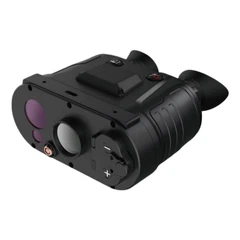
- Surveillance and Security: SWIR and NIR imaging cores are widely used in surveillance and security applications due to their ability to detect and monitor objects in low-light or no-light conditions. The high bit depth of these imaging cores allows for clear and detailed images, even in challenging environments. For example, Handheld Night Vision Binocular With Laser Rangefinder can provide enhanced situational awareness in the dark, making it an ideal tool for law enforcement and military personnel.
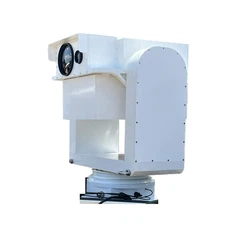
- Industrial Inspection: In industrial inspection applications, SWIR and NIR imaging cores can be used to detect defects, cracks, or other abnormalities in materials and products. The high bit depth of these imaging cores allows for accurate detection and analysis of small variations in the surface of the material, ensuring high-quality production. For example, the Cooled MWIR Load For SC-TK5 EO TURRET can be used for high-precision inspection of critical components in the aerospace and automotive industries.
- Scientific Research: SWIR and NIR imaging cores are also used in scientific research to study various phenomena in the infrared spectrum. The high bit depth of these imaging cores allows for detailed analysis of the data, providing valuable insights into the properties and behavior of materials and substances. For example, in environmental research, SWIR and NIR imaging can be used to monitor the health of forests, detect pollution, and study the effects of climate change.
Conclusion
In conclusion, bit depth is a critical parameter in SWIR and NIR Wideband Imaging Cores. It determines the range of intensity values that can be captured and stored for each pixel, which in turn affects the dynamic range, image quality, and color representation of the image. A higher bit depth allows for more detailed and accurate images, making it essential for applications that require high performance and precision.
As a supplier of SWIR and NIR Wideband Imaging Cores, we understand the importance of bit depth and offer a range of imaging cores with different bit depths to meet the diverse needs of our customers. Whether you are looking for a high-performance imaging core for surveillance, industrial inspection, or scientific research, we can provide you with the right solution.
If you are interested in learning more about our SWIR and NIR Wideband Imaging Cores or have any questions about bit depth or other imaging parameters, please feel free to contact us. We are always happy to help you find the best imaging solution for your application.
References
- Smith, J. (2018). Introduction to Infrared Imaging. New York: Springer.
- Jones, A. (2019). Advanced Imaging Technologies for Industrial Inspection. London: Elsevier.
- Brown, C. (2020). Infrared Remote Sensing for Environmental Monitoring. Cambridge: Cambridge University Press.