

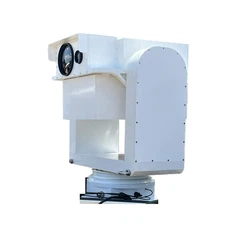
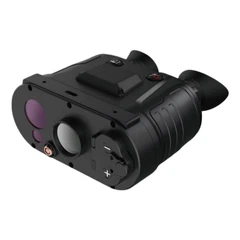

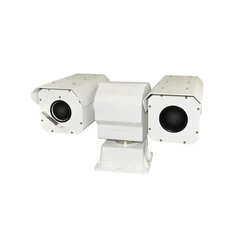

In the vast realm of astronomy, infrared (IR) optics have emerged as indispensable tools, revolutionizing our understanding of the cosmos. As an IR optics supplier, we take pride in contributing to this field by offering a range of high - performance IR optical components and systems. In this blog, we will explore the diverse applications of IR optics in astronomy and how our products can enhance astronomical research and observations.
1. Infrared Astronomy Basics
Traditional astronomy often relies on visible light to observe celestial objects. However, a significant portion of the universe emits most of its radiation outside the visible spectrum, especially in the infrared range. Infrared light can penetrate dust clouds that obscure visible - light observations, allowing us to peer into the hearts of star - forming regions, the cores of galaxies, and the environments around black holes. IR wavelengths range from about 700 nanometers to 1 millimeter, and different sub - regions within this range are useful for various astronomical studies.
2. Applications of IR Optics in Stellar Evolution Studies
Protostar and Star - Forming Regions
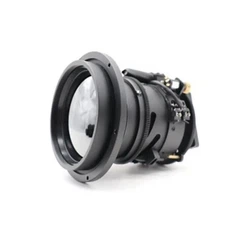
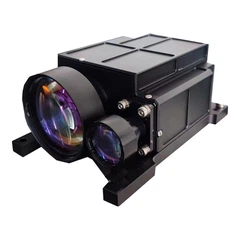
Stars are born within dense clouds of gas and dust. These clouds are opaque to visible light but transparent to infrared radiation. By using IR optics, astronomers can study the earliest stages of star formation. Protostars, which are still in the process of collapsing and accreting mass, are much brighter in the infrared than in the visible. For example, the Spitzer Space Telescope, equipped with advanced IR optics, has provided detailed images of protostars in the Orion Nebula and other star - forming regions. Our Athermalized LWIR Lens can be an excellent choice for ground - based telescopes observing these regions. The athermalized design ensures stable performance across a wide range of temperatures, which is crucial for long - term observations of star - forming regions that may take place over different seasons or in varying environmental conditions.
Red Giants and Planetary Nebulae
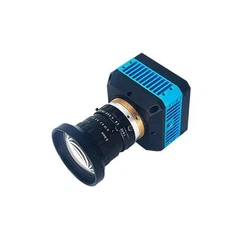
As stars evolve, they go through different phases. Red giants, which are in a late stage of stellar evolution, are very cool and emit a large amount of their radiation in the infrared. By studying the IR spectra of red giants, astronomers can learn about their chemical composition, mass loss rate, and internal structure. Planetary nebulae, the glowing shells of gas ejected by dying stars, also have distinct IR signatures. Our LWIR Zooming Lens can be used to observe these objects at different magnifications. The zooming capability allows astronomers to focus on different parts of a planetary nebula or to compare different nebulae at various distances.
3. Galactic and Extragalactic Studies
Galactic Structure and Dynamics
Infrared observations are crucial for mapping the structure of our Milky Way galaxy. The central bulge of the Milky Way is obscured by dust in the visible light, but IR light can penetrate this dust. By using IR optics, astronomers can determine the distribution of stars, gas, and dust in the galaxy. They can also study the rotation curves of galaxies, which provide insights into the distribution of dark matter. Our Manual Focusing LWIR Lens can be used in small - to medium - sized telescopes for detailed studies of the galactic plane. The manual focusing feature gives astronomers more control over the focus, which is important for obtaining sharp images of complex galactic structures.
Distant Galaxies and Quasars
In the study of distant galaxies and quasars, IR optics play a vital role. Due to the redshift effect, the light from distant objects is shifted to longer wavelengths. As a result, the ultraviolet and visible light emitted by these objects when they were formed may now be in the infrared range. By observing these objects in the infrared, astronomers can study their early history, star - formation rates, and the properties of their active galactic nuclei (AGNs). IR telescopes can detect faint, distant galaxies that are otherwise invisible in the visible spectrum. Our high - quality IR optics can enhance the sensitivity and resolution of telescopes used for these observations, enabling astronomers to gather more accurate data about the most distant and ancient objects in the universe.
4. Solar System Studies
Planets and Moons
Infrared observations are used to study the atmospheres, surfaces, and interiors of planets and moons in our solar system. For example, the thermal radiation emitted by planets can be measured in the infrared. By analyzing the IR spectra, astronomers can determine the temperature distribution, chemical composition, and the presence of clouds and hazes in planetary atmospheres. On the icy moons of Jupiter and Saturn, IR observations can help identify the presence of water ice, other volatile compounds, and geological activity. Our IR optics can be integrated into spacecraft - based telescopes or ground - based observatories for solar system studies. The precision - made lenses can provide clear images and accurate spectral data, which are essential for understanding the complex processes occurring on these celestial bodies.


Asteroids and Comets
Asteroids and comets are remnants from the early solar system formation. IR observations can reveal their surface properties, such as albedo (reflectivity) and composition. Comets, in particular, have a rich variety of volatile compounds that emit characteristic IR signatures when heated by the Sun. By studying these signatures, astronomers can learn about the origin and evolution of comets. Our IR optical systems can be used to track and study the movement and composition of asteroids and comets, which is important for both scientific research and planetary defense.
5. The Role of Our IR Optics in Astronomical Advancement
As an IR optics supplier, we understand the critical requirements of astronomical applications. Our lenses and optical systems are designed with high precision and using advanced manufacturing techniques. They offer excellent optical performance, including high resolution, low aberration, and good light - gathering ability. The materials used in our products are carefully selected to ensure long - term stability and reliability in harsh astronomical environments, whether it is on a ground - based telescope exposed to changing weather conditions or a space - based instrument subjected to the vacuum and radiation of space.
Our Athermalized LWIR Lens, LWIR Zooming Lens, and Manual Focusing LWIR Lens are just a few examples of our product offerings. These lenses can be customized to meet the specific needs of different astronomical projects. Whether it is a small - scale research telescope or a large - scale observatory, we can provide the right IR optical solutions.
6. Invitation to Contact for Procurement
If you are involved in astronomical research or observatory operations, we invite you to explore our range of IR optics products. Our team of experts is available to discuss your specific requirements and provide detailed technical support. We believe that our high - quality IR optics can significantly enhance your astronomical observations and research. Whether you need a single lens or a complete optical system, we are committed to providing the best products and services. Please feel free to contact us to start a procurement discussion and take your astronomical endeavors to the next level.
References
- Binney, J., & Merrifield, M. (1998). Galactic Astronomy. Princeton University Press.
- Schneider, P. (2006). Extragalactic Astronomy and Cosmology: An Introduction. Springer.
- Spitzer Science Center. (n.d.). Spitzer Space Telescope Mission Overview. Retrieved from [Spitzer website](If this was a real retrieval, put the actual link here).
- Kitchin, C. R. (2009). Optical Astronomy: An Introduction. Springer.