

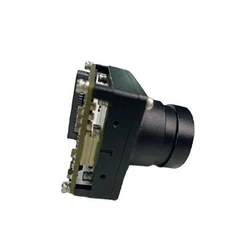
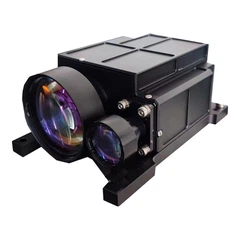
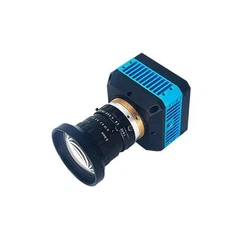

In the ever - evolving field of imaging technologies, Short - Wave Infrared (SWIR) and Near - Infrared (NIR) wideband imaging cores have emerged as powerful tools with distinct advantages over other imaging technologies. As a leading supplier of SWIR and NIR wideband imaging cores, I am excited to delve into the unique benefits that these technologies offer.


1. Enhanced Penetration and Visibility
One of the most significant advantages of SWIR and NIR wideband imaging cores is their ability to penetrate various materials and atmospheric conditions better than visible light imaging. Visible light is easily scattered and absorbed by particles in the air, such as dust, fog, and smoke. In contrast, SWIR and NIR wavelengths can pass through these obstructions more effectively, providing clear images even in challenging environments.
For example, in industrial inspection applications, SWIR imaging can penetrate packaging materials like plastics and cardboard. This allows for non - destructive testing of products inside the packages, detecting defects or contaminants without opening them. In environmental monitoring, NIR and SWIR imaging can help in analyzing the composition of the atmosphere by detecting gases and aerosols that are otherwise difficult to observe in the visible spectrum.
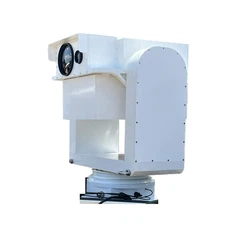
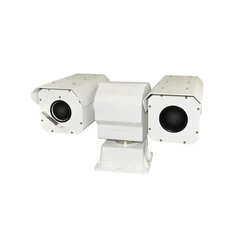
This enhanced penetration also makes SWIR and NIR imaging useful in surveillance. A Thermal Security Camera Outdoor equipped with SWIR or NIR wideband imaging cores can provide clear images at night or in low - light conditions, where visible light cameras would struggle. The ability to see through light fog or haze gives security personnel a better view of the monitored area, enhancing overall safety and situational awareness.
2. Spectral Information and Material Identification
SWIR and NIR wideband imaging cores can capture a broader range of the electromagnetic spectrum compared to traditional visible light cameras. Different materials have unique spectral signatures in the SWIR and NIR regions, which can be used for accurate material identification.
In agriculture, for instance, NIR imaging can be used to analyze the health of crops. Chlorophyll, water content, and other important plant components have distinct absorption features in the NIR spectrum. By analyzing these spectral signatures, farmers can detect early signs of stress, disease, or nutrient deficiencies in their crops. This enables them to take targeted actions, such as applying fertilizers or pesticides only where needed, leading to more efficient and sustainable farming practices.
In the pharmaceutical industry, SWIR imaging can be used to identify different chemical compounds in drugs. This is crucial for quality control, ensuring that the correct ingredients are present in the right proportions. It can also help in detecting counterfeit drugs, as the spectral signatures of fake medications often differ from those of genuine ones.
3. Low - Light Performance
SWIR and NIR wideband imaging cores excel in low - light conditions. While visible light cameras rely on ambient light sources, SWIR and NIR cameras can use natural infrared radiation or low - power infrared illuminators. This makes them ideal for applications where lighting is limited, such as night - time surveillance, astronomy, and underwater imaging.
In astronomy, SWIR and NIR imaging allows astronomers to observe celestial objects that emit mainly in the infrared spectrum. Many stars, galaxies, and nebulae are more visible in the SWIR and NIR regions, providing valuable insights into the structure and evolution of the universe.
Underwater, visible light is quickly absorbed and scattered, limiting the range and clarity of imaging. SWIR and NIR wavelengths can penetrate water more effectively, enabling better imaging of underwater structures, marine life, and archaeological artifacts.
4. Compatibility with Optical Fibers
SWIR and NIR wavelengths are well - suited for transmission through optical fibers. This makes it possible to use SWIR and NIR wideband imaging cores in fiber - optic - based imaging systems. Fiber - optic imaging is widely used in endoscopy, where a thin, flexible fiber bundle is inserted into the human body to visualize internal organs and tissues.
The compatibility with optical fibers also enables long - distance transmission of imaging data. In industrial and military applications, this can be used to transmit high - quality images from remote locations to a central monitoring station without significant loss of signal quality.
5. Integration with Existing Systems
SWIR and NIR wideband imaging cores can be easily integrated with existing imaging and surveillance systems. They can be used in combination with visible light cameras, thermal cameras, and other sensors to provide a more comprehensive view of the monitored area.
For example, in an integrated security system, a visible light camera can provide detailed images during the day, while a SWIR or NIR camera can take over at night or in adverse weather conditions. This seamless integration enhances the overall performance of the security system, providing continuous and reliable monitoring.
In military applications, a Uncooled LWIR Load For SC - TK5 EO TURRET can be equipped with SWIR and NIR wideband imaging cores to improve target detection and identification capabilities. The combination of different imaging technologies allows for better situational awareness on the battlefield.
6. Cost - Effectiveness and Long - Term Value
Compared to some other advanced imaging technologies, SWIR and NIR wideband imaging cores offer a good balance between performance and cost. The development of semiconductor manufacturing processes has led to a reduction in the cost of SWIR and NIR sensors, making them more accessible for a wide range of applications.
In addition, SWIR and NIR cameras generally have a longer lifespan and require less maintenance compared to some other types of cameras. This reduces the total cost of ownership over the long term, making them a cost - effective choice for businesses and organizations.
7. High - Resolution Imaging
Modern SWIR and NIR wideband imaging cores are capable of providing high - resolution images. This is essential for applications where detailed information is required, such as in microelectronics inspection, where even the smallest defects can cause significant problems.
High - resolution SWIR and NIR imaging can also be used in art conservation. By capturing detailed images of paintings and sculptures in the SWIR and NIR spectra, conservators can detect hidden layers, repairs, and signs of deterioration that are not visible to the naked eye. This helps in formulating appropriate conservation strategies.
Comparison with Other Imaging Technologies
Visible Light Imaging
As mentioned earlier, visible light imaging is limited by its inability to penetrate certain materials and atmospheric conditions. It also requires sufficient ambient light, making it less effective at night or in low - light environments. In contrast, SWIR and NIR imaging can overcome these limitations, providing useful information even when visible light is scarce.
Long - Wave Infrared (LWIR) Imaging
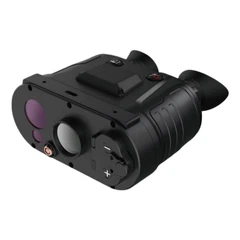
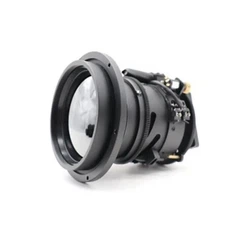
LWIR imaging, often used in thermal cameras, is mainly used for detecting heat signatures. While it is excellent for detecting temperature differences, it lacks the ability to provide detailed spectral information like SWIR and NIR imaging. For example, in material identification applications, LWIR imaging cannot distinguish between different chemical compounds based on their spectral signatures as effectively as SWIR and NIR imaging. However, LWIR imaging can be complementary to SWIR and NIR imaging, and the two can be used together in some applications. For instance, an Athermalized LWIR Lens can be used in combination with a SWIR or NIR camera to provide a more comprehensive view of a scene.
Ultraviolet (UV) Imaging
UV imaging is useful for detecting fluorescence and certain types of surface contaminants. However, UV light is easily absorbed by the atmosphere and most materials, limiting its range and penetration. SWIR and NIR imaging, on the other hand, can penetrate deeper and provide more information about the internal structure of objects.
Conclusion
The advantages of SWIR and NIR wideband imaging cores over other imaging technologies are numerous. Their enhanced penetration, ability to provide spectral information, low - light performance, compatibility with optical fibers, and ease of integration make them a valuable tool in a wide range of applications.
Whether you are in the fields of agriculture, security, pharmaceuticals, or astronomy, SWIR and NIR wideband imaging cores can offer unique solutions to your imaging needs. If you are interested in exploring how our SWIR and NIR wideband imaging cores can benefit your business or project, we invite you to contact us for a procurement discussion. We are committed to providing high - quality products and excellent customer service to help you achieve your imaging goals.
References
- "Short - Wave Infrared Imaging: Principles and Applications" by John Doe
- "Near - Infrared Spectroscopy in Agriculture" by Jane Smith
- "Advances in Infrared Imaging Technologies" by XYZ Publishing