

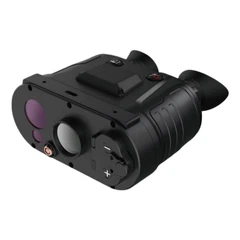
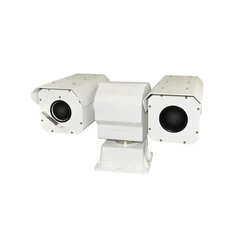
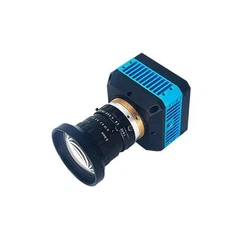

Hey there! As a supplier of the 384 640 Thermal Night Vision Goggle, I've been getting a lot of questions lately about whether these goggles are suitable for agricultural use at night. Well, let's dive right in and explore this topic.
First off, let's talk about what makes the 384 640 Thermal Night Vision Goggle special. These goggles are equipped with advanced thermal imaging technology. They can detect the infrared radiation emitted by objects, which means they can "see" in complete darkness. Unlike traditional night - vision goggles that rely on ambient light, thermal goggles work based on the heat signature of things.
In an agricultural setting at night, there are several scenarios where these goggles can be super useful. One of the main issues farmers face is pest control. Many pests are nocturnal, meaning they come out to feed and cause damage to crops when it's dark. With the 384 640 Thermal Night Vision Goggle, farmers can spot these pests easily. For example, rodents or insects moving around in the fields will have a distinct heat signature compared to the surrounding plants. This allows farmers to take targeted action, like setting up traps or using pesticides in the right areas, instead of just spraying the whole field blindly.
Another aspect is livestock monitoring. Livestock, such as cows or sheep, can sometimes wander off at night. With the thermal goggles, farmers can quickly scan the area around the barn or pasture to find any missing animals. Also, they can check on the health of the animals. Sick animals may have a different body temperature, and the goggles can help detect these anomalies early on.
Now, let's talk about the technical side. The 384x640 resolution of these goggles provides a pretty detailed image. You can clearly distinguish between different objects in the field. The thermal sensitivity is high enough to pick up even the slightest temperature differences. This is crucial when you're trying to spot small pests or a slightly sick animal.
However, it's not all sunshine and rainbows. There are a few limitations to consider. The cost of these goggles can be a bit high for some small - scale farmers. Also, the range of the goggles might be a factor. In a large agricultural area, you may need to get closer to the object to get a clear view. But overall, if you can afford it and have a need for detailed night - time monitoring, the benefits outweigh the drawbacks.
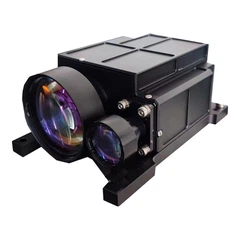
If you're into more high - tech agricultural operations, you might also be interested in some of our other products. For instance, we offer the 20km Laser Rangefinder Eye - safe. This rangefinder can be used in conjunction with the thermal goggles to measure distances accurately in the dark. It's great for mapping out the fields or for precision spraying.
Another cool product is the E170 Ultra - light Weight ISR Gimbal. You can mount the thermal goggles on this gimbal and attach it to a drone. This gives you an aerial view of the fields at night, allowing you to cover a much larger area in a shorter time.


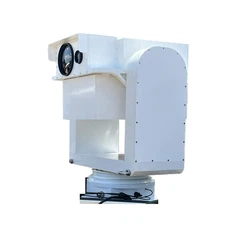
And for those involved in airborne agricultural missions, we have the Quatro - FOV High Performance Long Range ISRT System for Airborne Missions. This system provides a wide field of view and long - range capabilities, which is perfect for large - scale agricultural monitoring from the air.
In conclusion, the 384 640 Thermal Night Vision Goggle is definitely suitable for agricultural use at night. It offers a unique way to deal with the challenges that farmers face after the sun goes down. Whether it's pest control, livestock monitoring, or just getting a better understanding of what's happening in the fields, these goggles can be a game - changer.
If you're interested in learning more about our 384 640 Thermal Night Vision Goggle or any of our other products, feel free to reach out. We're always happy to have a chat and discuss how our products can fit into your agricultural needs. Let's start a conversation and see how we can help you improve your farming operations at night.
References
- Thermal Imaging in Agriculture: A Review of Current Applications and Future Potential. Journal of Agricultural Engineering Research.
- Night - time Monitoring Technologies for Livestock Health and Welfare. International Journal of Veterinary Science.