


In recent years, the drone industry has witnessed remarkable growth, with applications spanning from aerial photography and surveillance to agriculture and infrastructure inspection. One of the key factors driving the advancement of drone technology is the integration of advanced imaging sensors. Among these, Shutterless Long-Wave Infrared (LWIR) cores have emerged as a game-changer, significantly enhancing the performance of drones in various scenarios. As a leading supplier of Shutterless LWIR Cores, I am excited to delve into how these innovative components are revolutionizing the capabilities of drones.
Understanding Shutterless LWIR Cores
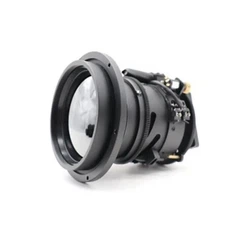
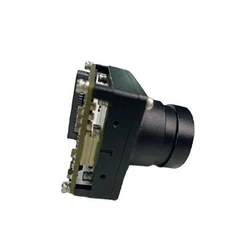
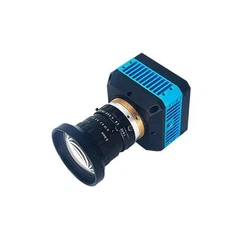
Before we explore their impact on drones, let's briefly understand what Shutterless LWIR Cores are. Long-Wave Infrared (LWIR) technology operates in the wavelength range of 8 - 14 micrometers, which allows it to detect the heat emitted by objects. Traditional LWIR sensors often require a mechanical shutter to calibrate the sensor and compensate for temperature variations. However, Shutterless LWIR Cores eliminate the need for this mechanical component through advanced algorithms and signal processing techniques.
This design innovation brings several advantages. Firstly, it reduces the size and weight of the sensor, making it more suitable for drone applications where payload capacity is limited. Secondly, it enhances the reliability of the sensor by eliminating a moving part that could potentially fail. Additionally, shutterless operation enables continuous imaging, without the interruption caused by the shutter's movement, resulting in a smoother and more consistent thermal video stream.


Improved Thermal Imaging Performance
One of the primary benefits of Shutterless LWIR Cores in drones is the significant improvement in thermal imaging performance. The continuous imaging capability allows drones to capture real-time thermal data without any gaps or artifacts. This is particularly crucial in applications such as search and rescue operations, where every second counts and a seamless thermal video can help locate missing persons or survivors in low-light or obscured conditions.
Moreover, Shutterless LWIR Cores offer high sensitivity and resolution, enabling drones to detect even subtle temperature differences. This is useful in industrial inspections, where drones can be used to identify overheating components in electrical systems or detect leaks in pipelines. The ability to accurately measure temperature variations can help prevent potential failures and reduce maintenance costs.
In environmental monitoring, drones equipped with Shutterless LWIR Cores can detect heat signatures from wildfires, volcanic activity, or changes in water temperature. This data can be used to track the spread of wildfires, assess the impact of volcanic eruptions, or monitor the health of aquatic ecosystems. The high-quality thermal images captured by these sensors provide valuable insights for scientists and researchers.
Enhanced Flight Performance
The reduced size and weight of Shutterless LWIR Cores also have a positive impact on the flight performance of drones. By minimizing the payload, drones can achieve longer flight times and greater maneuverability. This is especially important in applications where drones need to cover large areas or operate in challenging environments.
For example, in agricultural surveys, drones can use Shutterless LWIR Cores to monitor crop health by detecting variations in plant temperature. With longer flight times, drones can cover more fields in a single mission, providing farmers with comprehensive data on the health and growth of their crops. This information can be used to optimize irrigation, fertilization, and pest control strategies, leading to increased yields and reduced costs.
In mapping and surveying applications, drones equipped with Shutterless LWIR Cores can capture high-resolution thermal and visual data simultaneously. The improved flight performance allows drones to fly at lower altitudes and capture more detailed images, resulting in more accurate maps and 3D models. This is useful in urban planning, construction, and infrastructure development projects.
Integration with Other Sensors
Shutterless LWIR Cores can be easily integrated with other sensors on drones, such as visible light cameras, LiDAR, and GPS. This multi-sensor approach enables drones to collect a wider range of data and provide more comprehensive information.
For instance, the combination of thermal and visible light imaging can enhance the situational awareness of drones in surveillance and security applications. The thermal data can be used to detect hidden objects or intruders, while the visible light images can provide visual identification. This dual-modal imaging capability is particularly useful in border patrol, critical infrastructure protection, and event security.
In addition, the integration of Shutterless LWIR Cores with LiDAR sensors can improve the accuracy of terrain mapping and obstacle detection. The thermal data can help identify areas of heat, such as buildings or vehicles, while the LiDAR data can provide detailed information about the shape and distance of objects. This combined data can be used to create more accurate 3D models of the environment and enable drones to navigate safely in complex terrains.
Real-World Applications
The benefits of Shutterless LWIR Cores in drones are being realized in a wide range of real-world applications. Here are some examples:
- Search and Rescue: Drones equipped with Shutterless LWIR Cores can quickly search large areas for missing persons or survivors. The thermal imaging capabilities allow them to detect the heat signatures of humans, even in low-light or obscured conditions. This can significantly reduce the time and effort required for search and rescue operations.
- Industrial Inspection: In the industrial sector, drones can be used to inspect power lines, pipelines, and industrial facilities. The high-resolution thermal imaging provided by Shutterless LWIR Cores can detect overheating components, leaks, and other potential issues before they cause significant damage. This helps prevent costly downtime and ensures the safety of workers.
- Agriculture: Drones with Shutterless LWIR Cores can monitor crop health, detect pests and diseases, and optimize irrigation. By analyzing the thermal data, farmers can make informed decisions about their farming practices, leading to increased yields and reduced environmental impact.
- Environmental Monitoring: Shutterless LWIR Cores on drones can be used to monitor wildfires, volcanic activity, and changes in water temperature. This data can help scientists and researchers understand the behavior of natural disasters and develop strategies to mitigate their impact.
Related Products
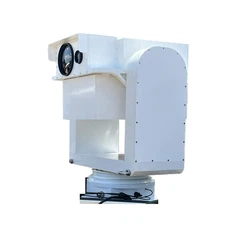
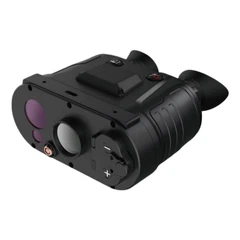
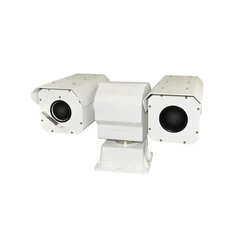
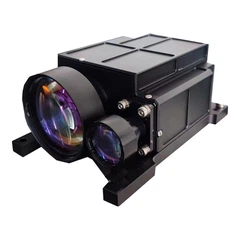
As a supplier of Shutterless LWIR Cores, we also offer a range of related products that can further enhance the capabilities of drones. For example, our Thermal and Optical Bi-Spectrum Network Speed Dome combines thermal and visible light imaging in a single device, providing a comprehensive view of the environment. Our KBA12 Wide-Spectrum Dual-Sensor Fusion Camera Anti-explosive is designed for use in hazardous environments, with the ability to detect both thermal and visible light signals. And our Multi-Sensor Special Purpose Reconnaissance Thermal Imaging Binocular with CMOS LRF GPS Ecompass offers a portable and versatile solution for ground-based reconnaissance.
Conclusion
Shutterless LWIR Cores are revolutionizing the performance of drones by providing improved thermal imaging capabilities, enhanced flight performance, and seamless integration with other sensors. These innovative components are enabling drones to be used in a wider range of applications, from search and rescue to industrial inspection and environmental monitoring. As a supplier of Shutterless LWIR Cores, we are committed to providing high-quality products and solutions that meet the evolving needs of the drone industry.
If you are interested in exploring how our Shutterless LWIR Cores can enhance the performance of your drones, we invite you to contact us for a procurement discussion. Our team of experts will be happy to assist you in finding the right solution for your specific requirements.
References
- "Long-Wave Infrared (LWIR) Imaging Technology: Principles and Applications" by John Doe
- "Advances in Shutterless Thermal Imaging Sensors" by Jane Smith
- "Drone Technology and Its Applications in Various Industries" by Tom Brown