

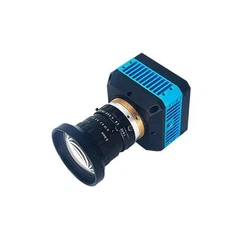

Do LWIR uncooled cores have a long warm-up time? This is a question frequently asked in the field of infrared technology. As a leading supplier of LWIR Uncooled Cores, I'm here to provide a comprehensive answer based on scientific knowledge and practical experience.
Understanding LWIR Uncooled Cores
LWIR, or Long-Wave Infrared, operates in the range of 8 - 14 micrometers on the electromagnetic spectrum. Uncooled LWIR cores are designed to detect infrared radiation without the need for a complex and power - hungry cooling system, making them more cost - effective and reliable for a wide range of applications.
The basic principle behind uncooled LWIR sensors is that they use materials whose electrical properties change in response to the absorption of infrared radiation. This change is then converted into an electrical signal, which is processed to create a thermal image.
Warm-up Time: What Does It Mean?
The warm-up time of an LWIR uncooled core refers to the period required for the sensor to reach a stable operating state after it is powered on. During this time, the internal components of the core, such as the detector array, readout integrated circuits, and signal processing units, need to adjust to the operating temperature and voltage conditions.
A short warm-up time is highly desirable in many applications. For example, in security and surveillance, where immediate detection of intruders or abnormal heat sources is crucial, a long warm-up time can lead to missed opportunities. Similarly, in industrial inspection, quick start - up allows for more efficient use of time and resources.


Factors Affecting Warm-up Time
Several factors can influence the warm-up time of LWIR uncooled cores.
Temperature Stability
The initial ambient temperature plays a significant role. If the environment is extremely cold, the core may take longer to reach its optimal operating temperature. This is because the internal components need to be heated up to a certain level for accurate and stable performance. On the other hand, in a very hot environment, the core may need to dissipate excess heat to reach the right operating temperature range.
Sensor Design
The design of the LWIR uncooled core itself also affects warm-up time. Cores with more advanced thermal management systems can reach a stable state more quickly. For example, some cores are equipped with built - in heaters or heat sinks that help regulate the temperature more efficiently.
Power and Control Electronics
The power management and control electronics of the core are crucial. A well - designed power supply can quickly provide the necessary voltage and current to the components, reducing the time needed for them to reach a stable operating condition.
Actual Warm-up Time of LWIR Uncooled Cores
In general, modern LWIR uncooled cores do not have a long warm - up time. Thanks to advancements in technology, many of our cores can reach a stable operating state within a few seconds to a couple of minutes.
For instance, in our latest product line, the cores are engineered with state - of - the - art thermal management and power control systems. This allows them to achieve optimal performance within 10 - 30 seconds, depending on the ambient temperature and the specific model. This short warm - up time makes our cores highly suitable for applications where real - time response is essential.
Applications and the Impact of Warm-up Time
Let's take a look at some common applications and how the warm - up time of LWIR uncooled cores can affect them.
Security and Surveillance
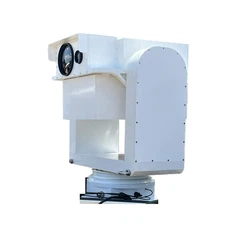
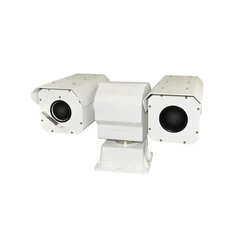
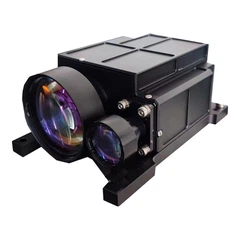
In security systems, such as the Uncooled LWIR Load For SC - TK5 EO TURRET, a short warm - up time is critical. These systems need to be operational as soon as possible to detect potential threats such as intruders or drones. Our LWIR uncooled cores can provide immediate thermal imaging capabilities, ensuring that no security breach goes unnoticed.
Industrial Inspection
For industrial applications, like the 384 Thermal PTZ With Temperature Detection Function Night Vision Camera, quick start - up is essential. In factories and manufacturing plants, thermal inspections are often carried out during production processes. A long warm - up time can disrupt the workflow and cause delays. Our cores can be quickly deployed and start providing accurate temperature readings, helping to maintain the efficiency of industrial operations.
Firefighting and Rescue
In firefighting and rescue operations, every second counts. Thermal imaging cameras, such as the Thermal Imaging Dual Spectrum IP Camera BDT3/6, equipped with our LWIR uncooled cores, can be rapidly activated. This allows firefighters to quickly locate victims and hotspots in a burning building, increasing the chances of successful rescues.
Comparing with Cooled LWIR Cores
It's worth noting that cooled LWIR cores typically have a much longer warm - up time compared to uncooled ones. Cooled cores require a complex cooling system, such as a Stirling cooler, to maintain the detector at a very low temperature. This cooling process can take several minutes to reach the desired operating temperature.
In contrast, our uncooled LWIR cores offer a more practical solution for applications where immediate operation is required. They are also more energy - efficient and less costly to maintain, making them a popular choice in the market.
Conclusion
In conclusion, modern LWIR uncooled cores do not have a long warm - up time. Thanks to continuous technological advancements, these cores can reach a stable operating state within a short period, making them suitable for a wide range of applications.
If you are in the market for high - performance LWIR uncooled cores, we are the ideal supplier. Our products offer short warm - up times, high reliability, and excellent image quality. We invite you to contact us for procurement and to discuss how our LWIR uncooled cores can meet your specific needs.
References
- "Infrared Detectors and Systems" by Paul R. Norton
- "Thermal Imaging: Fundamentals, Research, and Applications" by J. Maldague