


Can thermal vision sights and goggles be used in foggy conditions? This is a question that often comes up among users who are considering the practicality of these devices in various environmental scenarios. As a supplier of Thermal Vision Sights and Goggles, I'm here to provide you with an in - depth analysis of this topic.
Understanding Thermal Vision Technology
Before delving into the performance of thermal vision in foggy conditions, it's essential to understand how thermal vision works. Thermal imaging devices detect the infrared radiation emitted by objects. All objects above absolute zero (-273.15°C) emit infrared radiation, and the intensity of this radiation is related to the object's temperature. Thermal vision sights and goggles convert this infrared radiation into a visible image, allowing users to see in the dark or low - light conditions.
The key advantage of thermal vision over traditional night - vision devices, which rely on ambient light or image intensification, is that it doesn't depend on visible light. Instead, it focuses on the heat signatures of objects. This characteristic gives thermal vision a unique edge in many situations, but how does it fare in fog?
The Impact of Fog on Thermal Vision
Fog consists of tiny water droplets suspended in the air. These droplets can scatter and absorb infrared radiation, which is the basis of thermal vision. The degree to which fog affects thermal vision depends on several factors, including the density of the fog, the wavelength of the infrared radiation used by the thermal device, and the distance between the observer and the target.
Density of the Fog
Light fog may have a relatively minor impact on thermal vision. In such conditions, the water droplets are less concentrated, and the infrared radiation can still pass through to a certain extent. As a result, thermal vision sights and goggles can still provide a useful image, allowing users to detect the general shape and location of heat - emitting objects.
However, in dense fog, the situation is quite different. The high concentration of water droplets significantly scatters and absorbs the infrared radiation. This leads to a loss of image clarity and a reduction in the effective range of the thermal device. In extremely dense fog, it may be very difficult to distinguish detailed features of objects, and the detection range can be severely limited.
Wavelength of Infrared Radiation
Thermal imaging devices typically operate in the mid - wave infrared (MWIR, 3 - 5 micrometers) or long - wave infrared (LWIR, 8 - 14 micrometers) bands. LWIR is more commonly used in consumer and many professional thermal vision products because it is less affected by atmospheric absorption and is more suitable for detecting the heat signatures of objects at room temperature.
In foggy conditions, LWIR has an advantage over MWIR to some extent. The water droplets in fog scatter MWIR radiation more effectively than LWIR radiation. Therefore, thermal devices operating in the LWIR band are generally more capable of providing usable images in fog compared to those using MWIR.
Distance to the Target
The distance between the observer and the target also plays a crucial role. In fog, the longer the distance, the more infrared radiation is scattered and absorbed by the water droplets. So, detecting a distant object in fog is much more challenging than detecting a nearby one. Even in light fog, the image quality of a far - away target may degrade significantly, while a close - range target can still be clearly visible.
Our Thermal Vision Products and Their Performance in Fog
At our company, we offer a range of high - quality thermal vision sights and goggles designed to perform well in various conditions, including fog.
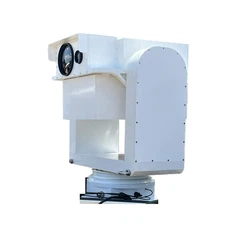
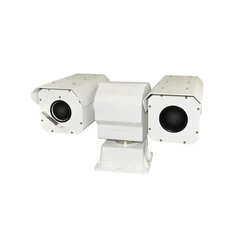
One of our notable products is the EO IR Thermal Radar Scan and Search (EO - RST) System. This advanced system is equipped with state - of - the - art thermal imaging technology. It uses a long - wave infrared detector, which provides better performance in foggy conditions compared to some other systems. The system also has advanced signal - processing algorithms that can enhance the image quality even in the presence of light to moderate fog.
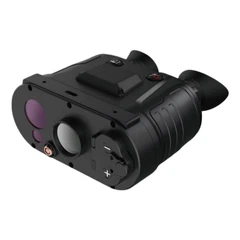
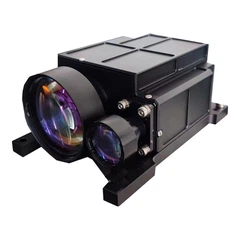
Our Handheld Night Vision Binocular With Laser Rangefinder is another great option for users who need to operate in foggy environments. The binoculars are designed with a high - sensitivity thermal sensor that can detect weak heat signatures. The built - in laser rangefinder helps users accurately measure the distance to the target, which is especially useful in fog when visual cues for distance estimation may be limited.
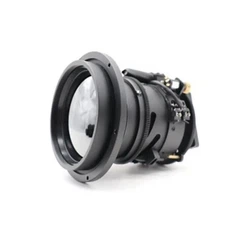
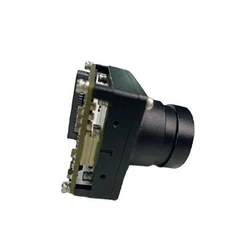
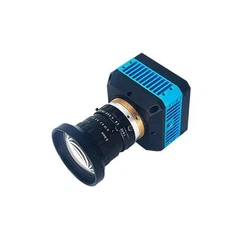
In addition, our 640 Small Mini Size Uncooled LWIR Shuterless Thermal Core is a key component in many of our thermal vision products. The LWIR technology ensures better penetration through fog, and the uncooled design makes the device more reliable and energy - efficient.
Strategies to Improve Thermal Vision Performance in Fog
Although fog poses challenges to thermal vision, there are some strategies that can help improve the performance of thermal vision sights and goggles in such conditions.
Adjusting the Settings
Most modern thermal devices allow users to adjust various settings, such as gain, contrast, and color palette. In foggy conditions, adjusting these settings can enhance the visibility of the image. For example, increasing the gain can make the heat signatures more prominent, while adjusting the color palette can help distinguish different temperature regions more clearly.
Using Filters
Some thermal devices are compatible with special filters that can reduce the impact of fog on the image. These filters are designed to block certain wavelengths of infrared radiation that are more affected by the water droplets in fog, while allowing the more useful wavelengths to pass through.
Combining with Other Sensors
In some applications, combining thermal vision with other sensors, such as radar or ultrasonic sensors, can provide a more comprehensive situational awareness. Radar can detect the presence and location of objects regardless of the fog, while thermal vision can provide information about the heat signatures. This multi - sensor approach can be very effective in foggy conditions.
Conclusion
In summary, thermal vision sights and goggles can be used in foggy conditions, but their performance is affected by the density of the fog, the wavelength of the infrared radiation, and the distance to the target. While dense fog can significantly reduce the effectiveness of thermal vision, light fog may still allow for useful detection of heat - emitting objects.
As a supplier of Thermal Vision Sights and Goggles, we are committed to providing high - quality products that can perform well in a variety of environments, including fog. Our products, such as the EO IR Thermal Radar Scan and Search (EO - RST) System, Handheld Night Vision Binocular With Laser Rangefinder, and 640 Small Mini Size Uncooled LWIR Shuterless Thermal Core, are designed with advanced technology to minimize the impact of fog on thermal vision.


If you are interested in our thermal vision products and would like to discuss your specific needs, we invite you to contact us for a detailed procurement consultation. We look forward to working with you to find the best thermal vision solution for your requirements.
References
- Smith, J. (2018). Thermal Imaging Technology: Principles and Applications. New York: Academic Press.
- Johnson, R. (2020). The Impact of Atmospheric Conditions on Infrared Imaging. Journal of Infrared Science and Technology, 25(3), 123 - 135.
- Brown, A. (2019). Advanced Thermal Vision Systems for Challenging Environments. London: Wiley - Blackwell.