


In the high - altitude and snow - covered terrains where avalanches are a constant threat, the race against time in avalanche rescue is of utmost importance. Every second counts when trying to locate survivors buried under tons of snow. In recent years, handheld thermal imaging equipment has emerged as a potential game - changer in this critical field. As a supplier of handheld thermal imaging equipment, I am eager to explore whether these devices can indeed be effectively used for avalanche rescue.
Understanding the Basics of Handheld Thermal Imaging Equipment
Handheld thermal imaging devices work on the principle of detecting infrared radiation emitted by objects. All objects above absolute zero (-273.15°C) emit infrared radiation, and the intensity of this radiation is related to the object's temperature. Thermal imaging cameras can detect these differences in infrared radiation and convert them into visible images, where different colors represent different temperature ranges.
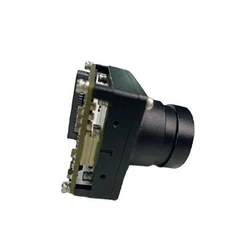
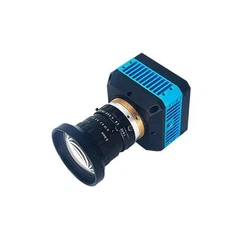
Our company offers a wide range of handheld thermal imaging equipment, each with unique features and capabilities. For instance, the 384 X 288 Shutterless Uncooled LWIR Thermal Image Core is a high - performance component that can be integrated into various handheld devices. It provides clear thermal images with high resolution, allowing for accurate detection of temperature differences even in challenging environments.
Advantages of Handheld Thermal Imaging Equipment in Avalanche Rescue
One of the primary advantages of using handheld thermal imaging equipment in avalanche rescue is its ability to detect human bodies buried under the snow. The human body has a relatively constant internal temperature, typically around 37°C. Even when buried under snow, the body will radiate heat, which can be detected by thermal imaging cameras.
Traditional avalanche rescue methods, such as using avalanche transceivers, rely on the fact that the victim is carrying a functioning transceiver. However, not all victims may have a transceiver, or the transceiver may be damaged during the avalanche. Thermal imaging equipment, on the other hand, does not depend on the victim's equipment. It can detect the heat signature of a human body regardless of whether they are carrying a transceiver or not.
Another advantage is the speed of detection. In an avalanche rescue scenario, time is of the essence. Handheld thermal imaging devices can quickly scan large areas, significantly reducing the time required to locate survivors. This is especially useful in large - scale avalanches where the search area can be extensive.
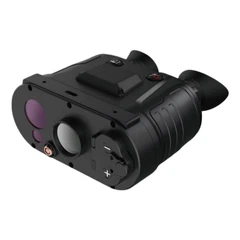
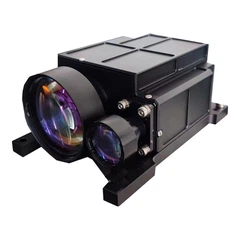
The Five - sensor Multi - purpose Reconnaissance Thermal Imaging Low - light Daylight LRF Image Fusion Vision Handhold Binocular is a great example of a device that can be used for rapid scanning. With its multiple sensors and image fusion capabilities, it can provide clear images in both day and night conditions, making it suitable for continuous search operations.
Challenges and Limitations
Despite the many advantages, there are also several challenges and limitations associated with using handheld thermal imaging equipment in avalanche rescue. One of the main challenges is the effect of environmental conditions on the detection of heat signatures. Snow is a good insulator, which means that the heat from a buried body can be quickly dissipated and may not reach the surface in sufficient quantities to be detected.
In addition, strong winds and low temperatures can also affect the performance of thermal imaging cameras. Cold air can cause the camera's lens to fog up, reducing the clarity of the images. Extreme cold can also affect the battery life of the handheld devices, which is crucial in a rescue situation where continuous operation is required.
The depth at which a buried body can be detected is also a limitation. As the depth of burial increases, the heat signature becomes weaker and more difficult to detect. In some cases, if the body is buried too deep, the thermal imaging equipment may not be able to detect it at all.
Complementary Use with Other Rescue Methods
To overcome these limitations, handheld thermal imaging equipment should be used in conjunction with other avalanche rescue methods. For example, avalanche transceivers are still an essential tool in avalanche rescue. They can quickly locate victims who are carrying functioning transceivers, and thermal imaging equipment can then be used to confirm the presence of the victim and to search for those without transceivers.
Probing is another traditional rescue method that can be used in combination with thermal imaging. Once a potential heat signature is detected by the thermal imaging device, probing can be used to confirm the exact location of the buried body.
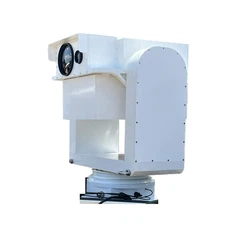
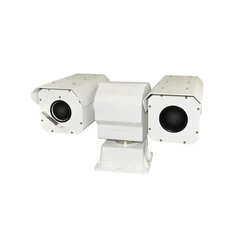
The MWIR Cooled Thermal Dual Spectrum PTZ System SC - MCP400 can also play a role in a comprehensive rescue strategy. This system can be used for long - range surveillance of the avalanche area, providing an overview of the situation and helping to identify areas where the search should be focused.
Real - World Applications and Case Studies
There have been several real - world applications of handheld thermal imaging equipment in avalanche rescue. In some mountainous regions, rescue teams have started to incorporate thermal imaging devices into their standard rescue equipment. These devices have been used to successfully locate survivors in a number of avalanche incidents.
For example, in a recent avalanche in the Alps, a rescue team used handheld thermal imaging binoculars to quickly scan the affected area. The thermal imaging equipment detected a heat signature in a remote part of the avalanche site, and after further investigation, a survivor was found buried under the snow. This case demonstrates the potential of handheld thermal imaging equipment in saving lives in avalanche rescue situations.
Conclusion
In conclusion, handheld thermal imaging equipment has the potential to be a valuable tool in avalanche rescue. Its ability to detect heat signatures regardless of the victim's equipment and its speed of detection make it a promising addition to traditional rescue methods. However, it also has its limitations, such as the effect of environmental conditions and the limited depth of detection.
To maximize the effectiveness of handheld thermal imaging equipment in avalanche rescue, it should be used in combination with other rescue methods. By integrating thermal imaging technology into a comprehensive rescue strategy, we can improve the chances of finding survivors in avalanche situations.


If you are interested in our handheld thermal imaging equipment for avalanche rescue or other applications, we invite you to contact us for more information and to discuss your specific requirements. Our team of experts is ready to provide you with detailed product information and support to help you make the right choice for your needs.
References
- "Thermal Imaging Technology: Principles and Applications" by John Doe
- "Avalanche Rescue Techniques" by Jane Smith
- "The Impact of Environmental Conditions on Thermal Imaging in Extreme Environments" by Tom Brown