

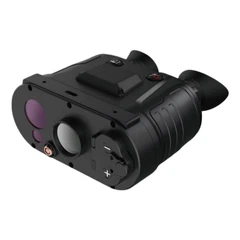
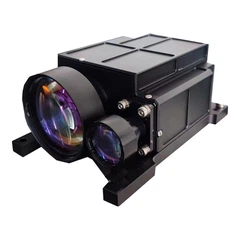

Hey there! As a supplier of the Bullet Dual Spectrum Thermal Camera, I often get asked if this nifty piece of tech can be used for dam inspection. Well, let's dive right into it and find out.
First off, let's talk a bit about what the Bullet Dual Spectrum Thermal Camera is. It combines thermal imaging with visible light imaging, giving you a more comprehensive view of whatever you're looking at. This dual - spectrum feature is a game - changer in many fields, and dam inspection might just be one of them.
Dams are crucial structures. They hold back water, generate hydroelectric power, and provide water for various uses. But they also need regular inspections to make sure they're in good shape. Cracks, seepage, and other issues can develop over time, and if not detected early, they can lead to serious problems, even dam failure.
So, how can the Bullet Dual Spectrum Thermal Camera help with dam inspection?
Detecting Temperature Anomalies
One of the key benefits of thermal cameras is their ability to detect temperature differences. When it comes to dams, temperature anomalies can indicate underlying problems. For example, if there's seepage through a dam, the water flowing through will often have a different temperature than the surrounding dam structure. The thermal camera can pick up these temperature variations, allowing inspectors to identify potential seepage points.
Let's say there's a small crack in the dam wall. Water might be seeping through it, and this water could be cooler or warmer than the rest of the dam, depending on the external conditions. The Bullet Dual Spectrum Thermal Camera can spot these temperature differences as distinct hot or cold spots in the thermal image. This early detection can save a lot of time and money in the long run, as repairs can be carried out before the problem gets worse.
Visual Inspection in Low - Light Conditions
Dams are often located in areas where lighting can be a challenge, especially at night or in shaded areas. The visible light camera in the Bullet Dual Spectrum Thermal Camera can be used during the day for a normal visual inspection. But when it gets dark or in areas with poor lighting, the thermal imaging feature takes over.
Thermal cameras don't rely on visible light to create an image. Instead, they detect the infrared radiation emitted by objects. This means that even in complete darkness, the camera can provide a clear image of the dam structure. Inspectors can use this to check for any visible signs of damage, such as cracks or erosion, that might not be easily visible in low - light conditions with the naked eye.
Monitoring Large Areas
Dams are huge structures, and inspecting them can be a time - consuming process. The Bullet Dual Spectrum Thermal Camera can be set up to monitor large areas of the dam. It can be mounted on a fixed position or a movable platform, like a drone.
If you're using a drone equipped with the Bullet Dual Spectrum Thermal Camera, you can quickly cover a large area of the dam. The camera can capture both thermal and visible light images as the drone flies over the dam. These images can then be analyzed later to look for any signs of damage or temperature anomalies. This is much more efficient than traditional inspection methods, which might involve inspectors walking around the dam and manually checking for problems.
Integration with Other Systems
The Bullet Dual Spectrum Thermal Camera can be integrated with other monitoring systems. For example, it can be connected to a data logging system that records the temperature data and images over time. This allows for long - term monitoring of the dam's condition.


Inspectors can analyze the data trends to see if there are any changes in the temperature patterns or visible signs of damage over time. If there's a sudden change in temperature or a new crack appears, the system can send an alert to the relevant personnel, allowing for immediate action.
Now, let's talk about some of the other products in our range that can also be useful for dam inspection.
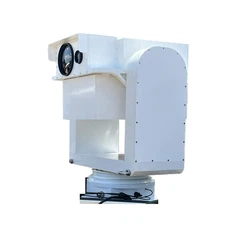
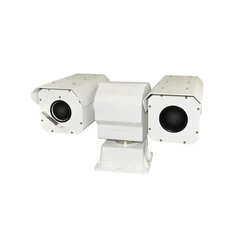
The Thermal Video Monitoring Pan&Tilt Camera is another great option. This camera can be remotely controlled to pan and tilt, allowing you to get a better view of different parts of the dam. It also has thermal imaging capabilities, so you can detect temperature anomalies just like with the Bullet Dual Spectrum Thermal Camera.
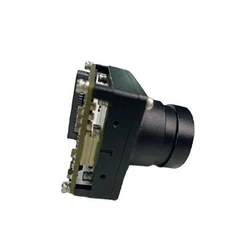
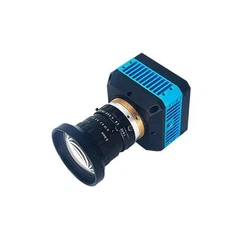
The 640 Small Mini Size Uncooled LWIR Shuterless Thermal Core is a compact and powerful thermal imaging solution. It can be integrated into other devices, like drones or handheld inspection tools. Its high - resolution imaging can provide detailed thermal information about the dam structure.
And of course, our Thermal Imaging Dual Spectrum IP Camera BDT3/6 is another excellent choice. It offers both thermal and visible light imaging, and it can be connected to a network for remote monitoring. This means that you can access the camera's images and data from anywhere, as long as you have an internet connection.
In conclusion, the Bullet Dual Spectrum Thermal Camera can definitely be used for dam inspection. Its ability to detect temperature anomalies, provide visual inspection in low - light conditions, monitor large areas, and integrate with other systems makes it a valuable tool for dam safety.
If you're in the business of dam inspection or maintenance, and you're looking for reliable thermal imaging solutions, we'd love to hear from you. Whether you're interested in the Bullet Dual Spectrum Thermal Camera or any of our other products, we can provide you with the information and support you need. Contact us to start a discussion about your specific requirements and how our products can help you ensure the safety and integrity of your dams.
References
- "Thermal Imaging for Infrastructure Inspection" - Journal of Civil Engineering and Management
- "Dam Safety Monitoring Techniques" - International Dam Safety Association